
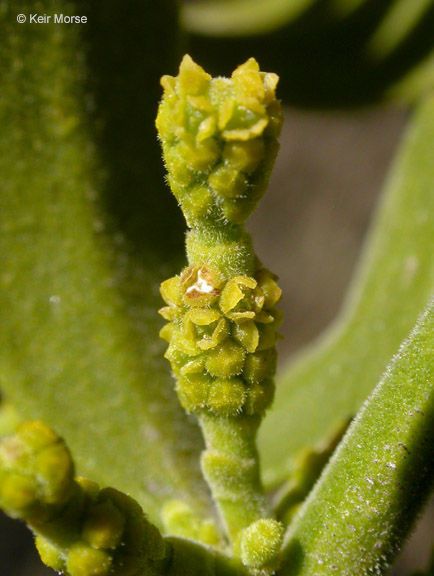
Kissing the Mistletoe: Propagating Phoradendron villosum, the Festive Parasite
Mistletoe, that iconic symbol of holiday cheer, isn’t just something to hang over a door for good luck. It’s a fascinating plant with a unique way of life, and for those interested in plant propagation, it poses an intriguing challenge. Phoradendron villosum, the species most commonly used as mistletoe, is a hemiparasite, meaning it draws some of its nutrients from a host tree while also photosynthesizing its own food.
So, how can you propagate this holiday staple? It’s not as simple as planting a seed or taking a cutting. In fact, Phoradendron villosum propagation is a bit of a science experiment. Here’s a breakdown of the unique techniques involved:
1. The Seed Story:
Mistletoe relies on birds to spread its seeds. The sticky berries are eaten and then, well, deposited onto a suitable host tree branch. The seeds adhere firmly, germinating and sending out a root that penetrates the bark.
2. Mimicking Nature:
Propagating mistletoe from seed requires mimicking this process. You’ll need:
- Fresh, ripe berries: Find mistletoe berries that are plump and have a deep green or purplish color.
- Target tree: Choose a hardwood tree like an oak, apple, or even a pear as your host. Mistletoe prefers deciduous trees.
- A bit of “bird poop”: This might sound gross, but bird droppings are actually important for seed germination! You can create a similar environment using a mixture of crushed, dried bird droppings and potting soil.
3. The Seed Placement:
Once you have your materials, follow these steps:
- Make a small cut: Carefully cut a small incision into the bark of the host tree branch.
- Apply the seed mixture: Carefully insert a mixture of seed, crushed bird droppings, and soil into the cut.
- Wrap it up: Seal the wound with water-resistant tape to prevent infection.
- Water occasionally: Keep the area slightly moist to help the seed germinate.
4. Patience is Key:
Mistletoe propagation is a long game. Depending on the environmental conditions, it can take several months for the seed to germinate. Don’t be discouraged if you don’t see results immediately.
5. Alternatives: Stem Cuttings & Grafting:
While propagation from seed is the most natural method, there are alternatives, though they are more challenging:
- Stem cuttings: Mistletoe cuttings are notoriously difficult to root. However, with the right tools and techniques, some people have success.
- Grafting: This technique involves inserting a piece of mistletoe onto a healthy branch of the host tree.
Important Considerations:
- Ethical considerations: Make sure you have permission to propagate mistletoe on a tree you don’t own.
- Environmental impact: Don’t take mistletoe from the wild, as this can disrupt the lifecycle of the plant and harm its host tree.
- Be mindful of your local laws: In some places, it’s illegal to propagate mistletoe without permits.
Mistletoe: More Than Just a Holiday Tradition
While most people think of mistletoe as a festive decoration, it’s a fascinating plant with a complex and unique life cycle. Propagating mistletoe is an intriguing challenge that allows you to connect with the natural world and learn fascinating facts about this parasitic species.