
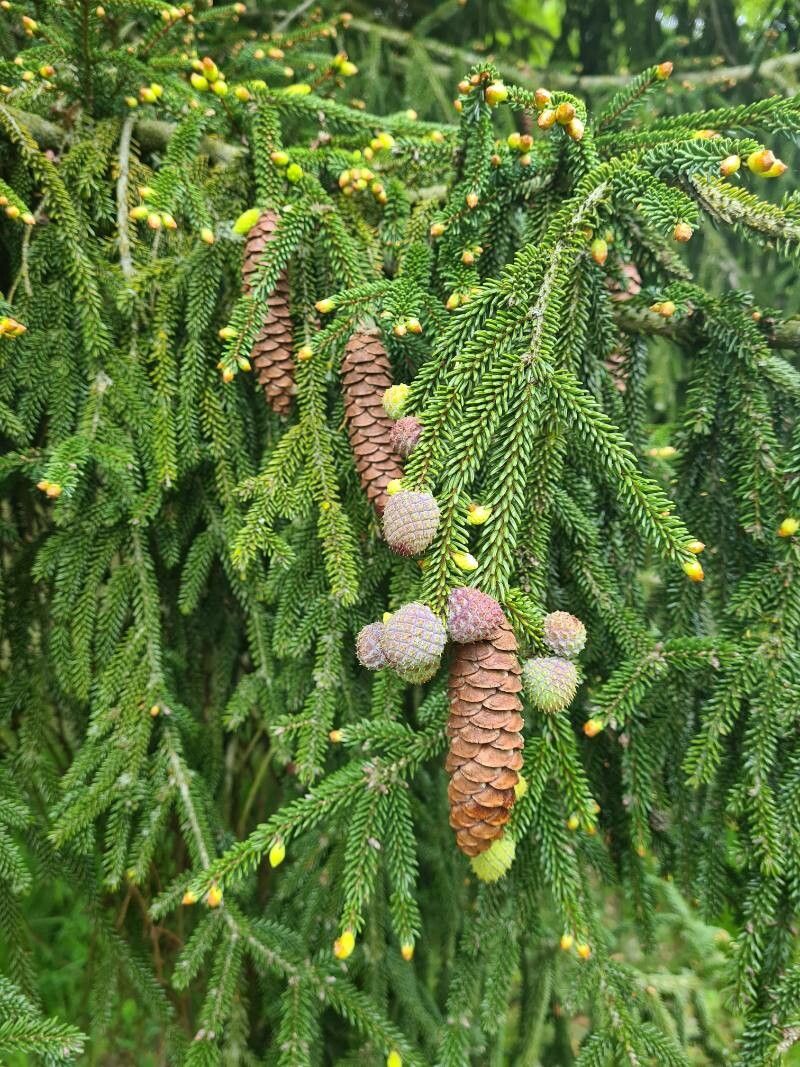
From One to Many: Propagating Your Own Oriental Spruce
The majestic Oriental Spruce ( Picea orientalis ) is a stunning evergreen that adds grandeur and elegance to any landscape. Its delicate, blue-green needles and symmetrical conical shape are a testament to its regal nature. But did you know that you can multiply the beauty of your Oriental Spruce by propagating new trees from the comfort of your own garden?
Propagating your own Oriental Spruce not only allows you to expand your collection but also gives you the joy and satisfaction of nurturing new life. While it can be a bit more challenging than other plant propagation methods, with patience and the right techniques, you can successfully create a small forest of these magnificent trees.
The Two Main Methods:
There are two primary methods for propagating Oriental Spruce: seed propagation and cuttings. Each method has its own advantages and disadvantages.
1. Seed Propagation:
- Advantages: Seed propagation is the most affordable method, as you can easily collect seeds from mature cones. This method also allows for a larger number of seedlings.
- Disadvantages: Seedlings can take several years to reach maturity, and you may not see the exact traits of the parent tree.
- Process:
- Collect seeds: Harvest mature cones in the fall and extract the seeds.
- Stratification: To break dormancy, store seeds in a cool, moist environment for 1-3 months.
- Sow seeds: After stratification, sow seeds in a seed tray filled with a well-draining potting mix. Keep the soil consistently moist and place the tray in a shaded location.
- Transplant: Once seedlings are established (after about 2 years), transplant them individually into larger pots or directly into your garden.
2. Cuttings:
- Advantages: Cuttings are quicker to produce mature trees, and the resulting plant will be an exact genetic replica of the parent tree.
- Disadvantages: This method requires a bit more technical skill and is often less successful than seed propagation.
- Process:
- Take cuttings: Choose healthy, 4-6 inch stems from the current year’s growth. Remove needles from the bottom 2 inches, and dip the cut end in rooting hormone.
- Plant cuttings: Insert the cuttings into a well-draining potting mix and cover with a clear plastic dome or humidity tent to maintain humidity.
- Root growth: Cuttings may take several weeks or months to root. Ensure consistent moisture and bright, indirect light.
- Transplant: Once cuttings have established roots, transplant them into individual pots or directly into your garden.
Essential Tips for Success:
- Choose the right time: The best time to take cuttings is in the late spring or early summer when new growth is tender.
- Proper sterilization: Sterilize tools before and after collecting seeds or taking cuttings to prevent the spread of disease.
- Moisture control: Maintain consistent moisture levels in your seed tray or cutting propagation environment. Don’t overwater, but don’t let the soil dry out completely.
- Patience is key: Propagating Oriental Spruce takes time and dedication. Be patient and don’t be discouraged if your first attempts don’t produce perfect results.
With a little patience and the right techniques, you can successfully propagate your own Oriental Spruce trees. Enjoy the rewarding experience of watching your seedlings or cuttings grow into the majestic evergreen that has captivated gardeners for generations.