
Propagating the Velvet Tree: A Guide to Cultivating Pourouma villosa
Introduction:
Pourouma villosa, commonly known as the velvet tree, is a captivating neotropical species prized for its striking foliage and potential as a fruit-bearing tree. Its large, velvety leaves and edible fruit make it a desirable addition to any garden with a suitable climate. While relatively unknown outside its native range, its beauty and unique characteristics are garnering increasing attention among gardeners seeking unusual and rewarding plants. However, propagation presents specific challenges, which this article aims to address, exploring various techniques and highlighting their potential successes and failures.
Seed Germination:
Currently, there are no known reliable methods for seed germination propagation of Pourouma villosa. While seeds may be produced, their viability and germination rate are reportedly extremely low, even under optimal conditions. Further research is needed to determine the specific requirements for successful seed germination, if any exist. The lack of a readily accessible seed propagation method limits the scale of potential propagation efforts significantly.
Cuttings:
Cuttings offer a more promising avenue for propagating Pourouma villosa. However, challenges remain.
Challenges: The success rate of cuttings depends heavily on factors including the timing (ideally during active growth), the type of cutting (semi-hardwood cuttings are likely most successful), and the use of rooting hormones. The relatively large leaves also contribute to moisture loss, potentially hindering rooting.
Practical Tips: Take semi-hardwood cuttings, approximately 4-6 inches long, from healthy, non-flowering stems. Remove lower leaves to prevent rot. Treat the cut ends with a rooting hormone and plant in a well-draining, moist propagation mix (e.g., perlite and peat moss). Maintain high humidity (e.g., using a propagation dome or plastic bag) and provide bottom heat to stimulate root development.
Rewards: Successful propagation by cuttings provides a faster means of multiplying desirable plants compared to other slower methods. While genetic diversity is limited to the parent plant, this approach enables quicker establishment of a larger number of Pourouma villosa plants.
Division:
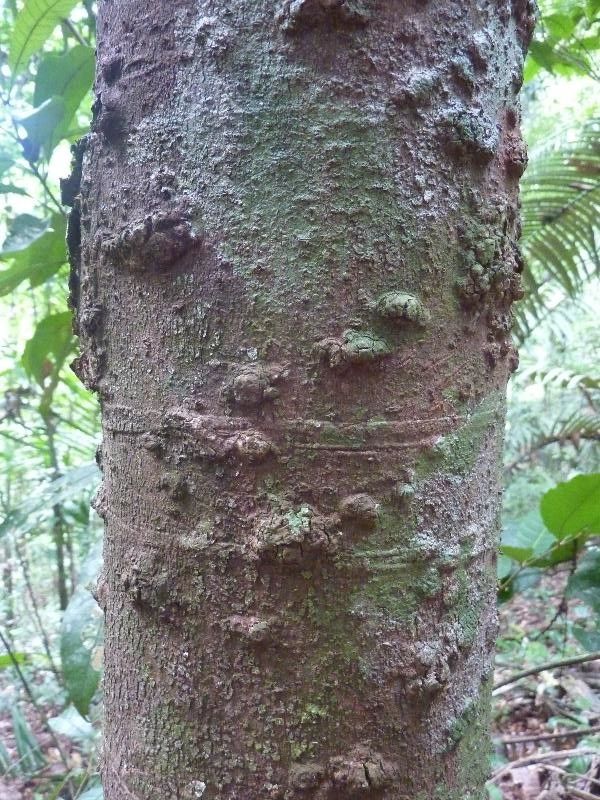
Division is generally not a practical method for propagating Pourouma villosa. This species typically develops a single trunk and doesn’t readily produce offsets or suckers suitable for division. Therefore, this method is not recommended.
Tissue Culture:
Tissue culture presents a potentially powerful method for propagating Pourouma villosa, offering scalability and the opportunity to produce large quantities of genetically uniform plants.
Challenges: Establishing effective tissue culture protocols for Pourouma villosa requires specialized knowledge and laboratory facilities. Identifying appropriate growth media and hormonal treatments for successful shoot proliferation and root development will be crucial yet challenging aspects. Contamination is another major hurdle in tissue culture.
Practical Tips: Consult with a plant tissue culture laboratory with experience in similar species. Initial experiments may require considerable trial and error to optimize media composition and growth conditions.
Rewards: Tissue culture offers the potential for mass propagation, ensuring the availability of this relatively rare plant. It also allows for clonal propagation, preserving desirable traits of superior specimens.
Conclusion:
Propagating Pourouma villosa presents significant challenges across various techniques. Seed germination remains largely unfeasible currently, while cuttings offer a more accessible, albeit still challenging, route. Tissue culture holds the greatest promise for large-scale propagation but requires specialized expertise and resources. Division is simply not applicable.
The unique satisfaction of successfully cultivating Pourouma villosa arises from overcoming these obstacles. The time, effort, and occasional setbacks are rewarded by the possession of this striking and unusual plant. Whether you choose cuttings or, with the necessary resources, tissue culture, persistence and attention to detail are key to success. For aspiring propagators, remember to embrace experimentation, learn from failures, and celebrate the small victories along the path to successfully growing this beautiful velvet tree.