
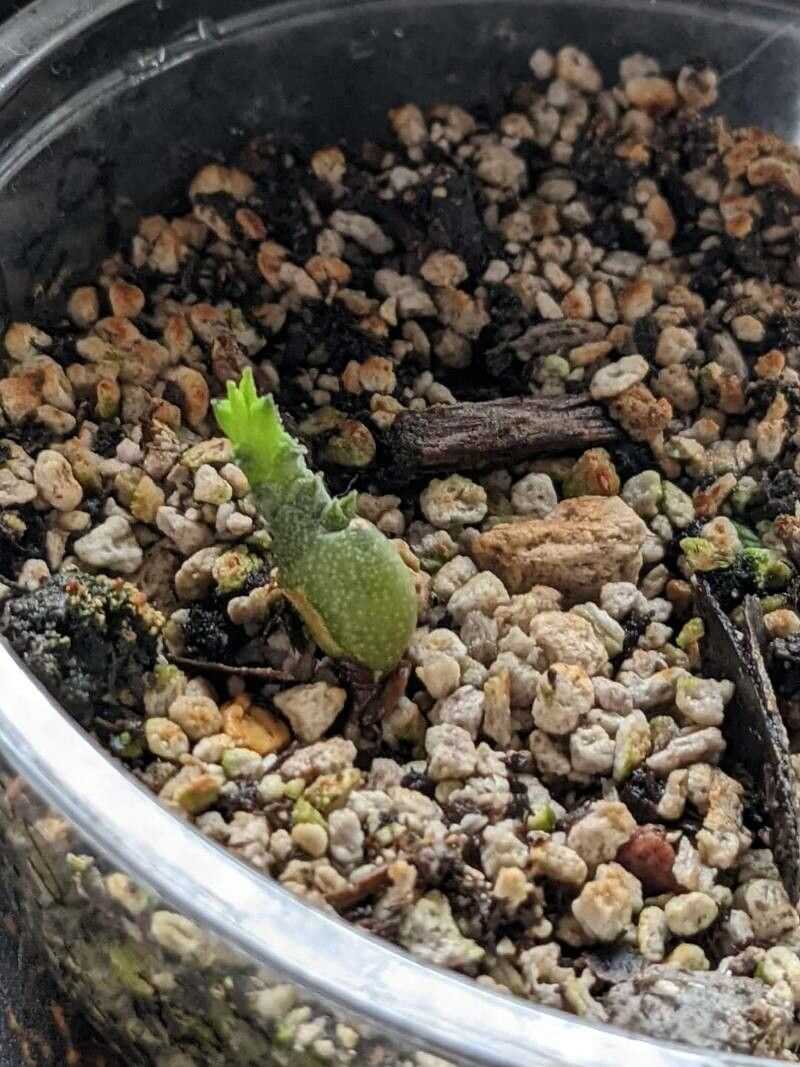
Propagating the Mysterious Pseudolithos horwoodii: A Gardener’s Guide
Introduction:
Pseudolithos horwoodii, commonly known as the Horwood’s Pseudolithos, is a captivating succulent belonging to the Apocynaceae family. Its bizarre, almost alien, appearance captivates collectors and succulent enthusiasts alike. Resembling a cluster of knobbly, grey-green tubers, it produces small, inconspicuous flowers emerging from fissures in the plant’s body. This slow-growing, drought-tolerant plant is prized for its unusual form and the challenge it presents to cultivation. Its propagation, however, presents a unique set of hurdles, making successful reproduction a rewarding achievement for even seasoned succulent growers.
Seed Germination:
Currently, there are no known reliable methods for seed germination propagation of Pseudolithos horwoodii. While the plant does produce seeds, their viability and germination rates are extremely low, making this method impractical for most cultivators. Further research into seed germination techniques may be necessary to unlock this potential propagation pathway.
Cuttings:
Cuttings are similarly unreliable for propagating Pseudolithos horwoodii. The plant’s unique structure doesn’t lend itself easily to this method. Attempts at taking stem cuttings typically result in the cutting rotting before callus formation and rooting occur. The low success rate coupled with the slow growth of the plant makes this method impractical.
Division:
Division offers the most promising method for propagating Pseudolithos horwoodii. Mature, larger plants sometimes develop interconnected tubers. These can, with careful handling, be separated into distinct clumps, each containing a sufficient root system.
- Challenges: The delicate nature of the root system makes careful separation crucial to avoid damage. Improper handling can lead to rot and the loss of both the parent plant and the division. A very sharp, sterile knife is essential.
- Tips: Division should be attempted only during the active growing season, ideally after a period of watering to encourage plump tubers. Wounds should be allowed to dry completely before planting in well-draining succulent potting mix. Use a fungicide to prevent rot development.
- Rewards: Division offers a relatively simple method to increase the number of plants, transferring existing genetic material. It’s also the fastest way to propagate this slow-growing species.
Tissue Culture:
Tissue culture presents a potentially more reliable method for large-scale propagation of Pseudolithos horwoodii, although it’s a complex and specialized technique.
- Challenges: Establishing a sterile protocol for Pseudolithos horwoodii would require extensive laboratory work, involving various media formulations and sterilization techniques. The success of tissue culture fundamentally depends on expert knowledge and specialized equipment.
- Tips: If attempting tissue culture, it’s advisable to enlist the help of a specialist with experience in propagating succulents.
- Rewards: This method offers the potential for large-scale propagation, preserving genetic uniformity and creating a consistent supply of plants.
Conclusion:
Propagating Pseudolithos horwoodii poses significant challenges. While seed germination and cuttings prove unreliable, division offers the most realistic approach for home cultivators. Tissue culture remains a potentially viable method but requires advanced skill and resources. The rewards, however, are well-worth the effort. The unique beauty and challenging nature of this succulent make successful propagation an immensely satisfying experience. Don’t be discouraged by initial setbacks—each attempt, even those ending in failure, provides valuable learning experiences that bring you closer to mastering the cultivation of this enigmatic plant. For most hobbyists, focusing on careful division will provide the most accessible route to expanding their collection of these fascinating plants.