
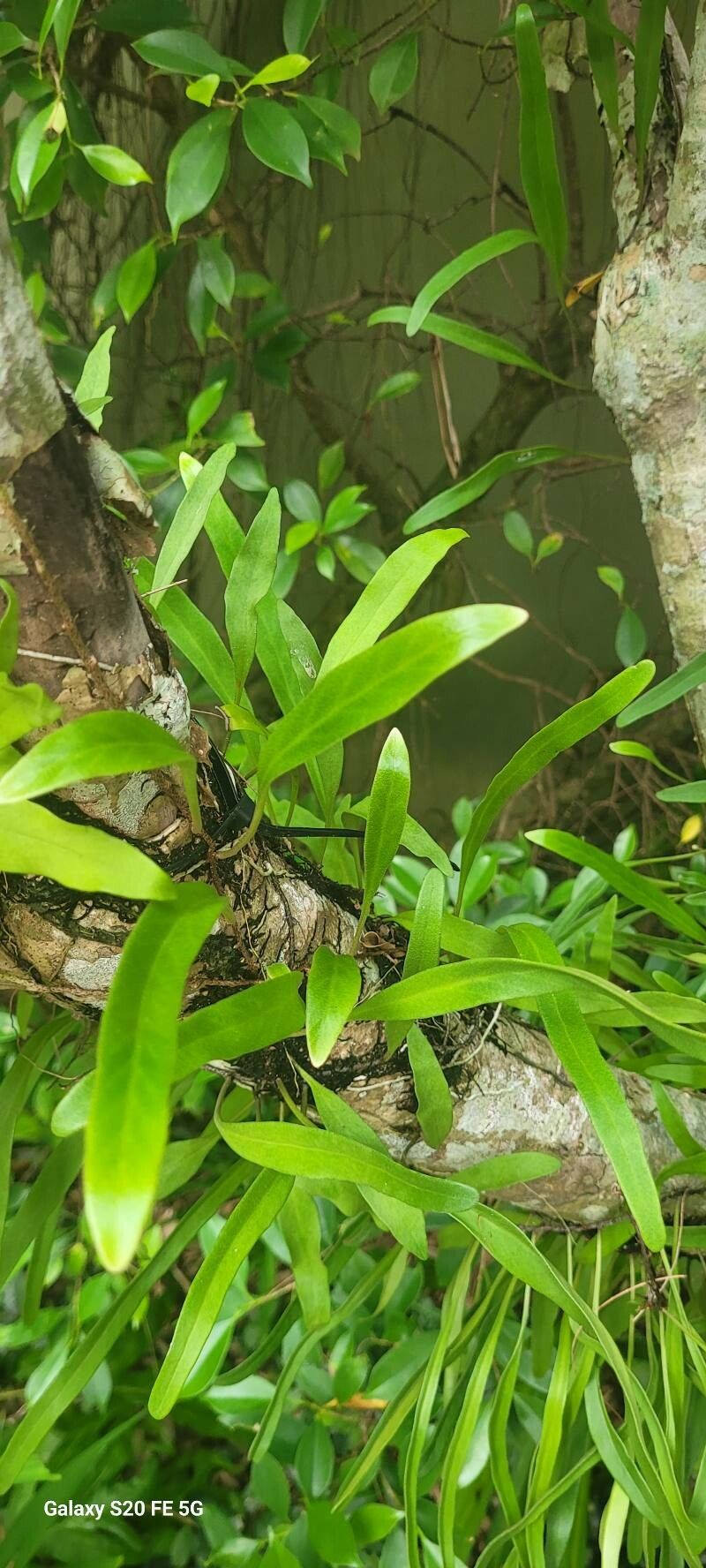
Propagating Pyrrosia lanceolata: Unveiling the Secrets of the Lance-Leaved Pyrrosia
Introduction:
Pyrrosia lanceolata, commonly known as the lance-leaved Pyrrosia or sometimes as a type of “fishbone fern,” is a captivating epiphytic fern prized for its leathery, lance-shaped fronds and often striking silvery scales adorning its leaves and rhizomes. Its relatively low maintenance requirements and attractive appearance have made it a favourite among fern enthusiasts and gardeners seeking to introduce texture and unique foliage to their collections, whether in terrariums, hanging baskets, or mounted on pieces of wood. However, propagating this species presents some interesting challenges, making successful propagation a rewarding accomplishment.
Seed Germination:
Currently, there are no known reliable methods for seed germination propagation of Pyrrosia lanceolata. While Pyrrosia species generally reproduce via spores, the minute size and specific environmental needs of Pyrrosia lanceolata spores often hinder successful germination even under laboratory conditions. Further research is needed to determine if controlled germination is possible.
Cuttings:
Cuttings are not a typically successful method for propagating Pyrrosia lanceolata. The fern relies on its rhizomes for growth and survival, and simply cutting fronds doesn’t generally initiate new plant development.
Division:
Division is the most practical and reliable method for propagating Pyrrosia lanceolata. This involves separating established plants into smaller sections, each containing a portion of healthy rhizome and several fronds.
Challenges: Successfully dividing requires careful consideration. Rough handling can damage the delicate rhizomes, leading to plant failure. Additionally, the division needs to be made at the appropriate time – typically during the active growing season – to maximize the chances of the individual sections forming new roots and fronds.
Practical Tips: Use a sharp, clean knife or shears to divide the rhizome. Ensure each section has a healthy root system and several fronds. Replant the divisions in a well-draining medium similar to their original growing conditions (e.g., a mix of orchid bark, sphagnum moss, and perlite). Keep the newly divided plants consistently moist but not waterlogged, and provide bright, indirect light.
Rewards: Division offers the simplest and fastest way to increase the number of plants, preserving the genetic characteristics of the mother plant. It is ideal for smaller-scale propagation.
Tissue Culture:
Tissue culture propagation of Pyrrosia lanceolata is potentially viable but requires specialized laboratory equipment and expertise.
Challenges: Establishing sterile conditions is crucial to prevent fungal and bacterial contamination. Developing optimal nutrient media and growth regulators for successful shoot proliferation and root formation can be complex and time-consuming, requiring significant experimentation and knowledge of plant tissue culture techniques.
Practical Tips: This method requires a controlled environment with sterile laminar flow hoods, autoclaves, and a well-defined tissue culture protocol. Experienced tissue culture specialists are necessary for successful propagation.
Rewards: Tissue culture offers the potential for large-scale propagation, producing many genetically identical plants rapidly. This can be particularly valuable for rare or endangered variants of Pyrrosia lanceolata.
Conclusion:
Propagating Pyrrosia lanceolata presents a unique set of challenges, emphasizing the importance of proper technique and understanding of the plant’s specific needs. While seed germination and cuttings prove unreliable, division offers a practical approach for hobbyists and small-scale cultivators. Tissue culture holds the promise of large-scale propagation, yet requires specialized knowledge and equipment. The rewards, however – the satisfaction of nurturing these captivating ferns from a division or successfully growing them from tissue culture – are well worth the effort, offering a deeply gratifying experience for the dedicated propagator. Patience, careful handling, and the right growing conditions are key to success, transforming the challenge into a delightful journey in the world of ferns.