
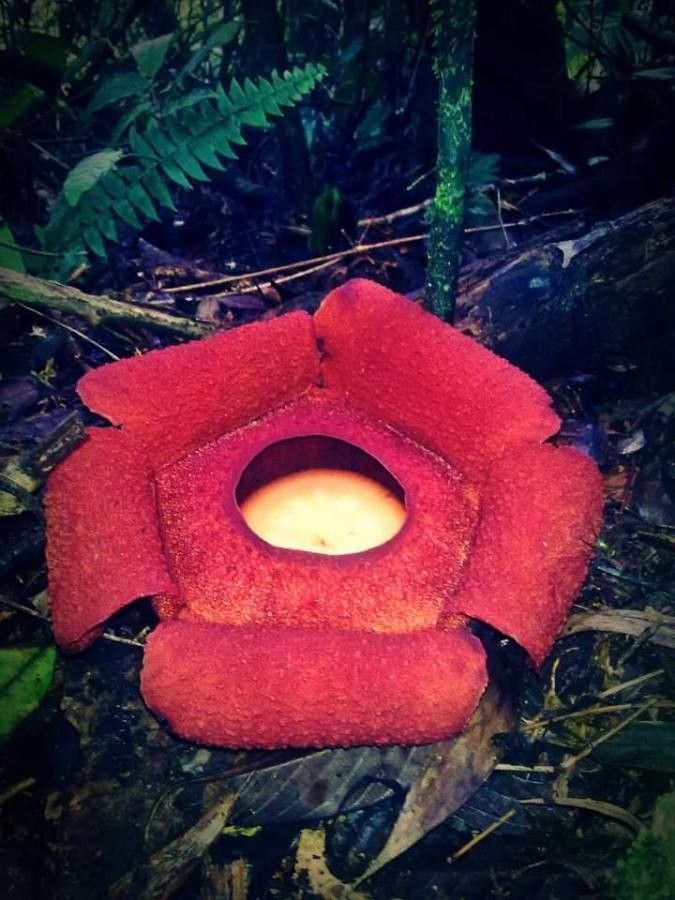
Unraveling the Mysteries: Can You Grow the Corpse Flower, Rafflesia rochussenii, at Home?
The Rafflesia rochussenii, a parasitic plant famed for its pungent, corpse-like odor and gigantic, fleshy flower, sparks intrigue and disgust in equal measure. As one of the largest flowers on Earth, reaching up to 3 feet in diameter, it’s a sight to behold, though you might want to hold your nose. But can you actually cultivate this botanical oddity in your backyard? The answer, sadly, is a resounding no.
Unlike your typical garden variety rose or sunflower, the Rafflesia rochussenii doesn’t play by the usual rules of plant propagation. Its life cycle is a complex, fascinating, and rather gruesome tale of parasitism and deception.
Firstly, this plant lacks the typical plant organs: no leaves, stems, or roots. Instead, it exists as a network of thread-like filaments that live entirely inside the host vine, Tetrastigma. This vine is the only plant capable of sustaining the Rafflesia, and finding it is a feat in itself, occurring naturally only in the rainforests of Southeast Asia.
Secondly, forget seeds and cuttings: propagation of Rafflesia rochussenii occurs through minute buds that form on the host vine. These buds are incredibly rare and susceptible to damage from environmental factors and even the host vine’s immune response. Even if a bud survives, it takes years, sometimes a decade, to develop into a flower.
The flower itself is short-lived, lasting only a few days. During this time, it emits its infamous putrid smell, mimicking rotting flesh to attract carrion flies crucial for pollination. If successful, a large, fruit-like structure develops, filled with thousands of tiny seeds. These seeds are thought to be dispersed by larger animals, but the exact mechanism remains a mystery.
So, what does this mean for aspiring Rafflesia rochussenii cultivators? Simply put, cultivating this species is virtually impossible. The complex interplay of its parasitic nature, specific host vine reliance, and intricate life cycle makes it a challenge even for experienced botanists, let alone home gardeners.
While growing your own Rafflesia rochussenii might remain a pipe dream, this shouldn’t diminish the awe this botanical marvel inspires. Its unique biology and ecological role highlight the incredible diversity of the plant kingdom and remind us of the delicate balance that governs these intricate relationships.
Instead of attempting to tame the wild beauty of Rafflesia, we can appreciate its existence by supporting conservation efforts. By protecting their natural habitats and educating others about the importance of biodiversity, we can ensure future generations have the opportunity to marvel at this extraordinary floral phenomenon.