
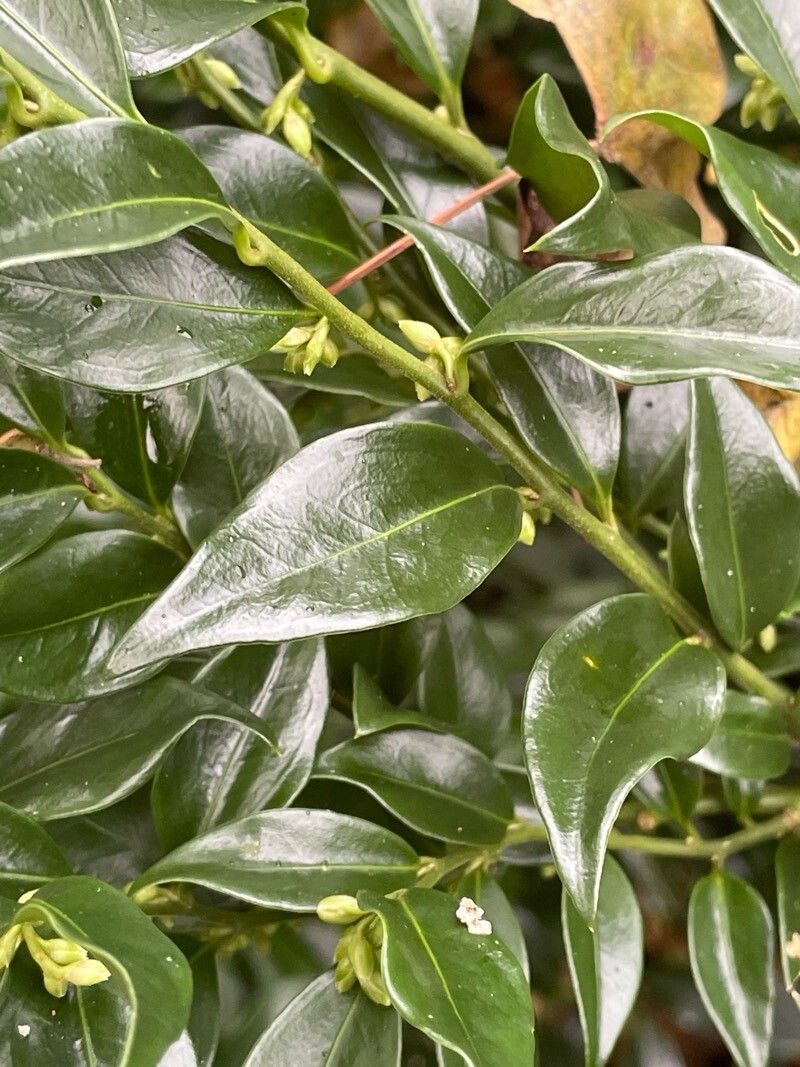
Propagating Sweet Box (Sarcococca confusa): A Gardener’s Guide
Introduction:
Sarcococca confusa, commonly known as Sweet Box, is a highly prized evergreen shrub celebrated for its intensely fragrant, small white flowers that bloom during the winter months when few other plants offer such a delightful scent. Its glossy, dark green foliage provides year-round interest, making it a valuable addition to any garden, especially in shady areas. Its relatively low-maintenance nature further contributes to its popularity among gardeners. However, propagation of Sarcococca confusa can present some challenges, making successful cultivation all the more rewarding.
Seed Germination:
Currently, there are no known reliable methods for seed germination propagation of Sarcococca confusa. While seeds are produced, their germination rate is exceptionally low, and the process is often unpredictable and unreliable, even under carefully controlled conditions. The seeds are very slow to germinate and require specialized circumstances unlikely to be achievable at home.
Cuttings:
Cuttings represent the most widely used and generally successful method for propagating Sarcococca confusa.
Challenges: Rooting can be slow and inconsistent. The success rate depends heavily on factors like the timing of the cutting, the use of rooting hormone, and maintaining consistently high humidity.
Practical Tips: Semi-hardwood cuttings taken in late summer or early autumn are generally recommended. These should be approximately 4-6 inches long, taken from non-flowering stems. Dip the cut ends in a rooting hormone powder before planting in a well-draining propagation mix (e.g., a mix of peat moss and perlite). Maintain high humidity using a propagation dome or plastic bag. Place in a warm, shaded location.
Rewards: Cuttings offer a relatively simple method to increase the number of plants, maintaining the genetic characteristics of the parent plant. This is ideal for propagating particularly desirable cultivars.
Division:
Division is a viable propagation method, but with limitations.
Challenges: Sarcococca confusa does not readily lend itself to division. Established plants are often slow-growing and have a relatively compact root system, making it difficult to divide without significant damage to the plant.
Practical Tips: Division is best attempted in spring or autumn when the plant is actively growing or entering dormancy. Careful digging is crucial to avoid severing roots. Only divide larger, mature plants, using a sharp, clean spade or knife to separate the root system into smaller clumps. Each division should ideally have its own established root system.
Rewards: Division provides a quick way to increase the number of plants, saving time compared to cuttings.
Tissue Culture:
Tissue culture propagation is a possibility but is not commonly practiced for home gardeners.
Challenges: Tissue culture requires specialized equipment, a sterile environment, and considerable expertise in plant tissue culture techniques. It is an expensive and technically demanding method that would generally only be feasible for commercial propagation.
Practical Tips: This method requires a controlled laboratory environment and is beyond the scope of this article.
Rewards: Tissue culture allows for mass propagation of genetically identical plants, offering a significant advantage for commercial nurseries wishing to propagate rare cultivars or large quantities.
Conclusion:
Propagating Sarcococca confusa presents unique challenges. While seed germination is unreliable, cuttings offer a practical method for the home gardener, albeit requiring patience and attention to detail. Division is possible but limited by the plant’s growth habit. Tissue culture remains a specialized technique. The rewards, however, are significant: the opportunity to cultivate this fragrant and beautiful shrub, enjoying the quiet satisfaction of successfully propagating a plant that isn’t easily multiplied. To achieve success, aspiring propagators should prioritize a well-draining medium for cuttings, maintain appropriate humidity, and be patient, accepting that propagation may take time and some losses are inevitable. The delightful winter fragrance of your successfully propagated Sweet Box will make the effort more than worthwhile.