
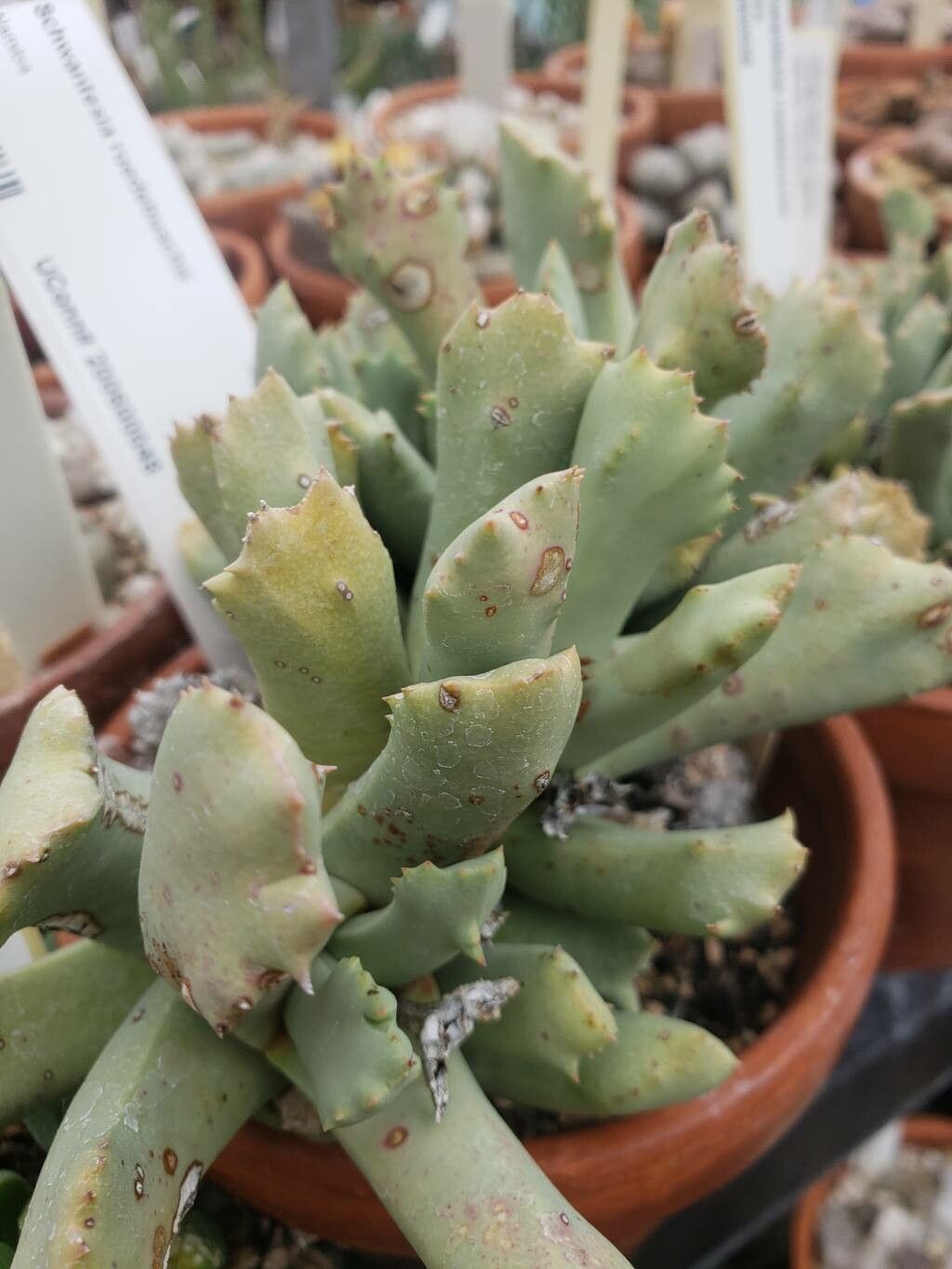
Multiply Your Mesmerizing “Living Stones”: A Guide to Schwantesia ruedebuschii Propagation
“Living stones,” also known as Lithops, are fascinating succulents renowned for their unique camouflage and resemblance to pebbles. But did you know there’s a close cousin that boasts even more captivating foliage? Meet Schwantesia ruedebuschii, a mesmerizing succulent that wows with its intricate patterns and vibrant colours.
This comprehensive guide will walk you through the fascinating world of Schwantesia ruedebuschii propagation. Whether you’re a seasoned plant parent or just starting your succulent journey, these simple techniques will help you multiply your “living stone” collection.
Understanding the Beauty: A Closer Look at Schwantesia ruedebuschii
Before we delve into propagation, let’s appreciate the beauty we’re working with. Schwantesia ruedebuschii originates from the Klein Karoo region of South Africa, where it thrives in arid, rocky landscapes. Its leaves are its claim to fame. Instead of smooth, pebble-like surfaces, this species boasts intricate patterns, grooves, and textures, often in vibrant greens, pinks, and browns.
Propagation Power: Two Techniques to Try
Schwantesia ruedebuschii can be propagated in two main ways:
1. Seed Propagation:
- Timing is Key: Spring offers the ideal conditions for seed sowing.
- Sowing the Seeds: Use a well-draining seed-starting mix or create your own by combining equal parts coarse sand and perlite. Sprinkle the seeds on the surface and lightly press them in – do not bury them.
- Creating the Right Environment: Mist the soil to keep it consistently moist (but not soggy). Cover the tray with a clear plastic wrap or use a humidity dome to retain moisture.
- Light and Patience: Place the tray in a bright, indirectly lit location. Germination can take anywhere from a few weeks to a couple of months. Be patient!
- Transplanting Time: Once seedlings have developed a few true leaves, carefully transplant them into individual pots using a well-draining succulent mix.
2. Division (Offsets):
- Identifying Offsets: Over time, mature Schwantesia ruedebuschii plants will produce smaller “offsets” or “pups” at their base.
- Division Time: It’s best to divide during the plant’s active growing season (spring or early summer).
- Careful Removal: Gently remove the parent plant from its pot. Using clean hands or a sterilized knife, carefully separate the offsets, ensuring each one has its own root system.
- Allow to Callus: Let the separated offsets air dry for a day or two, allowing the cut surfaces to callous over. This prevents rot when planted.
- Potting the Offsets: Plant each offset in its own pot with a well-draining succulent mix, ensuring the leaves sit slightly above the soil line.
- Water Wisely: Wait a few days after potting before watering the offsets to avoid root rot.
Essential Tips for Success:
- Well-Draining Soil: Schwantesia ruedebuschii is highly susceptible to root rot. Always use a well-draining soil mix.
- Water Sparingly: These succulents are adapted to arid conditions. Allow the soil to dry out completely between waterings, and avoid overwatering.
- Bright, Indirect Light: Place your plants in a location with plenty of bright, indirect light.
A Rewarding Propagation Journey:
Propagating Schwantesia ruedebuschii can be immensely rewarding. With patience and a bit of care, you can cultivate a collection of these mesmerizing succulents and enjoy their unique beauty for years to come. So, why not give it a try? Embrace the world of “living stone” propagation and witness the magic of new life unfold.