
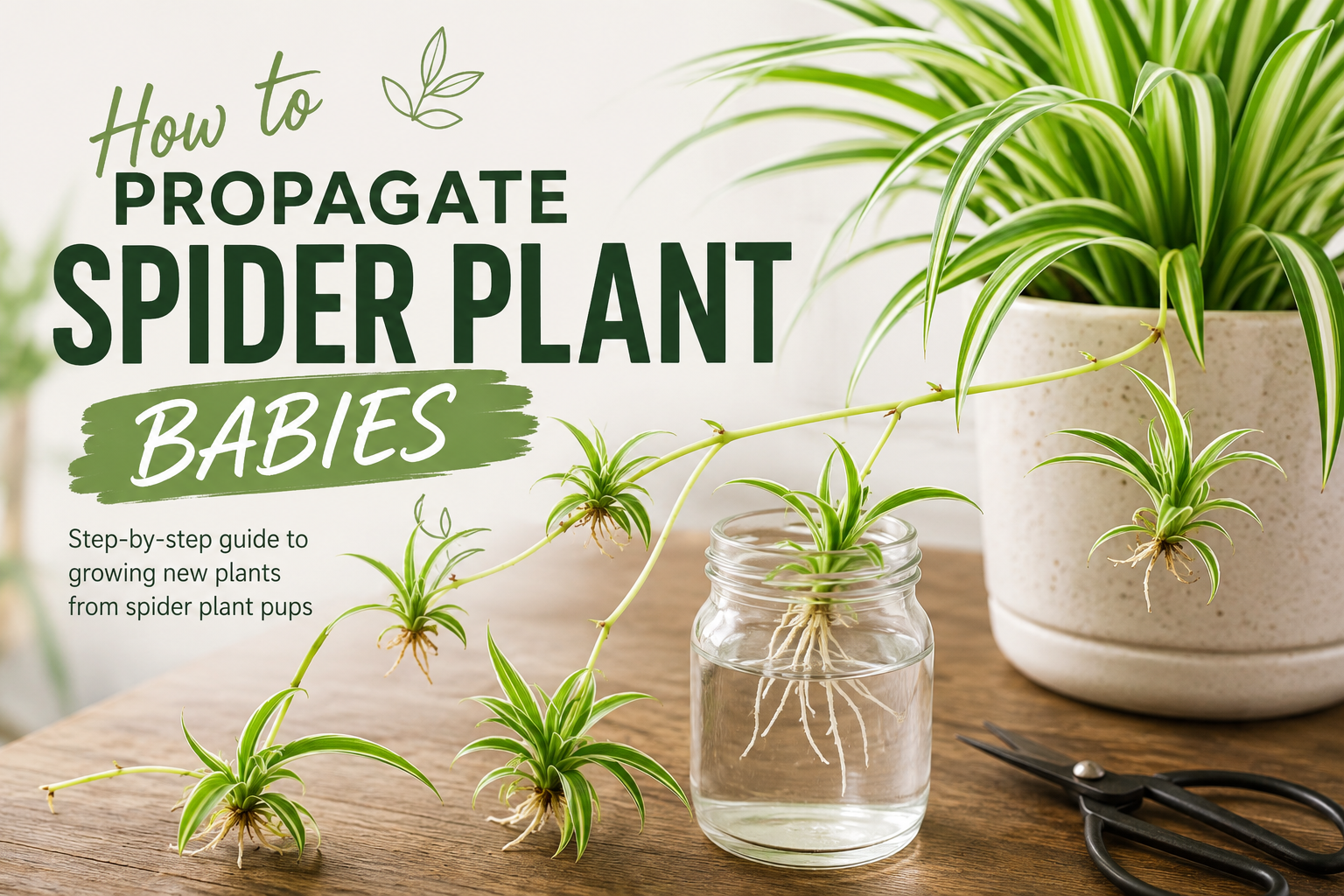
The big spider plant in my kitchen window spends every summer flinging out babies like it’s trying to take over the room. Long arching stems, each one tipped with a tiny plantlet — and every single one of those is a free plant if you want it to be. Rooting spider plant babies is about the easiest propagation project there is, which makes it a perfect one to do with kids or to fill out a shelf on the cheap. Here’s how I do it.
When to take spider plant babies
Because spider plants live indoors, you can technically snip a baby any time of year. That said, the plant grows fastest in spring and summer, so babies taken now will root and settle in more quickly than ones taken in the dead of winter.
More important than the calendar is the baby itself. Flip a plantlet over and look at its base: the ones ready to root have tiny root nubs — small whitish bumps, sometimes little tendrils already reaching out. Those babies will root almost without your help. If the base is smooth with no nubs at all, leave that one on the mother plant a while longer. There’s no prize for rushing.
What you’ll need
- Clean, sharp scissors or snips
- A small glass or jar (for water rooting) or a small pot of fresh potting mix (for soil)
- Room-temperature water
- A warm spot with bright, indirect light
Notice what’s not on the list: rooting hormone. Spider plant babies come pre-loaded with those root nubs, so they don’t need any help.
Step by step
- Pick a baby with visible root nubs on its underside.
- Cut it free close to the base of the plantlet, leaving about a quarter inch of the long stem (the stolon) attached to the baby.
- For water rooting: stand the baby in about half an inch of room-temperature water — just enough to cover the root nubs. Keep the leaves out of the water or they’ll rot.
- For soil rooting: plant it about half an inch deep in lightly moist potting mix, just enough to cover the nubs, and firm it in gently.
- Set it somewhere warm with bright, indirect light. Don’t let it sit around unplanted after cutting — the longer a cut baby waits, the more likely it wilts.
- Water babies: refresh the water every few days, before it goes cloudy. Soil babies: keep the mix consistently moist but never soggy.
- If you rooted in water, pot the baby up in soil once the roots are two to three inches long.
The number one killer: rot
When a spider plant baby fails, it’s almost never because it couldn’t grow roots — it’s because it rotted. And most of the time, that comes down to too much water in one form or another. In a glass, it’s leaves sitting below the waterline or water left until it turns murky. In soil, it’s a pot that’s too big. A large pot holds far more wet soil than a tiny root system can drink, so it stays soggy for days and the new roots sit in it and rot. Keep the pot small — a little nursery pot is plenty — and let it graduate to something bigger once it’s actually growing.
Water or soil — which is better?
Water is the fun one. You get to watch the roots appear, usually within seven to ten days, and kids love checking on them. The trade-off is that water roots are a bit softer, and the plant has to adjust when you eventually move it to soil.
Soil is the sturdy one. Roots that grow in potting mix push against real resistance, so they come out stronger, and there’s no transplant shock later because the baby is already home. It can take a few days longer to get going, and you don’t get the show.
There’s also a third option I like for anyone nervous about cutting: don’t cut yet. Set a small pot of moist soil next to the mother plant and rest a still-attached baby on top of it, root nubs down. It’ll root right there while the mother keeps feeding it, and once it’s clearly established, you snip the cord. It’s the closest thing to a guaranteed success in propagation.
How long it takes, and aftercare
Most healthy babies root within one to three weeks given warmth and bright, indirect light. After that, treat your new spider plant like the easygoing houseplant it is: let the top of the soil dry slightly between waterings, keep it out of harsh direct sun, and hold off on fertilizer until you see fresh new leaves — a sign the roots are doing their job. Before long it’ll be sending out babies of its own, and the whole thing starts over.
Frequently asked questions
Can you put spider plant babies straight into soil?
Yes — as long as the baby has root nubs, you can skip the water stage entirely and plant it about half an inch deep in moist potting mix. Soil-rooted babies tend to grow sturdier roots, too.
How big should a spider plant baby be before you cut it off?
Size matters less than roots. Look underneath for the little whitish root nubs — a baby with nubs is ready regardless of how big it is, and a smooth-bottomed baby isn’t, even if it’s large.
How long do spider plant babies take to root in water?
New roots usually start showing within seven to ten days. Wait until they’re two to three inches long before moving the baby into a pot of soil.
Can you root a spider plant baby without cutting it off?
Yes. Rest a still-attached baby on a small pot of moist soil placed next to the mother plant. Once it has rooted in and looks established, cut the connecting stem. This is the gentlest, most reliable method of all.
Why is my new spider plant baby turning brown and mushy?
That’s rot, and it means too much water. In a glass, make sure only the base of the baby touches the water and refresh it every few days. In soil, move it to a smaller pot and let the mix dry out slightly before watering again.
Related guides
- Grow your own African violets: a simple guide to leaf propagation
- Propagate your Christmas cactus: rooting cuttings
- Grow your own sweet potato vine: easy propagation guide
— Nora Ellison