
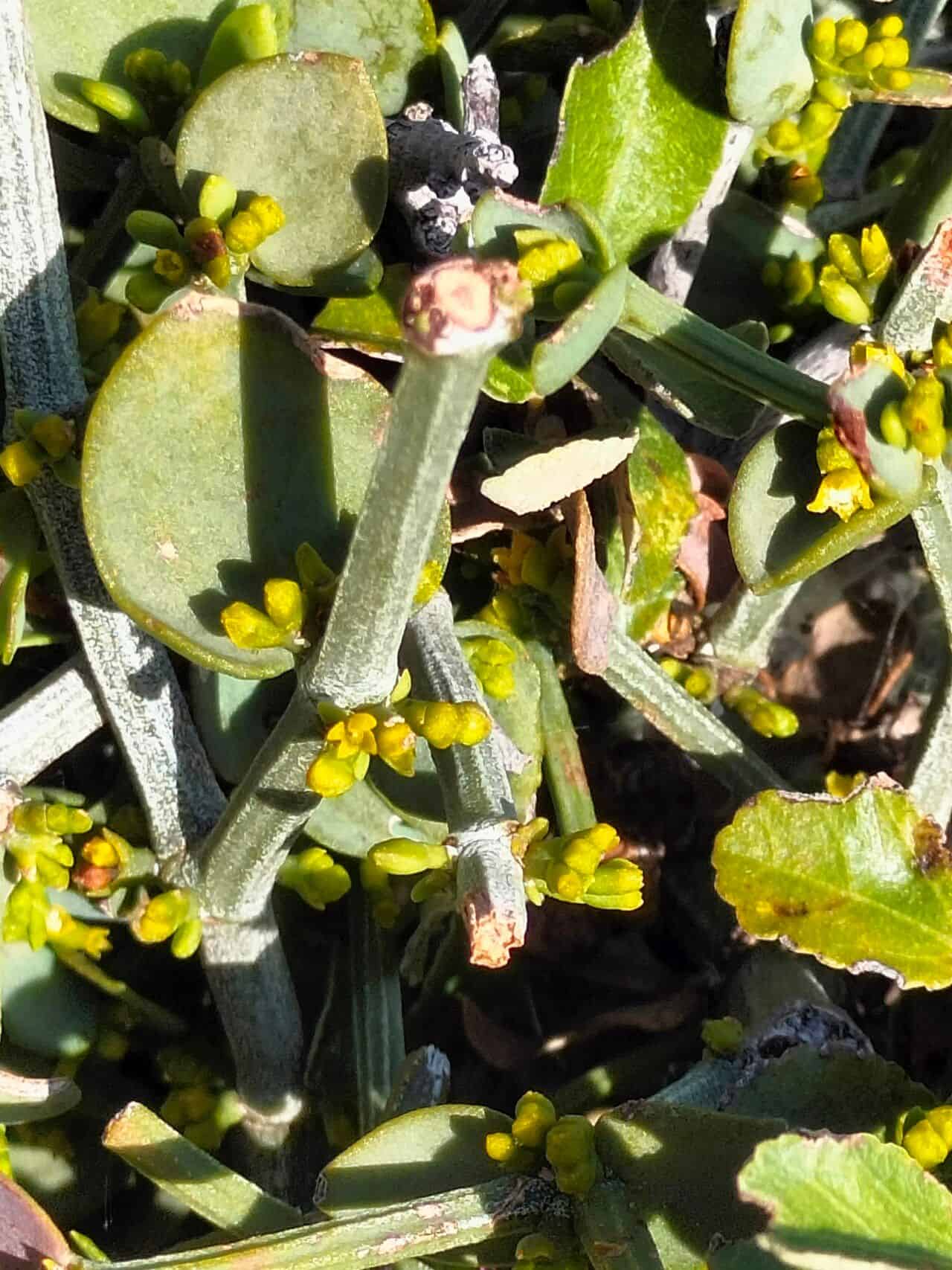
A Sticky Situation: Propagating the Round-Leaved Mistletoe (Viscum rotundifolium)
The world of mistletoe often evokes images of holiday romance and festive decorations. But beyond its festive charm lies a fascinating group of plants with unique lifecycles and propagation methods. Today, we’re delving into the intriguing world of Viscum rotundifolium, the Round-leaved Mistletoe, and exploring how to propagate this fascinating species.
Understanding the Nature of the Beast (Well, Plant):
Viscum rotundifolium, a relative of the European mistletoe, is a hemiparasitic plant. In simpler terms, it’s a bit of a botanical freeloader. While it can photosynthesize to produce some of its own food, it relies on a host tree for water and nutrients, attaching itself through specialized structures called haustoria.
This parasitic lifestyle makes propagating V. rotundifolium a unique challenge. Unlike many plants easily grown from cuttings or seeds in pots, mistletoe propagation necessitates a living host.
The Art of Mistletoe Matchmaking:
Before diving into propagation techniques, it’s crucial to choose the right host. V. rotundifolium displays a preference for specific tree species, and success hinges on a compatible pairing. Research the mistletoe’s natural range and preferred hosts in your area. Once you’ve identified a suitable candidate, ensure the tree is healthy and mature enough to support the mistletoe without significant harm.
Sowing the Seeds of Success (Literally):
- Fruitful Timing: Harvest ripe mistletoe berries in late winter or early spring. The berries should be plump, slightly soft, and vibrant in color.
- Sticky Situation: Mistletoe berries contain a sticky substance called viscin. This natural glue plays a crucial role in securing the seed to the host branch.
- Strategic Placement: Select young, healthy branches on the outer canopy of your chosen tree. Using a gentle scraping motion, carefully remove a small portion of the bark. Avoid damaging the branch’s cambium layer, the living tissue responsible for growth.
- Seed to Bark: Gently press a mistletoe berry onto the exposed area, ensuring the sticky viscin adheres it firmly. You can repeat this process with several berries on different branches.
- Patience is Key: Now comes the waiting game. It may take several months, even a year, for the seeds to germinate and establish a connection with the host tree. Monitor the branches periodically for signs of new growth.
Ethical Considerations:
While propagating mistletoe can be a rewarding endeavor, it’s crucial to approach it with responsibility. Avoid excessive harvesting from wild populations, as this can negatively impact both the mistletoe and its host trees. Choose cultivated sources whenever possible, and always obtain any necessary permits before collecting from the wild.
Beyond Propagation:
Successfully establishing V. rotundifolium on your chosen host is just the beginning. Regularly monitor the mistletoe’s growth, ensuring it doesn’t overwhelm the host tree. Prune as needed to maintain a healthy balance between the two.
Propagating Viscum rotundifolium is not your average gardening endeavor. It demands patience, respect for the delicate balance of nature, and a touch of botanical matchmaking. However, the reward of nurturing this unusual and fascinating plant is a testament to the wondrous interconnectedness of the natural world.