
Introduction
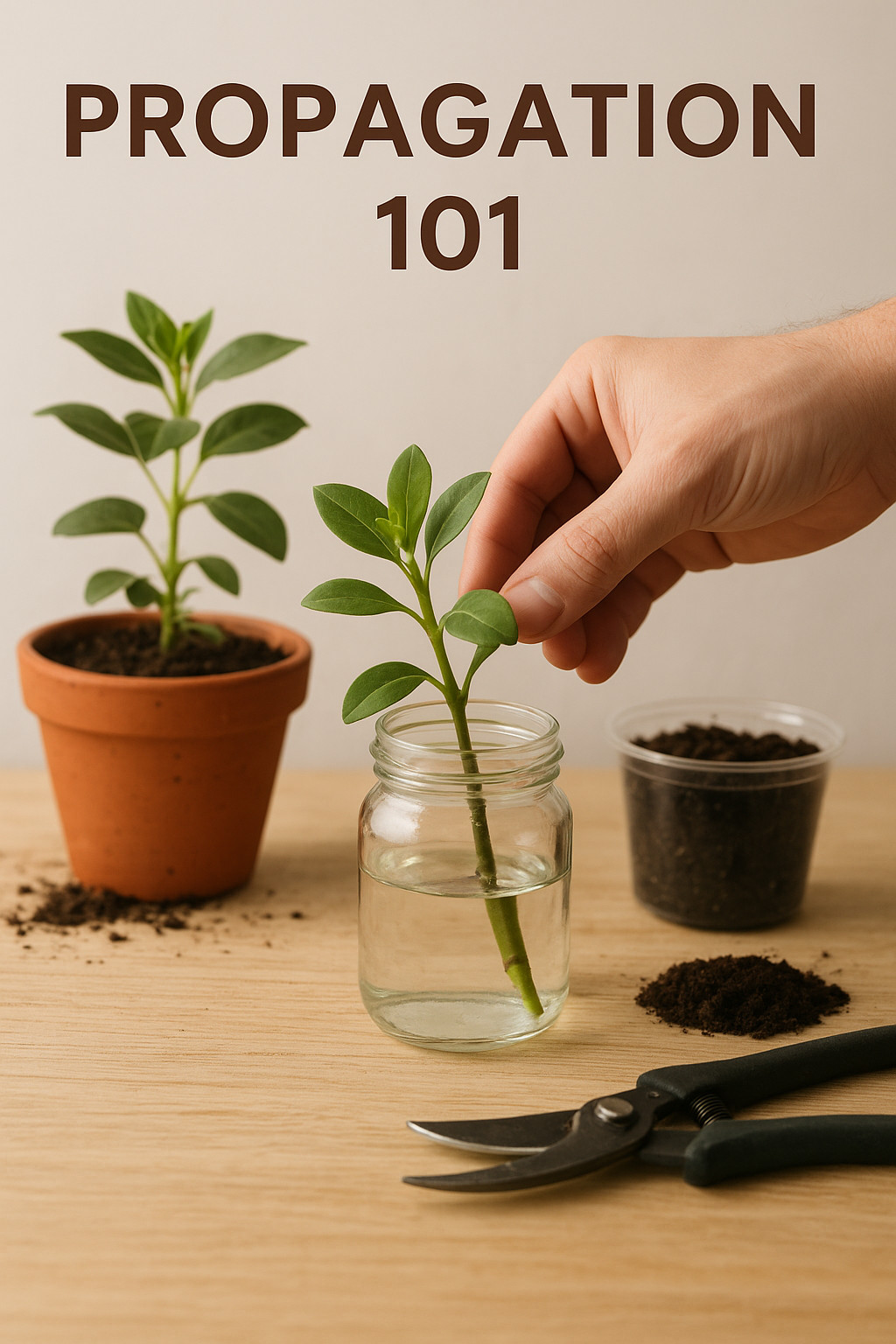
Plant propagation is one of the most fundamental practices in horticulture and agriculture. It is the process of creating new plants from existing ones, and it has been central to human food production, gardening, and landscaping for thousands of years. Whether you’re sowing seeds in a tray or cloning a prized rose through cuttings, propagation is the key to expanding and sustaining plant life.
Two Main Types of Propagation
1. Sexual Propagation (Seeds)
Sexual propagation occurs through seeds, the product of pollination and fertilisation. Because seeds carry genetic material from two parent plants, each seedling is unique.
- Advantages:
- Produces genetic diversity, which strengthens plant populations.
- Easy and inexpensive for many species.
- Long-term storage possible (seed banks).
- Disadvantages:
- Not all seeds breed true to type—offspring may not resemble the parent plant.
- Germination rates vary.
- Some species have dormancy requirements that make seed propagation difficult.
2. Asexual (Vegetative) Propagation
Vegetative propagation involves creating new plants that are genetically identical to the parent, often through cuttings, grafting, layering, or tissue culture.
- Advantages:
- Clones maintain desirable traits (flower color, fruit size, disease resistance).
- Faster maturity compared to seed-grown plants.
- Can propagate plants that do not produce viable seeds.
- Disadvantages:
- Reduced genetic diversity makes plants more vulnerable to pests and diseases.
- Requires more skill, equipment, and sometimes controlled environments.
Why Propagation Matters
Food Security
Crops like bananas, potatoes, and grapes rely heavily on vegetative propagation to maintain consistent quality and yield.
Horticulture & Landscaping
Propagation makes it possible to mass-produce ornamental plants, ensuring that identical cultivars are available to gardeners and landscapers worldwide.
Conservation
Propagation is critical for preserving endangered species. Rare plants can be multiplied through cuttings or tissue culture, reducing pressure on wild populations.
Innovation & Breeding
While sexual propagation provides diversity for breeding programs, vegetative propagation ensures that once a superior cultivar is developed, it can be widely and reliably distributed.
Everyday Examples of Propagation
- Growing tomatoes from seed packets.
- Rooting basil or rosemary cuttings in water.
- Air-layering a houseplant like fiddle-leaf fig.
- Commercial cloning of orchids and bananas through micropropagation.
Conclusion
Propagation is more than a technique it is the foundation of modern horticulture and agriculture. By understanding the basics of sexual and asexual propagation, we not only gain practical skills for the garden but also an appreciation for how these methods support food security, plant diversity, and conservation worldwide.