
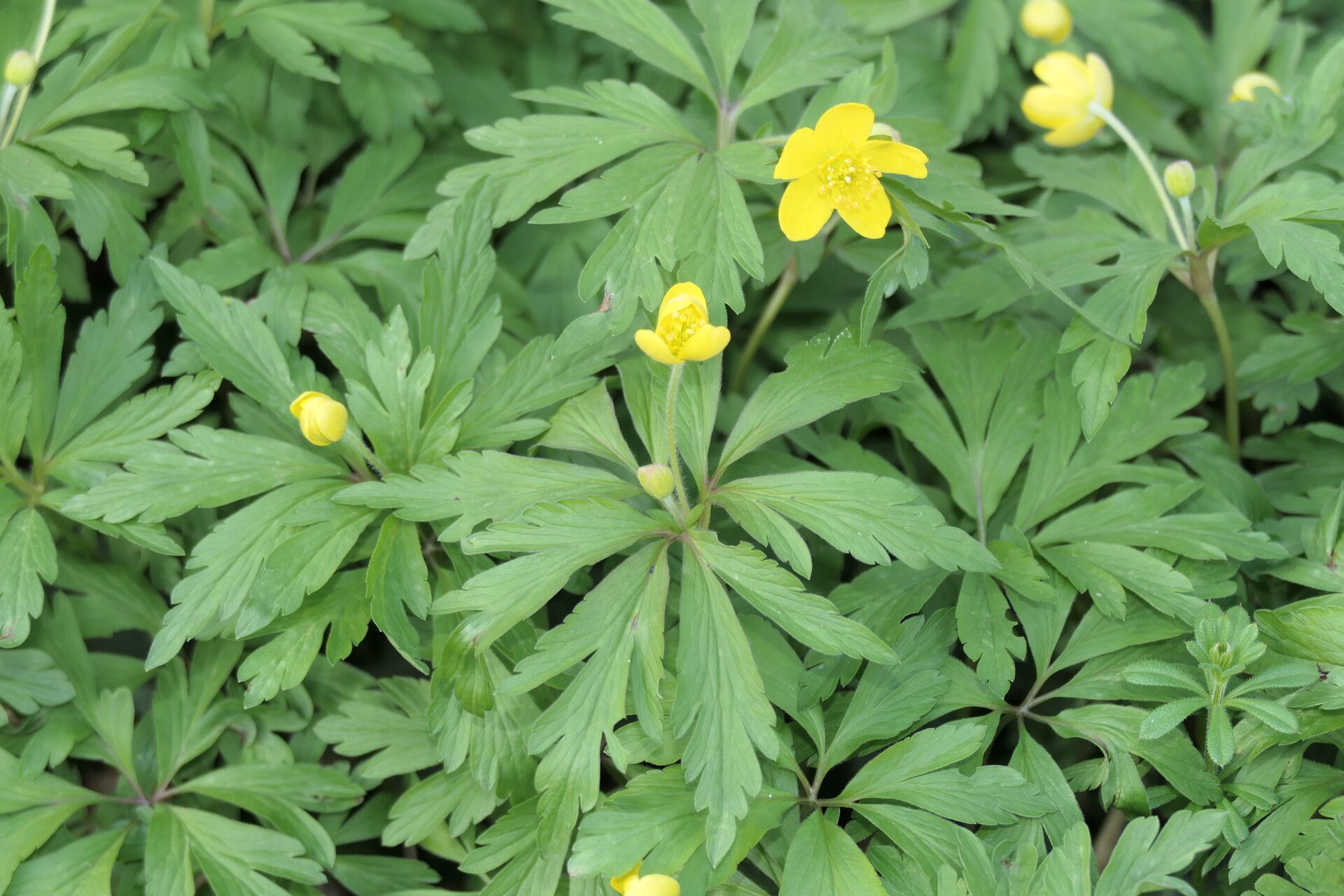
Propagating the Yellow Wood Anemone (Anemonoides ranunculoides): A Gardener’s Guide
Introduction:
Anemonoides ranunculoides, commonly known as the Yellow Wood Anemone, is a charming spring ephemeral boasting delicate, bright yellow, buttercup-like flowers. Its low-growing habit and airy foliage make it a prized addition to woodland gardens and shady borders. Its ease of establishment in suitable conditions contributes to its popularity, but propagation can present some unique challenges. This guide explores various methods, highlighting their feasibility and offering practical advice for successful propagation.
Seed Germination:
Currently, there are no known reliable methods for seed germination propagation of Anemonoides ranunculoides. While seeds may be produced, their germination rate is extremely low, making this method impractical for most gardeners. The challenges likely stem from the plant’s reliance on specific mycorrhizal fungi for successful seedling establishment, a difficult symbiotic relationship to replicate artificially.
Cuttings:
Propagating Yellow Wood Anemone from cuttings is also generally considered unreliable. While stem cuttings might theoretically be attempted, the success rate is very low because of the plant’s delicate nature and susceptibility to rot. The lack of readily available resources or established protocols for this method further reinforces its impracticality.
Division:
Division is the most reliable and commonly used method for propagating Anemonoides ranunculoides. This involves carefully separating established clumps of the plant into smaller sections, each containing roots and a portion of the rhizome.
- Challenges: The best time to divide is in late summer or early autumn, after flowering but before the onset of severe frost. Care must be taken to avoid damaging the delicate roots. Overcrowding of the original clump may result in smaller blooms.
- Practical Tips: Use a sharp, clean spade or knife to divide the clump into sections containing several growth buds. Handle the divisions gently. Replant the divisions immediately in well-drained, humus-rich soil in a partially shaded location, ideally mimicking its natural woodland habitat.
- Rewards: Division provides a relatively quick and easy method of increasing the number of plants. It maintains the genetic characteristics of the parent plant, ensuring uniformity in the resulting progeny.
Tissue Culture:
Tissue culture propagation of Anemonoides ranunculoides is possible but requires specialized laboratory equipment and expertise. It is not a method readily accessible to the home gardener.
- Challenges: Establishing sterile conditions and developing appropriate culture media are crucial. The process requires careful monitoring and adherence to specific protocols to prevent contamination and optimize growth.
- Practical Tips: This method is best left to professional plant propagators or researchers.
- Rewards: Tissue culture allows for large-scale propagation and the potential for disease-free plants. It’s also valuable for conservation efforts involving rare or endangered varieties.
Conclusion:
While seed germination and cuttings prove impractical for the average gardener, division offers a straightforward and dependable approach to propagating Anemonoides ranunculoides. While tissue culture is a viable option for large-scale propagation, its complexity limits its feasibility for home use. The difficulty in propagating this lovely plant, especially contrasted with its successful establishment once planted, only adds to the gardener’s sense of accomplishment when finally surrounded by a thriving patch of these cheerful yellow blooms. The patience and care required in division—the most accessible propagation method—are handsomely rewarded by the delicate beauty of the Yellow Wood Anemone gracing your garden year after year. Therefore, embrace the challenge; the satisfying results are well worth the effort.