
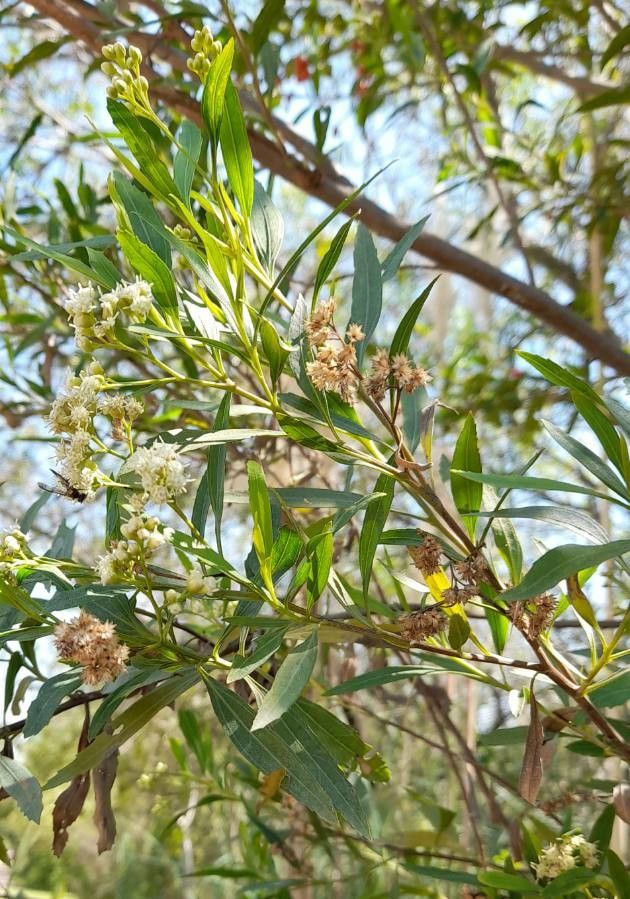
Propagating Baccharis salicina: A Guide to the Mulefat’s Multiplication
Introduction:
Baccharis salicina, commonly known as mulefat, is a resilient shrub native to southwestern North America. Characterized by its lanceolate leaves, energetic growth habit, and tolerance of arid conditions, it’s a popular choice among gardeners seeking drought-tolerant landscaping options. Its ability to stabilize soil and provide habitat for wildlife further enhances its horticultural significance. However, despite its widespread use, propagating mulefat can present unique challenges. This article explores various methods for propagating Baccharis salicina, weighing their effectiveness and providing practical advice for aspiring propagators.
Seed Germination:
Currently, there are no known reliable methods for seed germination propagation of Baccharis salicina. While the plant does produce seed, germination rates are notoriously low, and successful germination under controlled conditions has not been consistently demonstrated. Factors such as seed dormancy mechanisms and specific environmental requirements remain largely unknown. Therefore, relying on seed propagation for Baccharis salicina is impractical for most gardeners.
Cuttings:
Cuttings represent the most reliable method for propagating Baccharis salicina.
Challenges: The success rate can vary depending on the timing and technique. Using semi-hardwood cuttings taken in late summer or early autumn appears to yield the best results.
Practical Tips: Take cuttings approximately 4-6 inches long, removing lower leaves to prevent rotting. Dip the cut ends in rooting hormone before planting in a well-draining moist medium, such as a mix of perlite and vermiculite. Maintain high humidity (e.g., using a propagation dome) and moderate warmth. Rooting typically takes several weeks.
Rewards: This method is relatively simple, provides high success rates compared to other methods, and allows for the quick multiplication of desirable genotypes.
Division:
Division of established Baccharis salicina plants is a feasible propagation method, although not as efficient as cuttings.
Challenges: This method is limited by the availability of mature plants large enough to divide. Care must be taken to avoid damaging the root system during division.
Practical Tips: Division is best performed in early spring or autumn. Dig up the mature plant, carefully separate the root ball into smaller sections, ensuring each section has healthy roots and shoots. Replant the divisions immediately, ensuring proper soil moisture and avoiding transplanting shock.
Rewards: This offers a relatively easy propagation method for existing plants and doesn’t require specialized equipment.
Tissue Culture:
While tissue culture is a theoretically viable method, it is rarely employed for propagating Baccharis salicina due to its complexity and cost.
Challenges: Establishing a successful tissue culture protocol requires specialized knowledge, equipment, and sterile conditions. The optimization of growth media and hormone combinations can be time-consuming and requires experimentation.
Practical Tips: This method is best left to professional nurseries or research institutions with access to the necessary resources.
Rewards: Tissue culture offers the potential for mass propagation of disease-free plants and the preservation of genetic diversity.
Conclusion:
Propagating Baccharis salicina presents unique challenges, with cuttings emerging as the most reliable and practical method for most gardeners. While seed germination and division are possible, their success is less predictable. Tissue culture remains a sophisticated option for large-scale propagation but is impractical for home gardeners. The rewards of successfully propagating this resilient shrub are numerous: the satisfaction of nurturing a plant from a cutting, the contribution to landscape beautification, and the knowledge of contributing to the preservation of this ecologically important species. Don’t be discouraged by the challenges; perseverance and attention to detail will ultimately lead to the successful cultivation and propagation of the versatile and hardy mulefat.