
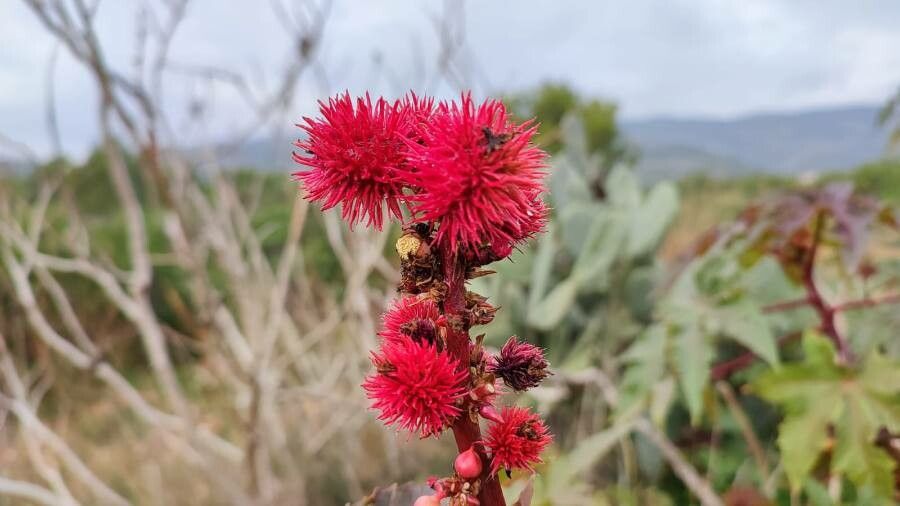
Unleashing the Majestic Castor Bean: A Guide to Propagating Ricinus communis
The castor bean plant, known scientifically as Ricinus communis, is a dramatic statement piece for any garden. With its massive, exotic leaves and intriguing seed pods, this fast-growing annual commands attention. But did you know that starting your own castor bean plant is surprisingly easy? Let’s explore the world of Ricinus communis propagation, unlocking the secrets to cultivating this botanical marvel.
The Power of Seeds: The Most Common Route
The most straightforward path to propagating Ricinus communis lies within its distinctive seeds. These seeds, often mottled and beautiful in their own right, hold the potential for a new generation of plants.
Here’s how to do it:
- Source your seeds: Castor bean seeds are readily available at garden centers or online. You can also harvest mature seeds from existing plants, ensuring they’re completely dried before storing.
- Scarification for Success: Castor bean seeds have a hard outer coating that can hinder germination. Gently nicking this shell with a file or sandpaper (scarification) allows water to penetrate and promotes sprouting.
- Soaking for Speedy Sprouts: Soak the scarified seeds in water for 24 hours before planting. This step further softens the seed coat and encourages quicker germination.
- Planting Time: Sow seeds about an inch deep in a well-draining seed starting mix. Water well and provide warmth (around 70-75°F) for optimal germination, which typically occurs within 1-3 weeks.
- Transplanting with Care: Once seedlings develop a few sets of true leaves, they’re ready for transplanting. Choose a sunny location with well-draining soil and ample space, as castor bean plants can grow rapidly.
Beyond Seeds: Exploring Cuttings
While seed propagation reigns supreme for Ricinus communis, you can also propagate this fascinating plant through cuttings.
Here’s a quick guide:
- Timing is Key: Take cuttings during the plant’s active growing season, ideally in late spring or early summer.
- Selecting the Right Cuttings: Look for healthy, non-flowering stems that are about 4-6 inches long.
- Preparing the Cutting: Remove leaves from the bottom two inches of the cutting. You can dip the cut end in rooting hormone to encourage faster root development.
- Planting and Patience: Plant the cutting in a pot filled with a well-draining potting mix. Keep the soil moist and place the pot in a warm, bright location, out of direct sunlight.
- Rooting and Beyond: Within a few weeks, your cutting should develop roots. Once you observe new growth, you can transplant the rooted cutting to a larger pot or directly into the garden.
A Word of Caution: Remember that Ricinus communis seeds are highly poisonous if ingested. Handle them with care, particularly around children and pets.
Conclusion: Cultivating Wonder in Your Garden
Propagating Ricinus communis is a rewarding endeavor that allows you to witness the lifecycle of this extraordinary plant firsthand. Whether you choose to start from seed or experiment with cuttings, the process is surprisingly approachable. By following these simple guidelines, you’ll be well on your way to cultivating the majestic beauty of the castor bean plant in your own garden.