
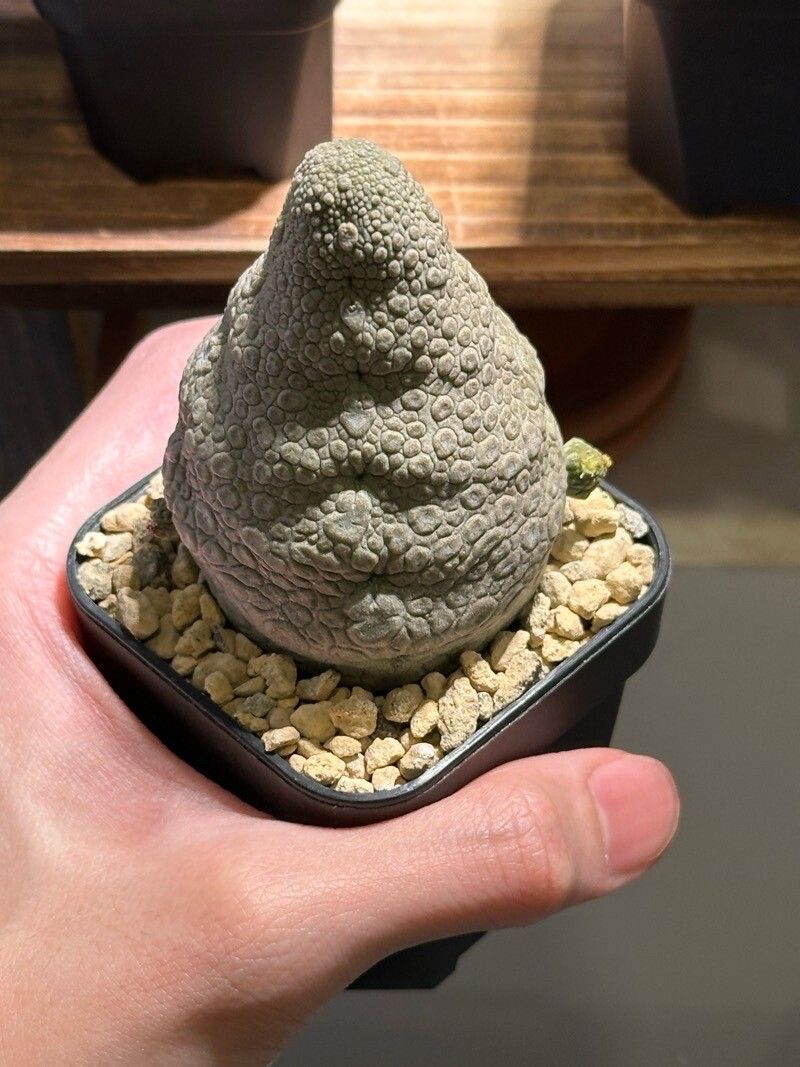
Taming the Giant: Propagating the Bizarre Beauty of Pseudolithos gigas
The plant world is full of surprises, but few are as captivatingly strange as the Pseudolithos gigas. This succulent, hailing from arid regions of Somalia, looks more like a lump of otherworldly rock than a living organism. But beneath its rough, mottled exterior lies a fascinating plant begging to be propagated and shared.
What Makes Pseudolithos gigas So Unique?
This slow-growing succulent belongs to the Apocynaceae family, known for its unusual members like the Stapelia (carrion flower). Its mottled, grayish-green body, covered in warty tubercles, acts as a water reservoir, allowing it to survive harsh droughts. Pseudolithos gigas also produces mesmerizing, star-shaped, deep maroon flowers, often with a pungent scent.
The Challenge and Reward of Propagation
While Pseudolithos gigas is a slow grower, propagation offers a chance to multiply these unique plants and deepen your appreciation for their resilience. However, be warned: these beauties are not for the faint of heart.
Two Main Methods of Propagation:
Seeds: The most common method, though it requires patience.
- Source: Seeds are readily available from reputable online succulent sellers.
- Process: Sow freshly harvested seeds in a well-draining mineral substrate (pumice, perlite, and coarse sand mix works well). Keep the soil consistently moist, but not waterlogged. Provide bright, indirect light and maintain temperatures between 70-80°F. Germination can take several weeks.
- Pros: Relatively easy and affordable. Allows for growing a larger number of plants.
- Cons: Slow process, with plants taking years to reach a significant size. High variability in appearance.
Cuttings: Though less common, this method offers faster growth but is riskier.
- Source: Obtain a healthy, mature Pseudolithos gigas.
- Process: Use a sterilized, sharp knife to remove an offset or branchlet. Let the cutting dry for a few days to allow a callus to form. Plant the calloused end in a well-draining mix similar to the seed starting mix. Keep the soil barely moist and provide bright, indirect light. Rooting can take several weeks.
- Pros: Faster growth than seeds.
- Cons: Higher risk of rot and failure. Limited to the number of offsets available.
Key Tips for Success:
- Patience is paramount: Pseudolithos gigas is a slow grower. Do not be discouraged if you don’t see immediate results.
- Well-draining soil is crucial: Use a specialized succulent mix or create your own with inorganic materials.
- Water sparingly: Overwatering is the fastest way to kill a Pseudolithos gigas. Allow the soil to dry completely between waterings.
- Provide ample light: Bright, indirect light is essential for healthy growth.
- Be vigilant for pests: Mealybugs and spider mites can be problematic.
Propagating Pseudolithos gigas is a rewarding endeavor for any plant enthusiast seeking a challenge. While it requires patience and diligence, the joy of nurturing these otherworldly plants from seed or cutting to maturity is a deeply satisfying experience. As your collection of these fascinating succulents grows, so will your admiration for the bizarre beauty and resilience of nature.