
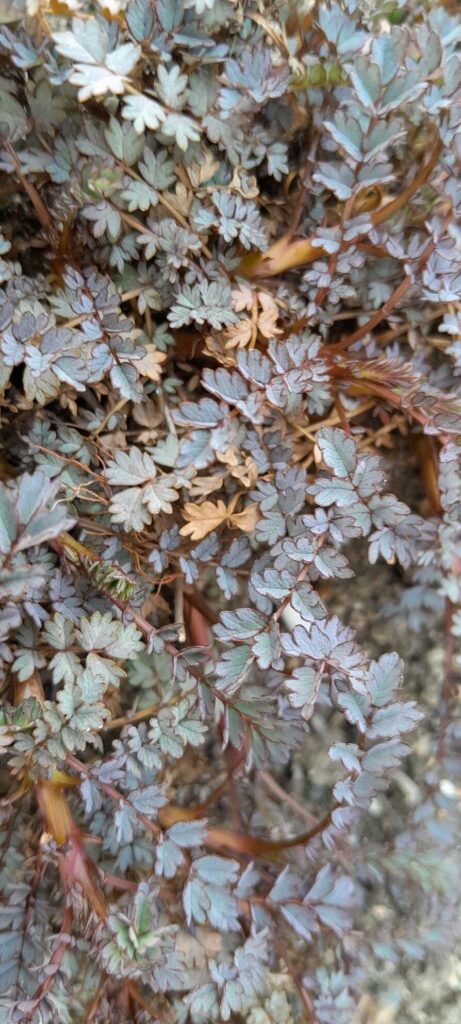
Propagating Acaena saccaticupula: A Guide for Garden Enthusiasts
Introduction
Acaena saccaticupula, commonly known as New Zealand copper-leaf or bidibidi, is a low-growing, spreading perennial valued for its attractive, copper-coloured foliage and spiky, burr-like seed heads. Its hardiness, drought tolerance, and ground-covering habit make it a popular choice among gardeners for erosion control, rock gardens, and as a textural element in borders. However, propagating Acaena saccaticupula presents some unique challenges, contributing to its relative scarcity in some areas despite its horticultural merits. Understanding the various propagation methods and their associated difficulties will significantly improve your chances of success.
Seed Germination
Currently, there are no known reliable methods for seed germination propagation of Acaena saccaticupula. While seeds may be produced, germination rates are extremely low, likely due to underdeveloped seed dormancy mechanisms or other factors inhibiting germination. Further research into specific germination requirements, such as light exposure, temperature, and pre-treatment methods, is needed to determine if seed propagation is a viable option.
Cuttings
Cuttings offer a more reliable method of propagation for Acaena saccaticupula compared to seed.
-
Challenges: Rooting success can be variable and dependent on factors like the age of the cuttings, the time of year, and environmental conditions. Softwood cuttings taken in spring or early summer usually yield the best results.
-
Practical Tips: Use semi-hardwood cuttings taken from non-flowering stems. Remove lower leaves to prevent rotting, and dip the cut ends in rooting hormone before planting in a well-draining propagation mix (e.g., perlite and peat moss). Maintain consistently moist but not soggy conditions and high humidity, ideally using a humidity dome or propagation tray. Misting regularly is beneficial.
- Rewards: Cuttings offer a relatively quick method of producing new plants, preserving the genetic characteristics of the parent plant. They are easier to handle than division and allow for more controlled propagation.
Division
Division is a straightforward and effective method for propagating established Acaena saccaticupula plants.
-
Challenges: Division should only be performed on mature, well-established plants. Care must be taken to avoid damaging the root system, which can hinder the growth and establishment of new plants. Overly small divisions may struggle to thrive.
-
Practical Tips: The best time for division is in spring or autumn. Carefully dig up the plant, gently separating it into smaller sections, each with its own healthy roots and shoots. Plant the divisions immediately in well-prepared soil ensuring ample spacing to accommodate their mature size.
- Rewards: Division is a relatively quick and easy method that offers a high success rate, ensuring the preservation of desirable plant characteristics. This method allows for efficient propagation of specific cultivars.
Tissue Culture
Tissue culture offers the potential for large-scale propagation of Acaena saccaticupula but presents its own set of hurdles.
-
Challenges: Establishing aseptic conditions and optimizing the medium and growth hormones are crucial. The establishment of a successful tissue culture protocol for this species requires specialized knowledge and equipment. It is generally not a practical option for home gardeners.
-
Practical Tips: Sterile procedures are essential to prevent contamination. Various media formulations and hormone combinations would need to be tested experimentally to optimize growth and shoot multiplication.
- Rewards: Tissue culture offers the potential for mass propagation, producing large numbers of genetically consistent plants in a short period. It allows for rapid scaling without the limitations of seed or cutting propagation.
Conclusion
Propagating Acaena saccaticupula presents unique challenges, with propagation from seed proving unreliable at present. Cuttings offer a relatively straightforward and effective approach for home gardeners, while division is best suited for established plants. Tissue culture presents a path towards mass propagation but requires specialized expertise and laboratory facilities. The rewarding outcome of successfully cultivating this tenacious ground cover, despite the inherent difficulties, provides a unique sense of satisfaction for the dedicated gardener. With careful attention to technique and persistence, even the most challenging propagation methods can become a source of pride and a pathway to expanding the beauty of this unique plant within your garden.