
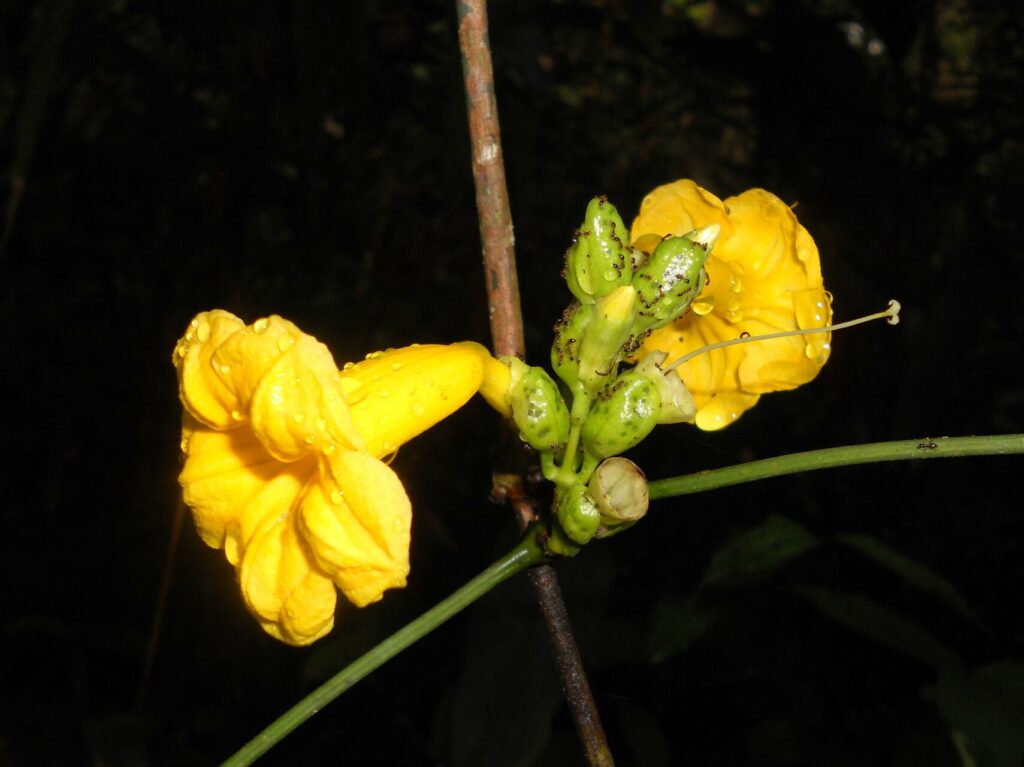
Propagating Adenocalymma flaviflorum: A Gardener’s Guide
Adenocalymma flaviflorum, commonly known as the yellow trumpet vine or golden trumpet vine, is a captivating flowering vine prized for its vibrant, yellow, trumpet-shaped blossoms. Its vigorous growth habit and eye-catching blooms make it a popular choice among gardeners, particularly in warmer climates. However, propagating this striking plant can present some unique challenges. This guide explores various propagation methods, evaluating their viability and offering practical advice for success.
Seed Germination:
Currently, there are no known reliable methods for seed germination propagation of Adenocalymma flaviflorum. While seeds may be produced, their viability and germination rate appear to be exceptionally low, making this method impractical for most gardeners. Further research into specific seed treatment techniques might be needed to unlock this propagation pathway.
Cuttings:
Cuttings offer a more promising method for propagating Adenocalymma flaviflorum.
Challenges: Rooting success can be variable, depending on factors like the age and health of the parent plant, the timing of the cutting, and environmental conditions. The thick, woody stems can be difficult to root.
Practical Tips: Take semi-hardwood cuttings (partially mature stems) in late summer or early autumn. Use a rooting hormone to significantly increase the chances of success. Plant the cuttings in a well-draining, sterile propagation mix (e.g., a mix of perlite and peat moss) and maintain high humidity (using a humidity dome or plastic bag) and warmth. Regular misting can help keep the cuttings hydrated.
Rewards: Cuttings provide a relatively quick and cost-effective method to produce genetically identical plants, preserving desirable traits from the parent plant.
Division:
Division is generally not a feasible propagation method for Adenocalymma flaviflorum. This vine typically grows as a single, robust plant, lacking the readily separable crowns or rhizomes conducive to division.
Tissue Culture:
Tissue culture offers a high-potential method for mass propagation of Adenocalymma flaviflorum.
Challenges: Tissue culture requires specialized equipment, a sterile environment, and a detailed understanding of plant tissue culture techniques. It is a more complex and expensive method than cuttings.
Practical Tips: This technique requires sterile conditions and specific nutrient media formulations, making it more suitable for laboratories or experienced propagators. Finding a suitable explant (a small piece of plant tissue) is key.
Rewards: Tissue culture enables the rapid multiplication of desirable plants and allows for the production of disease-free plantlets on a large scale.
Conclusion:
Propagating Adenocalymma flaviflorum presents unique challenges across different methods. While seed germination is currently unreliable, cuttings offer a viable, though somewhat unpredictable, option for the home gardener. Tissue culture holds the greatest potential for mass production but requires specialized expertise and resources. The rewards of successfully cultivating this beautiful vine, however, are considerable. The vibrant yellow blooms and vigorous growth make the effort worthwhile. The satisfaction of nurturing a cutting into a mature, flowering plant, especially after overcoming the initial challenges, provides a deep connection to nature and the process of cultivation itself. Don’t be discouraged by setbacks; experimentation and persistence are key to successful propagation. Remember to focus on creating the right environment for your chosen method — and enjoy the journey!