
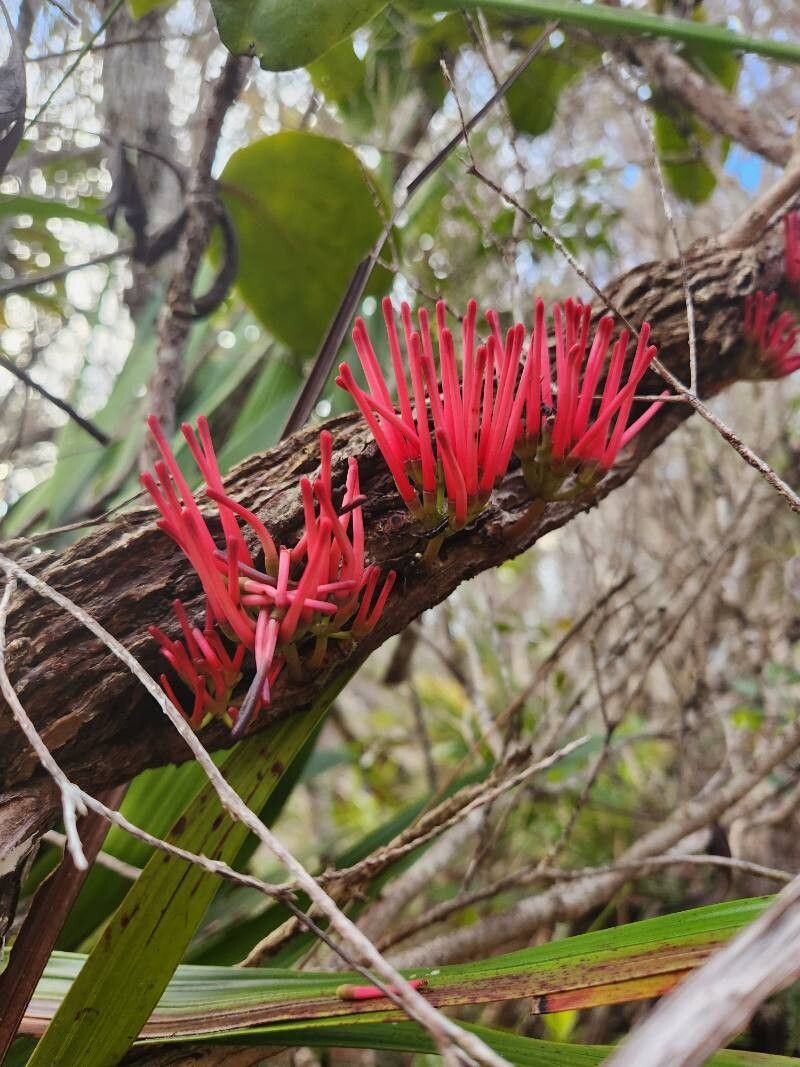
A Mistletoe Marvel: How to Propagate the Striking Amyema Scandens
The Amyema scandens, also known as the “Mistletoe Flower,” is a captivating parasite that adds a splash of vibrant beauty to the Australian landscape. Growing high within the branches of its host trees, this plant boasts striking red, orange, or yellow flowers and distinctive berries. While you wouldn’t want to bring this parasite into your home garden, its fascinating reproduction methods make it an intriguing subject for plant enthusiasts.
So, how can you propagate Amyema scandens? Unlike most plants, this species relies on birds to spread its seeds. Here’s a breakdown of the fascinating process:
The Role of Birds:
Amyema scandens doesn’t produce its own food through photosynthesis. Instead, it relies on its host tree for vital nutrients and water. The plant’s fleshy berries are a delicious treat for birds, particularly honeyeaters and lorikeets. These birds ingest the berries, digest the sweet pulp, and then deposit the sticky seeds onto tree branches.
Seed Germination:
The seed’s sticky consistency allows it to adhere firmly to the host tree’s bark. Once there, the seed waits for the perfect conditions to germinate. It needs a combination of moisture and a suitable host plant. The seed’s outer coating gradually deteriorates, allowing a tiny root to penetrate the host’s bark.
Haustoria: The Key to Survival:
This penetrating root doesn’t function like a typical plant root. Instead, it forms specialized structures called haustoria. These haustoria grow into the host tree’s vascular system, connecting the parasite to the host’s water and nutrient supply.
From Seed to Flower:
Once connected, the Amyema scandens begins to grow. It develops stems, leaves, and eventually, beautiful flowers. The entire process from seed germination to flowering can take several years, demonstrating the plant’s slow but persistent growth.
The Importance of Natural Propagation:
Trying to propagate Amyema scandens from cuttings or seeds in a controlled environment is extremely difficult. The plant relies heavily on a specific host tree and the interaction with birds. Therefore, it’s crucial to respect the natural propagation process of this fascinating species.
Understanding the Ecology:
Amyema scandens, while captivating, can potentially impact the health of its host tree. Excessive growth can weaken or even kill the tree. However, in natural environments, a healthy balance is often maintained. The presence of the mistletoe can even attract diverse insect life, contributing to overall biodiversity.
Observing in Nature:
If you’re interested in witnessing the fascinating life cycle of Amyema scandens, spend some time in the Australian bush. Look for flowering plants high in the branches of trees. You may even spot a bird feasting on the berries or witness a sticky seed adhering to a branch.
Conclusion:
The intricate propagation process of Amyema scandens is a testament to the complex relationships within the natural world. While we can’t replicate this process easily, it’s important to appreciate the unique beauty of this plant and the intricate role it plays in the Australian ecosystem. Next time you see a vibrant mistletoe flower clinging to a tree, take a moment to appreciate the fascinating story it tells.