
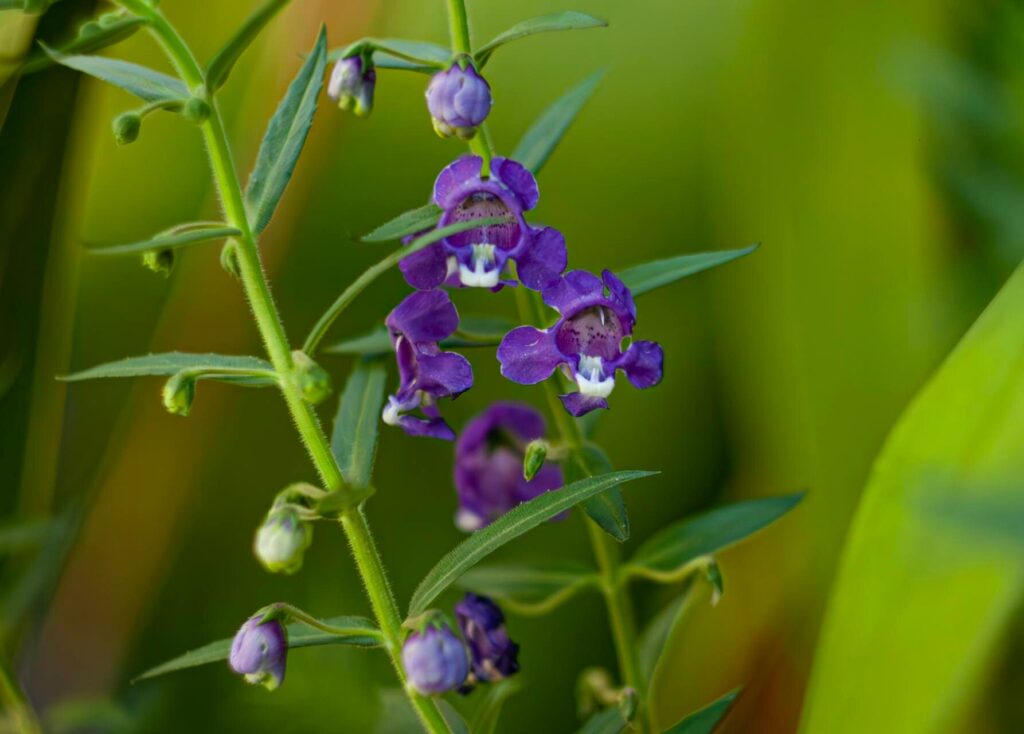
Propagating Angelonia biflora: A Gardener’s Guide to Summer Snapdragon
Angelonia biflora, commonly known as Summer Snapdragon, is a captivating annual boasting vibrant, snapdragon-like flowers that bloom profusely throughout the summer. Its long blooming period, drought tolerance, and attractive, fragrant flowers have made it a popular choice among gardeners worldwide. Unlike its name suggests, Angelonia is not closely related to true snapdragons (Antirrhinum). Its unique characteristics and relatively easy propagation (using certain methods) make it a rewarding plant to cultivate from scratch.
Seed Germination:
Currently, there are no known reliable methods for seed germination propagation of Angelonia biflora. While seeds may be produced, their germination rate is extremely low and inconsistent, making it impractical for most gardeners. The plant’s complex genetic makeup is likely a contributing factor to this difficulty.
Cuttings:
Challenges: Cuttings are the most reliable and widely used method for propagating Angelonia biflora. However, success hinges on proper technique and timing. Using too old or too young stems can lead to failure.
Practical Tips: Take 4-6 inch cuttings from healthy, semi-hardwood stems in spring or early summer. Remove lower leaves to prevent rot and dip the cut ends in rooting hormone. Plant the cuttings in a well-draining potting mix, keeping them moist but not waterlogged, under high humidity (e.g., using a propagator or covering with a plastic bag). Provide bright, indirect light. Rooting typically takes 3-4 weeks.
Rewards: This method reliably produces genetically identical plants, preserving desirable traits. It’s efficient for large-scale propagation for both home gardeners and commercial nurseries.
Division:
Challenges: Angelonia biflora is not easily propagated through division. Its fibrous root system is not conducive to splitting into viable sections. Attempting division often results in plant damage and reduced survival rates.
Practical Tips: Division is not a recommended method.
Tissue Culture:
Challenges: Tissue culture is a complex and specialized propagation method requiring sterile laboratory conditions, specific media formulations, and specialized knowledge. It also involves significant upfront investment and ongoing maintenance costs.
Practical Tips: This method is primarily employed by commercial nurseries for large-scale, high-quality propagation, not home gardeners.
Rewards: Tissue culture offers the greatest potential for large-scale propagation while efficiently eliminating diseases and promoting uniform growth. It also enables the conservation of rare or endangered Angelonia varieties.
Conclusion:
Propagating Angelonia biflora presents a range of challenges across different methods. While seed germination is essentially unproductive, cuttings offer the most practical and rewarding approach for home gardeners. Division is not recommended. Tissue culture, with its high technical demands, remains primarily a commercial practice. The effort invested in successfully propagating Angelonia biflora, especially through cuttings, brings a unique satisfaction. The vibrant blooms that reward your diligent efforts make the process worthwhile. So, don’t be discouraged by the challenges; embrace the journey, master the art of cuttings propagation, and enjoy the beauty of this remarkable plant flourishing in your garden, grown entirely by your own hand.