
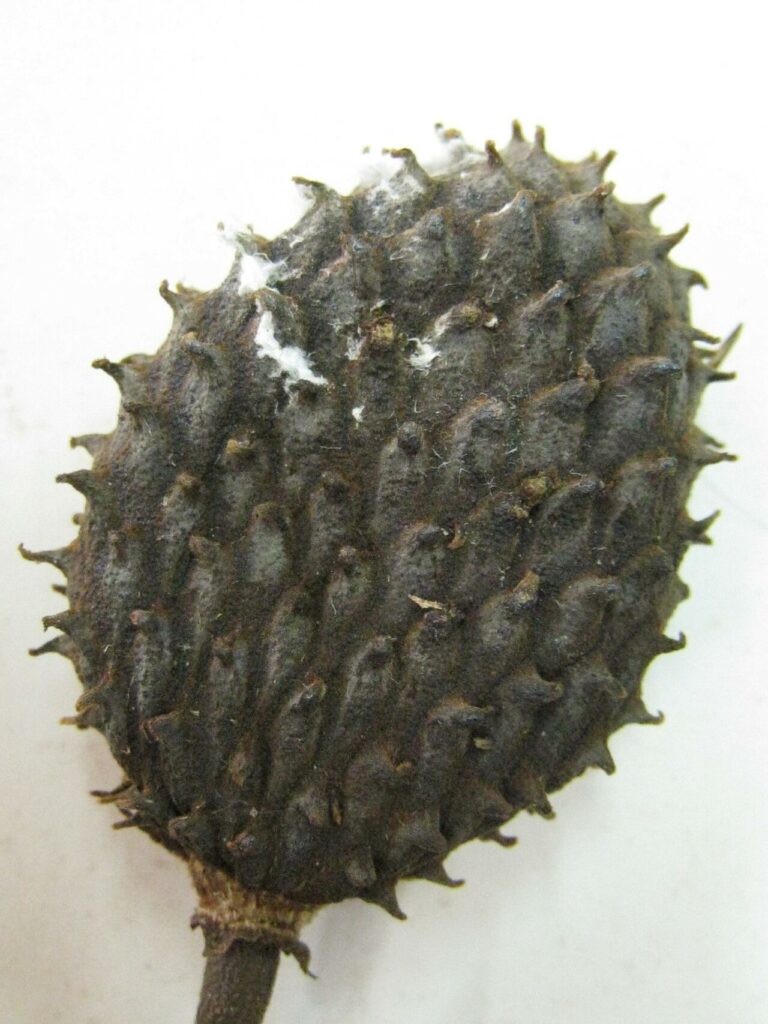
Propagating the Monkey-Head Annona: A Guide to Cultivating Annona echinata
Introduction:
Annona echinata, commonly known as the monkey-head annona or piña, is a captivating small tree or shrub appreciated for its unique, spiky fruit and attractive foliage. Native to parts of the Americas, its horticultural significance lies in its adaptability to various climates and its potential as an ornamental plant and a source of edible fruit, though the fruit’s palatability varies depending on individual experience. While relatively less common than other Annona species, its distinct appearance has steadily increased its popularity among gardeners seeking unusual additions to their collections. Propagation, however, presents several challenges, making success all the more rewarding.
Seed Germination:
Seed germination is a viable method for propagating Annona echinata, although it’s not without its hurdles. The primary challenge lies in the relatively low germination rate and the need for fresh seeds. Seeds rapidly lose viability; ideally, they should be sown as soon as possible after extraction from ripe fruit.
Challenges: Low germination rates, short seed viability.
Practical Tips: Sow seeds directly into well-draining seed-starting mix, keeping the mix consistently moist but not waterlogged. Avoid deep planting; a light covering of soil is sufficient. Maintain a warm environment (ideally 25-30°C) and high humidity. Using a humidity dome can significantly increase success.
Rewards: High genetic diversity within the resulting seedlings, offering potential for selecting superior cultivars. This method is suitable for large-scale propagation, provided a sufficient quantity of high-quality seeds is available.
Cuttings:
Cuttings are another possible propagation method for Annona echinata, but success rates are generally lower compared to seed propagation.
Challenges: Difficult rooting. Hardwood cuttings tend to be more challenging to root than softwood cuttings.
Practical Tips: Use semi-hardwood cuttings taken from actively growing shoots. Apply rooting hormone to the cut end before planting in a well-draining rooting medium, such as a mix of perlite and peat moss. Maintain high humidity and warm temperatures. Mist regularly to maintain moisture. Bottom heat can improve rooting success.
Rewards: The resulting plants will be genetically identical to the parent plant, preserving desirable traits. This offers a quicker method to establish plants with known characteristics compared to seed propagation.
Division:
Division is not a practical method for propagating Annona echinata. The plant does not readily form offsets or suckers which can be easily divided.
Tissue Culture:
Tissue culture presents a potential avenue for large-scale propagation of Annona echinata, especially for the rapid multiplication of superior genotypes.
Challenges: Requires specialized equipment and expertise, making it generally less accessible to home gardeners. Developing optimal protocols for Annona echinata tissue culture may require experimentation.
Practical Tips: This method is best left to experienced tissue culture laboratories with expertise in propagating Annona species.
Rewards: Large-scale propagation of genetically uniform plants, rapid multiplication, and disease-free plantlets.
Conclusion:
Propagating Annona echinata presents a unique set of challenges, with seed germination offering the most feasible option for home gardeners willing to experiment and invest the time and energy required for a high success rate. While cuttings offer a viable alternative but with less certain outcomes, tissue culture offers the ideal solution for commercial production or propagation of superior genotypes. Despite the difficulties, the unique beauty and potential rewards of successfully cultivating this intriguing species make the effort worthwhile. The satisfaction of nurturing a tiny seed into a mature plant, or a cutting into a thriving specimen, offers a profound connection to the natural world and a considerable source of gardener pride. Don’t be discouraged by initial setbacks—with patience, perseverance, and the right techniques, the uniquely spiky fruits and foliage of the monkey-head annona can grace your garden.