
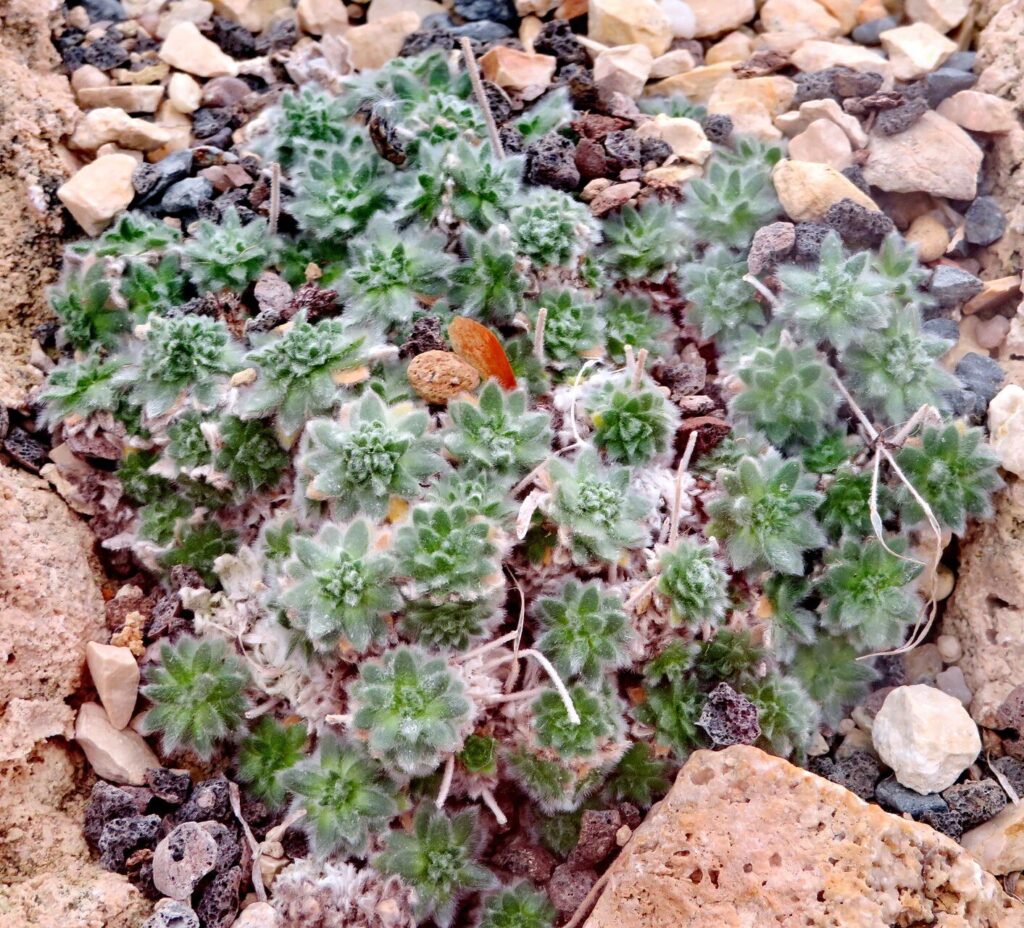
Propagating Arabis bryoides: A Gardener’s Guide to Mossy Arabis
Arabis bryoides, commonly known as mossy arabis, is a charming, low-growing perennial valued for its dense mats of tiny, grey-green foliage and delicate white flowers. Its diminutive stature and ability to thrive in rocky, well-drained soils make it a popular choice for rock gardens, alpine gardens, and as groundcover in sunny locations. While its relatively compact size might seem to limit its spread naturally, propagating mossy arabis offers gardeners the chance to expand their collection and share this delightful plant. However, propagation can present certain challenges, as we will explore below.
Seed Germination:
Currently, there are no known reliable methods for seed germination propagation of Arabis bryoides. While the plant does produce seeds, their germination rate is notoriously low, and success is largely unpredictable even under optimal conditions. Further research into specific germination requirements might yield results, potentially involving techniques like cold stratification (period of chilling). However, at present, relying on seed propagation is not a practical method for this species.
Cuttings:
Cuttings offer a more reliable method for propagating Arabis bryoides.
Challenges: Root development can be slow and inconsistent. Overwatering is a major problem, leading to rot before roots can establish.
Practical Tips: Take semi-hardwood cuttings in late spring or early summer from non-flowering stems. Use a sharp, clean knife or shears to prevent the spread of disease. Remove lower leaves to prevent rot, dip the cut ends in rooting hormone, and plant them in a well-draining, sterile mix such as a perlite and peat moss blend. Maintain consistently moist (but not soggy) conditions and high humidity (e.g., covering with a humidity dome).
Rewards: Cuttings offer a good method of cloning the parent plant, preserving desirable traits. It allows for faster propagation compared to division.
Division:
Division is a viable, and often the most successful, method for propagating Arabis bryoides.
Challenges: The plant’s compact nature means divisions must be carefully executed to avoid damaging the root system. Smaller divisions may take longer to establish.
Practical Tips: Divide established clumps in spring or fall, ideally after flowering. Use a sharp spade or knife to carefully separate portions of the root ball, ensuring each division has sufficient roots and shoots. Plant the divisions immediately into well-prepared, well-drained soil, and water gently until established.
Rewards: Division is relatively simple and reliable, resulting in quicker establishment compared to cuttings. It’s a good option for increasing the number of plants relatively quickly.
Tissue Culture:
Tissue culture propagation of Arabis bryoides is potentially viable but likely requires specialized laboratory equipment and expertise.
Challenges: Developing a successful protocol for Arabis bryoides would require significant experimentation to determine the optimal media, growth regulators, and sterilization techniques. It’s a complex and expensive method.
Practical Tips: This is not a method for the home gardener, requiring skilled technicians and sterile laboratory environments.
Rewards: Tissue culture offers the potential for mass production of genetically identical plants, crucial for commercial applications or conservation programs.
Conclusion:
Propagating Arabis bryoides presents both challenges and rewards. While seed germination is currently unreliable, cuttings and division provide viable options. Division is often favoured for its simplicity and relatively high success rate, while cuttings offer a good alternative, requiring more attention to detail. Tissue culture, though highly efficient, is beyond the scope of the average home gardener. The unique satisfaction of successfully propagating this charming plant, particularly through cuttings or division, lies in the tangible culmination of patience, care, and horticultural skill. The small, delicate plants reward the gardener for their persistence with a delightful profusion of tiny flowers, a testament to the satisfying journey from propagation to flourishing growth. So, don’t be discouraged by potential setbacks; with patience and attention to detail, even the most challenging propagation journeys can yield abundant rewards.