
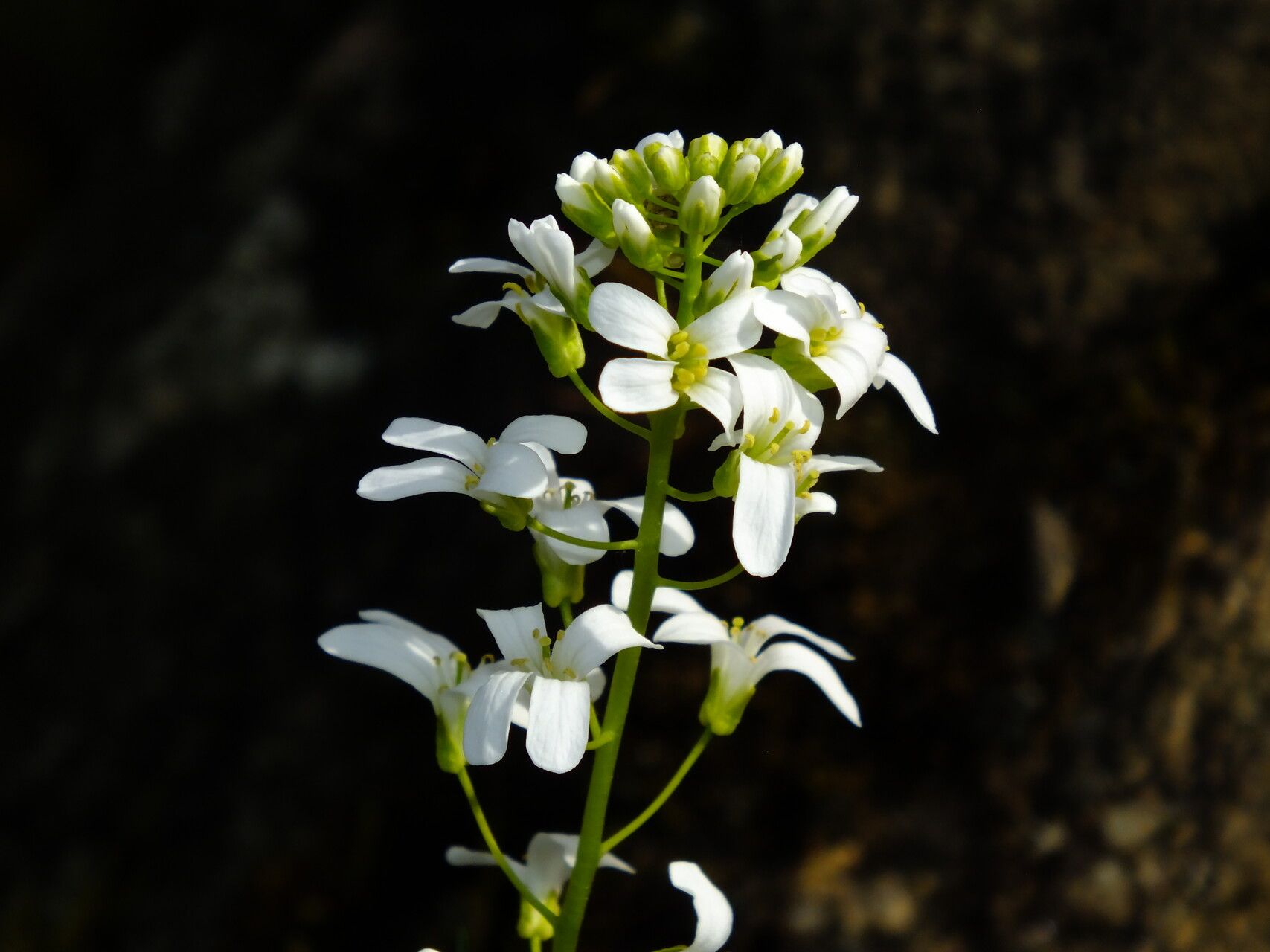
Propagating Arabis procurrens: A Gardener’s Guide to the Procumbent Rockcress
Arabis procurrens, commonly known as procumbent rockcress, is a low-growing, evergreen perennial prized for its dense mats of small, grey-green leaves and profuse displays of white, four-petaled flowers in spring. Its cascading habit makes it an ideal groundcover for rock gardens, walls, and slopes, adding textural interest and a touch of elegance to any landscape. Its adaptability and hardiness have earned it a popular place in many gardeners’ hearts, though propagating it can present some unique challenges. This article explores various propagation methods for Arabis procurrens, weighing their rewards and difficulties.
Seed Germination:
Currently, there are no known reliable methods for seed germination propagation of Arabis procurrens. While seeds may be produced, germination rates are exceptionally low and unpredictable, making this method impractical for most gardeners.
Cuttings:
Cuttings offer a more reliable method for propagating Arabis procurrens.
Challenges: Success relies on careful timing and technique. Older, woody stems are less likely to root.
Practical Tips: Take semi-hardwood cuttings in late spring or early summer. Use a sharp knife or shears to take 4-6 inch cuttings, removing lower leaves to prevent rot. Dip the cut ends in rooting hormone before planting in a well-draining propagating mix (e.g., perlite and vermiculite). Maintain high humidity (e.g., using a propagator or covering with a plastic bag) and consistently moist conditions.
Rewards: Cuttings provide a relatively quick method of creating genetically identical plants, preserving desirable traits. This is highly efficient for large-scale propagation of a specific cultivar.
Division:
Division is a simple and highly effective method for propagating established Arabis procurrens plants.
Challenges: Division can only be undertaken when the plant is mature and sufficiently large to be easily divided. Rough handling can damage the root system.
Practical Tips: Divide the plant in spring or autumn, carefully separating the root crown into smaller sections, each with its own healthy roots and shoots. Replant immediately, ensuring adequate spacing for optimal growth.
Rewards: This technique is straightforward, produces instant results, and is less technically demanding compared to cuttings or tissue culture. It is a perfect method for home gardeners with mature plants.
Tissue Culture:
Tissue culture is a sophisticated method not typically used by home gardeners for propagating Arabis procurrens.
Challenges: Requires specialized equipment, sterile conditions, and a thorough understanding of plant tissue culture techniques. It is a more expensive and complex process than the other methods.
Practical Tips: This method requires expertise. Commercial nurseries may utilize this technology for mass propagation of desirable cultivars.
Rewards: Tissue culture allows for rapid and large-scale propagation, producing disease-free plants and preserving genetic uniformity.
Conclusion:
Propagating Arabis procurrens presents a spectrum of challenges and rewards depending on the chosen method. While seed germination proves unreliable, cuttings and division offer accessible and relatively successful options for the home gardener. Division boasts simplicity and immediacy, while cuttings, while requiring more finesse, allow for precise replication of desired characteristics. Tissue culture remains highly specialized. The unique satisfaction of cultivating this beautiful groundcover comes not only from its aesthetic value, but also from the perseverance and skill required to cultivate it successfully from cuttings or by division. Don’t be discouraged by the initial difficulties; the reward of a flourishing patch of procumbent rockcress is well worth the effort. Experiment with different techniques and discover the method that best suits your skills and resources.