
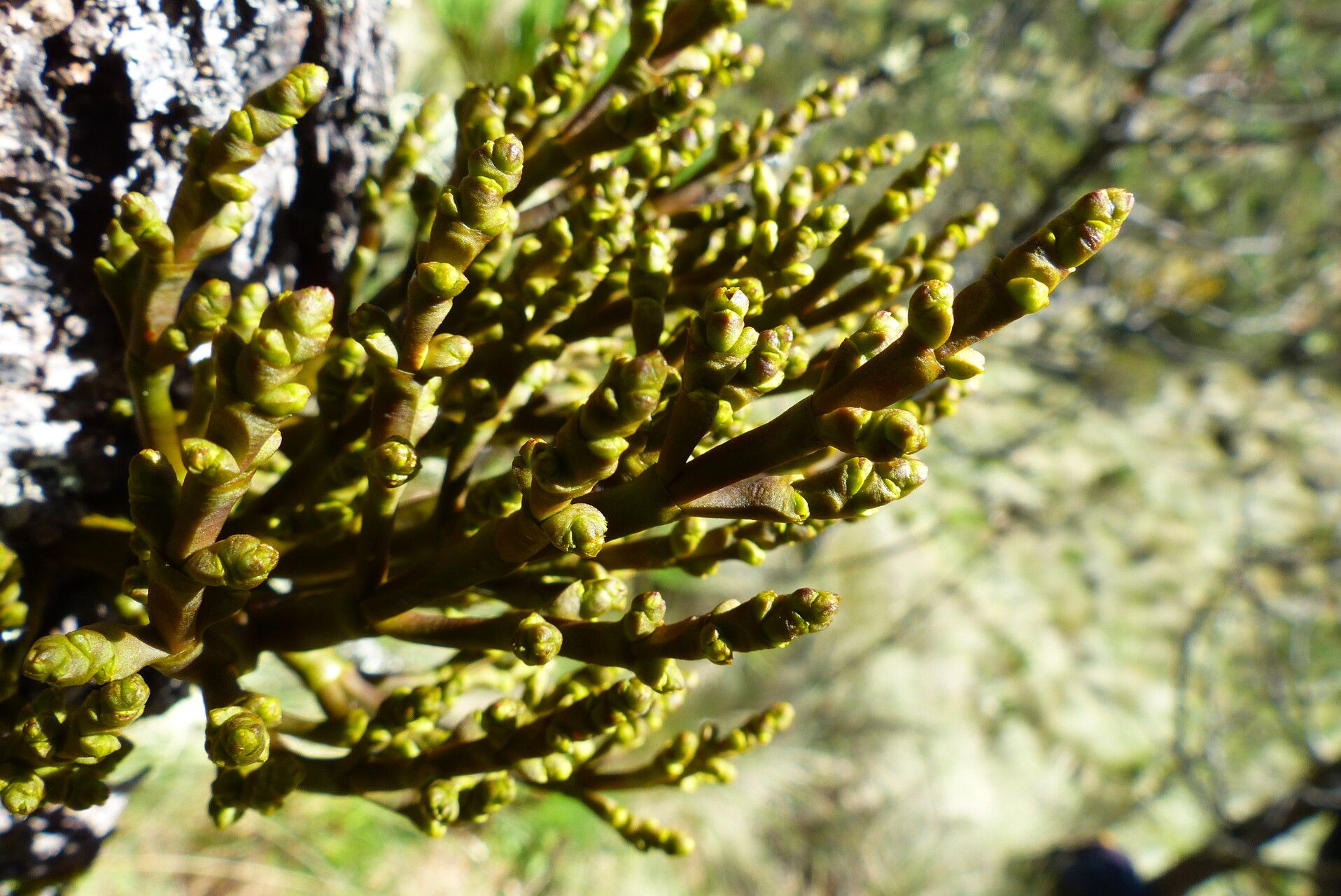
Explosive Seeds: Unveiling the Unusual Propagation of the Globeflower Dwarf Mistletoe
The plant world is full of fascinating reproductive strategies, and few are as explosive as that of the Arceuthobium globosum, commonly known as the Globeflower Dwarf Mistletoe. This unusual plant, sporting the somewhat misleading “mistletoe” in its name, doesn’t rely on birds or breezes for its propagation. Instead, it has developed a remarkably effective, and slightly violent, method to spread its seeds: ballistic dispersal.
Arceuthobium globosum belongs to a group of parasitic plants that target specific conifer trees. Unlike the familiar holiday mistletoe, which can photosynthesize to some extent, dwarf mistletoes are entirely dependent on their host for water and nutrients. They embed themselves deep within the branches of their host tree, often causing deformities and weakening the tree over time.
But how does this intriguing parasite spread from tree to tree? This is where things get explosive. Arceuthobium globosum produces small, fleshy fruits known as berries. Within each berry lies a single, pressure-laden seed. As the berry ripens, the internal pressure builds to an astonishing degree. The slightest touch, or even a change in temperature, can trigger a dramatic event.
With an audible pop, the fruit bursts open, launching the seed at speeds reaching up to 60 miles per hour! This forceful ejection can propel the seed as far as 50 feet away, increasing the likelihood of it landing on a suitable host tree and starting the parasitic cycle anew.
This unique mode of dispersal is a fascinating example of adaptation in the plant kingdom. The explosive force not only spreads the seeds over a wide area but also helps them stick to potential hosts. The sticky coating surrounding the seed ensures it adheres to branches or needles, giving it a chance to germinate and penetrate the bark of a new victim.
However, the story doesn’t end there. The success rate of germination and establishment is relatively low. The seed must land on a compatible host species, in a suitable location, and overcome the tree’s defenses to survive. This precarious balance ensures that Arceuthobium globosum populations remain in check, preventing a widespread parasitic takeover of their host trees.
While Arceuthobium globosum might be considered a harmful parasite, impacting the health and growth of its host trees, its unique propagation strategy is a testament to the incredible diversity and adaptability of the natural world. This explosive plant serves as a reminder that even within the seemingly quiet realm of trees, there are fascinating and surprising dramas unfolding all around us.