
Propagating Arenaria balearica: A Gardener’s Guide to the Balearic Sandwort
Introduction
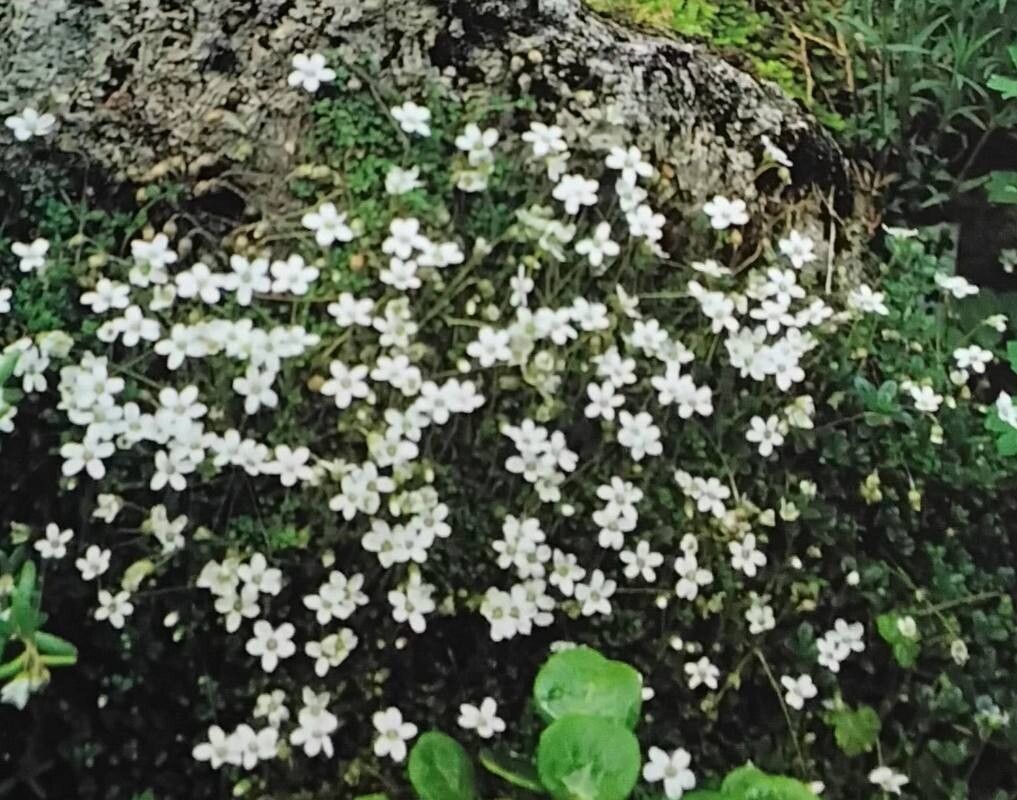
Arenaria balearica, commonly known as Balearic sandwort, is a charming, low-growing evergreen perennial prized for its delicate, needle-like foliage and profuse displays of small, white, five-petaled flowers. Native to the Balearic Islands, Corsica, and Sardinia, this plant has captured the hearts of gardeners worldwide for its ability to thrive in well-drained, sandy soils and its tolerance of full sun. Its mounding habit makes it ideal for rock gardens, crevices, and as ground cover. Its popularity stems from its ease of care once established, but propagating this beauty presents some unique challenges.
Seed Germination
Currently, there are no known reliable methods for seed germination propagation of Arenaria balearica. While seeds may be produced, their germination rate is reportedly extremely low, making this method impractical for most home gardeners. Further research into specific germination requirements, like light sensitivity or hormonal treatments, might yield future success in this area.
Cuttings
Cuttings offer a more reliable method for propagating Arenaria balearica.
Challenges: Success rates vary depending on the timing and technique. Hardwood cuttings taken in late autumn or softwood cuttings taken in spring may both show some success, but rooting can be slow.
Practical Tips: Take 5-8cm long cuttings from non-flowering stems. Remove lower leaves and dip the cut end in rooting hormone before planting in a well-draining, moist propagation mix (e.g., a mix of perlite and peat). Maintain consistent moisture but avoid overwatering. High humidity, provided by a propagator or plastic bag, can significantly improve success. Rooting can take several weeks or even months.
Rewards: Cuttings provide a relatively quick and easy way to multiply existing plants, preserving their genetic characteristics.
Division
Division is arguably the easiest and most reliable method for propagating Arenaria balearica.
Challenges: This method only works with established, mature plants. Care must be taken to avoid damaging the delicate roots.
Practical Tips: Divide the plant in spring or early autumn. Carefully lift the plant, gently separating the root ball into smaller sections, ensuring each section has sufficient roots and foliage. Replant immediately and water well.
Rewards: Division is a rapid method, producing multiple plants quickly with relatively high success rates. It’s less technically demanding than other methods.
Tissue Culture
Tissue culture offers the potential for large-scale propagation of Arenaria balearica, but it requires specialized equipment and expertise.
Challenges: Tissue culture demands a sterile environment and a precise knowledge of plant hormones and nutrient solutions. It’s a complex and expensive technique generally unsuitable for home gardeners.
Practical Tips: This method is best left to commercial nurseries or research institutions with the necessary facilities and experience.
Rewards: Tissue culture allows for rapid and large-scale cloning, enabling the production of many genetically identical plants from a single source. It can also reduce the transmission of diseases.
Conclusion
Propagating Arenaria balearica presents a unique set of challenges. While seed propagation currently remains unreliable, cuttings and division offer viable options for home gardeners. The rewards, however, are worth the effort. The satisfaction of nurturing a cutting into a thriving plant, or successfully dividing a mature specimen, is deeply rewarding. Mastering the art of propagating Balearic sandwort, despite the obstacles, allows you to share the beauty of this delicate plant and expand its presence in your garden and perhaps beyond. For the home propagator, cuttings and division are the recommended approaches, ensuring a successful increase in your prized collection. Remember patience and precision are key to success.