
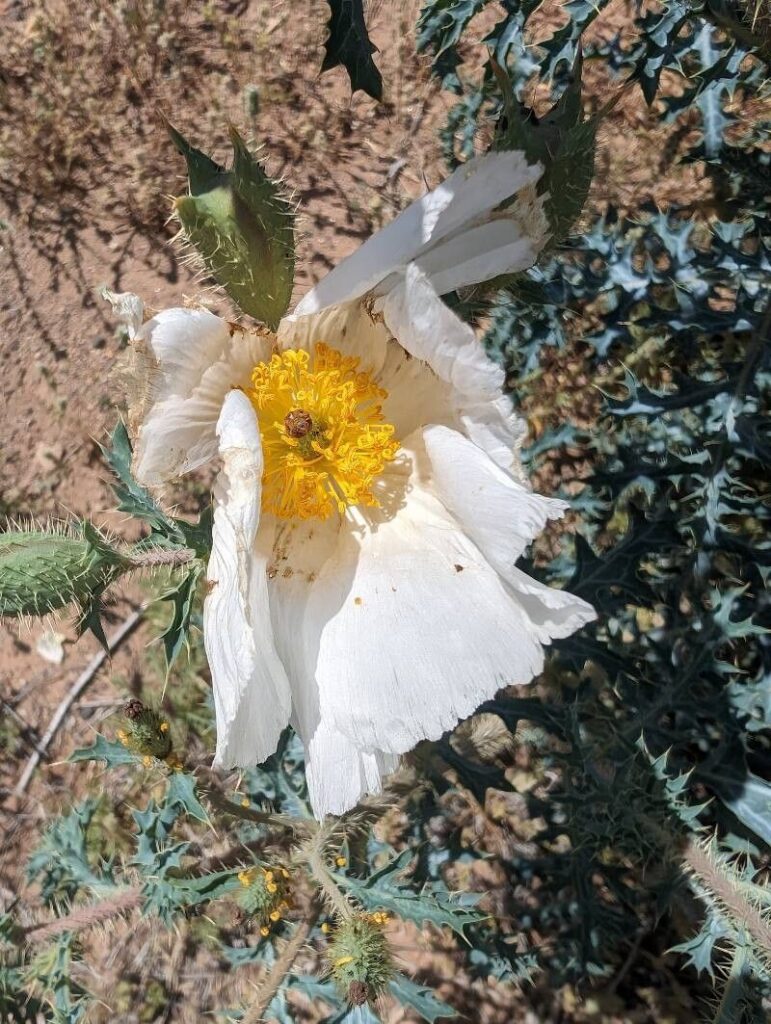
Propagating the Prickly Poppy: A Guide to Argemone pleiacantha
Introduction:
Argemone pleiacantha, commonly known as the prickly poppy, is a striking succulent plant native to the southwestern United States and northern Mexico. Its captivating beauty stems from its silvery-blue, deeply lobed foliage and vibrant yellow, cup-shaped flowers. The plant’s architectural form and drought tolerance make it a popular choice among gardeners seeking low-maintenance, yet visually arresting additions to their landscapes, particularly in xeriscaping projects. However, propagation of Argemone pleiacantha presents unique challenges due to its prickly nature and specific environmental needs. This article explores various propagation methods, highlighting their viability and offering practical advice for success.
Seed Germination:
Seed germination is a viable method for propagating Argemone pleiacantha, though it presents some challenges. The seeds possess a hard seed coat, which can inhibit germination. This necessitates scarification – a process that weakens the seed coat to allow water penetration. Simple techniques include nicking the seed coat gently with a file or sandpaper, or soaking seeds in warm water for 24-48 hours before sowing.
Challenges: Low germination rates are common unless the seed coat is properly scarified. Further challenges include potential fungal diseases if sowing conditions are too moist.
Tips: Sow seeds directly outdoors in well-draining soil in spring or fall after the last frost. Maintain consistently moist (but not waterlogged) conditions. Consider using a germination mix to promote drainage and aeration. Providing light shade, especially in hot climates, can improve success.
Rewards: Seed propagation offers the highest potential for genetic diversity within a population, allowing for a wider range of plant characteristics. This method also allows for large-scale propagation if successful.
Cuttings:
Cuttings are generally not a reliable method of propagating Argemone pleiacantha. The plant’s succulent nature can make cuttings prone to rotting, particularly in humid conditions. While some anecdotal evidence suggests stem cuttings might be possible under very specific conditions (e.g., using rooting hormone and maintaining excellent drainage), the success rate is extremely low and not consistently repeatable.
Division:
Division is a viable method, particularly for established plants.
Challenges: The plant’s sharp spines pose a significant challenge when handling it for division. Care must be taken to avoid injury. Each division needs to include sufficient root mass to ensure survival.
Tips: Division is best performed in spring or early fall. Carefully dig up the mature plant, gently separate the clumps, ensuring each division has a healthy root system. Plant the divisions immediately in well-draining soil, ensuring they are adequately spaced.
Rewards: Division typically leads to a higher success rate than seed germination and is relatively quick.
Tissue Culture:
While tissue culture is potentially feasible for Argemone pleiacantha, it’s generally not a practical approach for home gardeners. This method requires specialized equipment, a sterile environment, and a significant understanding of plant tissue culture techniques. It remains largely within the realm of professional plant propagation laboratories.
Conclusion:
Propagating Argemone pleiacantha presents a unique set of challenges across all methods. While seed germination offers the greatest potential for genetic diversity but requires careful scarification and careful moisture management, division offers a higher chance of success for the home gardener but requires careful handling. Cuttings generally prove unreliable. The rewards, however, are well worth the effort. Successfully cultivating this striking plant from seed or division brings a particular sense of achievement, acknowledging the effort required to coax life from such a prickly yet beautiful specimen. For aspiring propagators, perseverance, attention to detail, and a respect for the plant’s unique needs are crucial for success. Remember careful preparation and sanitary techniques are key in all methods to prevent fungal diseases.