
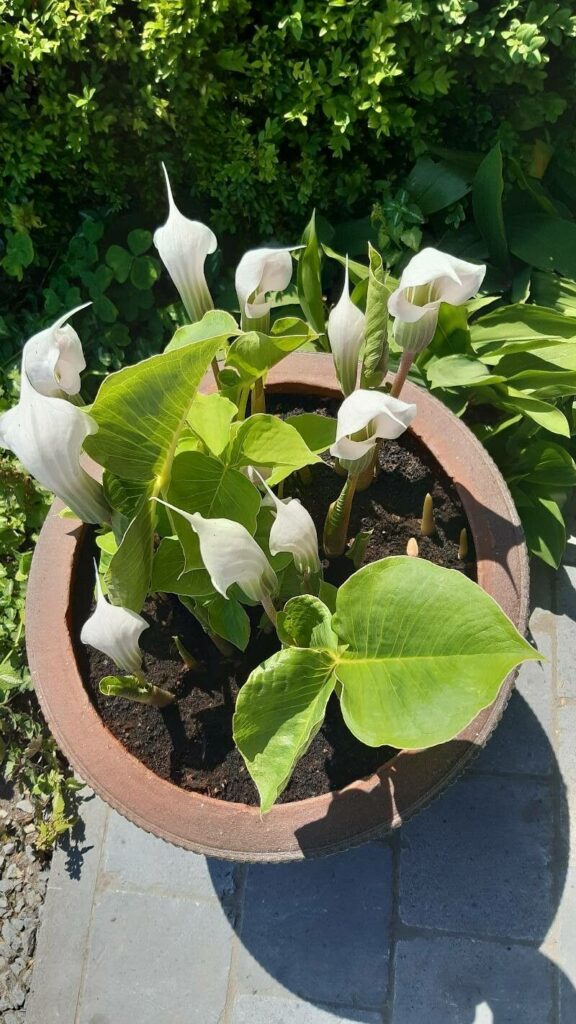
Propagating Arisaema candidissimum: The White-flowered Cobra Lily
Arisaema candidissimum, commonly known as the White-flowered Cobra Lily, is a striking member of the Araceae family, captivating gardeners with its elegant, hooded inflorescence – a creamy white spathe that contrasts beautifully with its deeply-veined, dark green foliage. Its rarity and unique appearance make it a highly sought-after addition to shade gardens, adding a touch of exotic allure. However, successfully propagating this plant presents certain challenges, making the achievement particularly rewarding.
Seed Germination:
Currently, there are no known reliable methods for seed germination propagation of Arisaema candidissimum. While seeds may be produced, germination rates are exceptionally low, and the process is unpredictable, even under controlled conditions. Further research into specific stratification techniques and hormonal treatments may be necessary to overcome this hurdle.
Cuttings:
Propagating Arisaema candidissimum through cuttings is generally considered unsuccessful. This genus doesn’t readily produce adventitious roots from stem or leaf cuttings, unlike some other aroids. The plant’s physiology appears unsuited to this method of propagation.
Division:
Division is the most reliable method for propagating Arisaema candidissimum. This involves carefully separating the corms (underground storage organs) during dormancy, typically in late autumn or early spring.
Challenges: The corms are relatively fragile and easily damaged, requiring careful handling. Each division should possess a healthy growth bud and a substantial portion of the rhizome to ensure successful establishment. Over-dividing can weaken the parent plant and its offspring.
Practical Tips: Use a sharp, sterile knife or shears to divide the corm. Ensure each division has healthy roots and at least one growth bud. Plant the divisions immediately in well-draining, humus-rich soil, maintaining consistent moisture.
Rewards: Division offers a relatively quick way to increase the number of plants, preserving the genetic characteristics of the parent plant.
Tissue Culture:
Tissue culture offers a potential, albeit specialized, method for propagating Arisaema candidissimum. This laboratory-based technique involves growing plant tissues in a sterile medium, fostering the development of new plants from small sections of the parent plant.
Challenges: Tissue culture requires specialized equipment, a sterile environment, and expertise in plant tissue culture techniques. Establishing optimal growth media and protocols for Arisaema candidissimum may require considerable experimentation.
Practical Tips: Experienced tissue culture laboratories familiar with aroid propagation would be best suited to attempt this method.
Rewards: Tissue culture allows for large-scale propagation and disease-free plants. It also enables the preservation of rare or endangered genotypes.
Conclusion:
Propagating Arisaema candidissimum presents unique challenges. While seed germination and cuttings are considered currently unreliable, division offers a practical means of increasing plant numbers for home gardeners. Tissue culture remains a promising avenue for large-scale propagation but demands specialist knowledge and resources. The difficulties involved only amplify the satisfaction of successfully cultivating this exceptional plant. The persistence required to overcome these obstacles underscores the unique bond that develops between the gardener and this fascinating specimen. Aspiring propagators are encouraged to start with division—mastering this method before exploring more complex techniques. Remember patience and careful observation are key to success with this exquisite plant.