
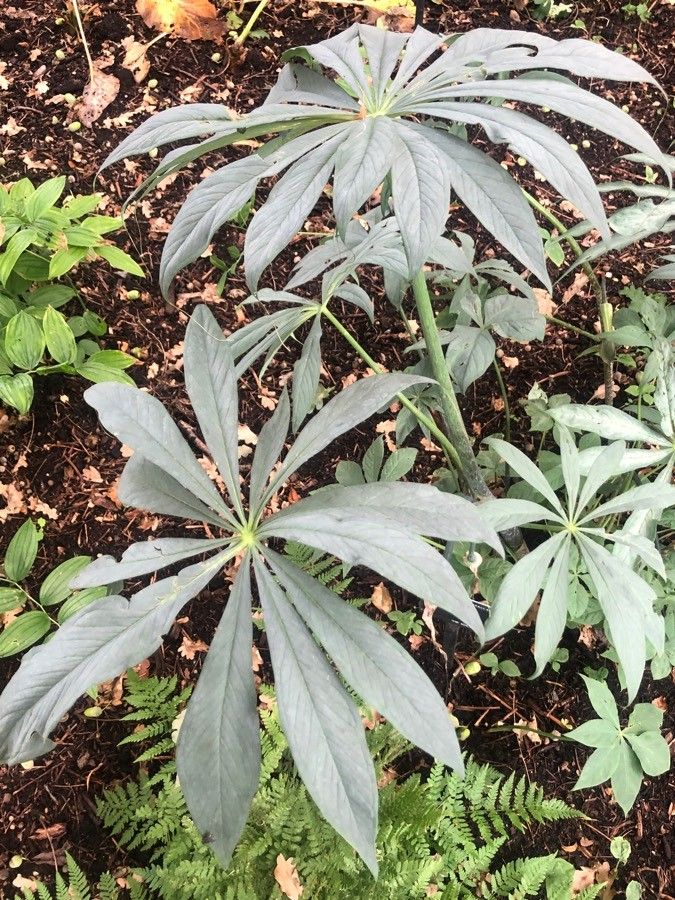
Propagating Arisaema consanguineum: Unveiling the Secrets of the Himalayan Cobra Lily
Arisaema consanguineum, also known as the Himalayan Cobra Lily, is a captivating member of the Araceae family, prized for its striking hooded inflorescence resembling a cobra about to strike. Native to the Himalayas, its uniquely patterned spathe and intriguing growth habit make it a highly sought-after addition to shade gardens and collections of unusual plants. While its dramatic beauty is undeniable, propagating this species presents unique challenges and rewards for the dedicated gardener. Its relative rarity in cultivation also contributes to its allure and necessitates an understanding of its propagation methods.
Seed Germination:
Seed germination for Arisaema consanguineum is possible but notoriously challenging. The seeds possess a period of dormancy requiring careful stratification before germination can occur. This involves mimicking the natural conditions of the Himalayan environment.
Challenges: Low germination rates are typical, often only reaching 10-20% even under optimal conditions. Precise temperature and moisture control are crucial to prevent fungal diseases which frequently attack the delicate seedlings.
Tips: Stratification is typically achieved by subjecting seeds to a period of cold, moist conditions (e.g., 3-4 months at 3-5°C) followed by a period of warmth. Sow seeds in a well-draining seed-starting mix, maintaining consistent moisture but avoiding waterlogging. A germination chamber with humidity control is recommended.
Rewards: Successful germination offers the greatest genetic diversity, resulting in a wider range of plant characteristics within your collection. This method offers the potential for large-scale propagation, although much patience and perseverance are required.
Cuttings:
Currently, there are no known reliable methods for propagating Arisaema consanguineum from cuttings. The plant’s physiology does not readily lend itself to this type of vegetative propagation.
Division:
Division of established corms offers a more reliable method of propagation compared to seed germination.
Challenges: This technique is limited by the size and age of the parent plant. Only mature plants with well-developed corms can be divided successfully. Improper division can damage the corms, leading to plant death. Poorly-divided corms also fail to establish efficiently.
Tips: Division should ideally be undertaken in late summer or early autumn, after the foliage has died back. Carefully separate the corms, ensuring each division has at least one healthy growth bud and a portion of the rhizome. Plant the divisions in well-drained, humus-rich soil in a shaded location.
Rewards: Division provides a quicker and more successful method of increasing the number of plants, maintaining the characteristics of the parent plant.
Tissue Culture:
Tissue culture is a viable, though specialized, method for Arisaema consanguineum propagation but requires a sterile laboratory setting and expert knowledge.
Challenges: This method requires sophisticated equipment, specialized media, and aseptic techniques to prevent contamination. It’s also expensive and time-consuming.
Tips: This method involves using small segments of plant tissue to establish new plants in a nutrient-rich growth medium under controlled conditions. Specific protocols for Arisaema consanguineum may need to be developed, as standardized procedures are lacking.
Rewards: Tissue culture enables rapid propagation of large numbers of genetically uniform plants and can successfully propagate from relatively small amounts of starting material.
Conclusion:
Propagating Arisaema consanguineum presents a unique challenge requiring patience, skill, and a willingness to experiment. While seed germination offers the potential for wide genetic diversity but remains difficult, division offers a more reliable, albeit less diverse, method for successful propagation in the garden. All methods require careful attention to detail, including appropriate soil conditions, moisture levels, and shade. Tissue culture, while effective, is complex and beyond the capabilities of most hobbyists.
The rewards, however, are well worth the effort. The satisfaction derived from successfully cultivating and propagating this intriguing plant—from nurturing a tiny seed to witnessing the emergence of its dramatic inflorescence—is profound. Don’t be discouraged by setbacks, for embracing the journey to cultivate this rare Himalayan beauty is a testament to the dedication and passion of the plant enthusiast.