
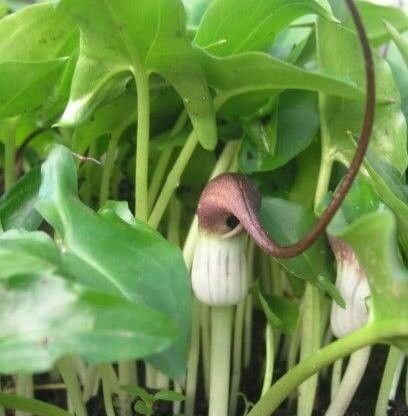
Propagating the Mousetail Plant: Arisarum proboscideum
Introduction:
Arisarum proboscideum, commonly known as the Mousetail plant, is a captivating member of the Araceae family. Its unique, hooded spathe mimicking a mouse’s tail is its most striking feature, captivating gardeners with its unusual form and subtle beauty. While not as widely cultivated as some other aroids, its distinctive appearance and relative ease of care (once established) make it a desirable addition to shaded gardens. However, propagation presents some challenges, making successful cultivation all the more rewarding. This article explores various methods of propagating Arisarum proboscideum, examining their viability and practicality.
Seed Germination:
Currently, there are no known reliable methods for seed germination propagation of Arisarum proboscideum. While the plant does produce seeds, germination rates appear to be extremely low under typical horticultural conditions. Further research is needed to determine if specific stratification techniques, specific light requirements, or the presence of mycorrhizal fungi are critical for successful germination.
Cuttings:
Propagating Arisarum proboscideum from cuttings also presents significant challenges. There is limited reported success with this method. The plant’s corms are the primary means of vegetative growth, with limited adventitious root development from stem cuttings. Therefore, this method is not recommended.
Division:
Division, leveraging the corm-based reproductive strategy of the plant, is the most successful and reliable method for propagating Arisarum proboscideum. The plant readily produces offsets (daughter corms) which develop around the main corm.
- Challenges: Careful handling is necessary to avoid damaging the delicate corms and their associated roots. Dividing too early or while the plant is actively growing can weaken or kill the mother plant and/or its offsets.
- Tips: The best time to divide is during the plant’s dormant period (typically late summer or early autumn, after flowering and leaf senescence). Gently dig up the clump, carefully separate the daughter corms, ensuring each has a portion of root and stem. Replant the divisions immediately in well-draining, humus-rich soil, keeping them slightly moist but not waterlogged.
- Rewards: Division offers the fastest and most reliable way to increase the number of Arisarum proboscideum plants. It maintains the genetic characteristics of the mother plant and allows for quick expansion of existing populations in the garden.
Tissue Culture:
There is no widely available information on tissue culture propagation of Arisarum proboscideum. This method, while potentially enabling large-scale propagation, requires specialized knowledge, equipment, and sterile laboratory conditions, making it unsuitable for most home gardeners.
Conclusion:
Propagating Arisarum proboscideum successfully presents unique challenges, with division being the most practical method for the average gardener. While seed germination and cuttings have proven unreliable, the rewards of successfully cultivating this unusual plant are significant. The unique satisfaction stems not only from showcasing its peculiar beauty but also from overcoming the inherent difficulties in its propagation. For aspiring propagators, patience, understanding of the plant’s life cycle, and meticulous handling during the division process are key to success. Embracing the challenges is a rewarding experience, leading to the profound satisfaction of cultivating this captivating little mousetail plant.