
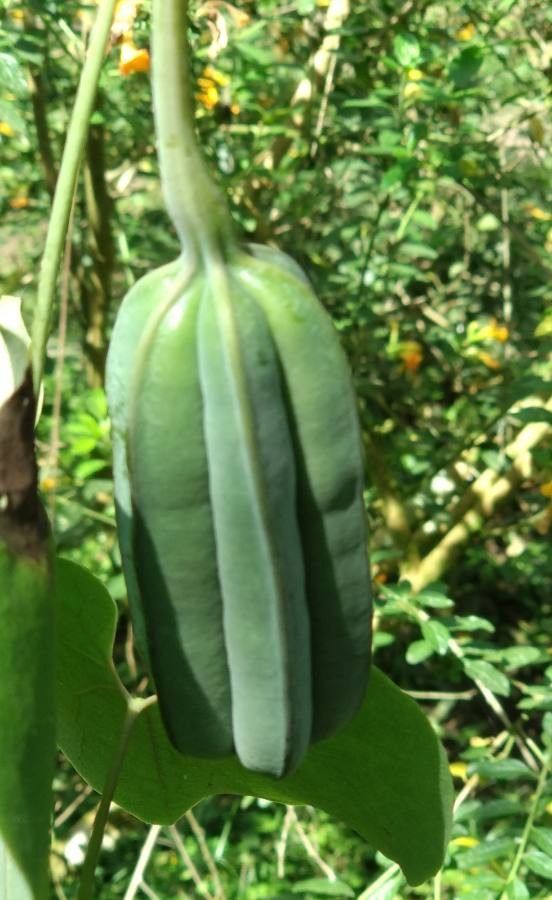
Propagating Aristolochia andina: A Gardener’s Guide to the Andean Dutchman’s Pipe
Aristolochia andina, commonly known as the Andean Dutchman’s Pipe, is a captivating vine prized for its uniquely shaped flowers—curious, almost alien-like blooms that attract pollinators with their pungent aroma. The plant’s heart-shaped leaves add to its ornamental appeal, making it a sought-after addition to collections of exotic climbers. Its relative rarity in cultivation, however, means propagating this species presents a unique challenge, and success depends on understanding the plant’s specific needs.
Seed Germination:
Currently, there are no known reliable methods for seed germination propagation of Aristolochia andina. While seeds may be produced, their viability and germination rate are reportedly very low, likely due to factors such as short seed lifespan and specific germination requirements that are yet to be fully understood. Further research is needed to determine if specific pre-treatment techniques, such as scarification or stratification, would improve germination success.
Cuttings:
Cuttings offer a more reliable method of propagation for Aristolochia andina than seed germination. However, it’s not without its challenges.
Challenges: Success relies heavily on using semi-hardwood cuttings taken from actively growing shoots in late spring or early summer. The cuttings are prone to rot if not provided with optimal conditions.
Tips: Take cuttings of approximately 10-15cm, removing lower leaves to prevent rotting. Treat the cut ends with a rooting hormone to encourage root development. Plant the cuttings in a well-draining propagation mix, maintaining high humidity (using a propagator or plastic bag) and consistent moisture but avoiding waterlogging. Bottom heat can significantly improve rooting success.
Rewards: Cuttings allow for the propagation of desirable traits from a parent plant, resulting in genetically identical offspring. This method is relatively straightforward when compared to other approaches.
Division:
Division is suitable only for established, mature Aristolochia andina plants.
Challenges: Aristolochia andina doesn’t readily lend itself to division. Its root system can be quite fragile, making careful handling essential to avoid damaging the plant. The success rate is dependent on the size and health of the parent plant.
Tips: Division should ideally be undertaken in spring or early summer during the actively growing season. Carefully dig up the plant, being mindful not to disturb the roots excessively. Separate the plant into sections, ensuring each division includes healthy roots and shoots. Replant the divisions immediately into well-prepared soil.
Rewards: Division provides a faster method of increasing plant numbers compared to cuttings, though it’s limited to established plants.
Tissue Culture:
Tissue culture offers potential for large-scale propagation of Aristolochia andina.
Challenges: Establishing a reliable tissue culture protocol for this species requires specialized knowledge, equipment, and a sterile laboratory environment. The process is complex, time-consuming, and expensive compared to other propagation methods. Optimal media formulations and growth regulators would need to be determined through experimentation.
Tips: Successful tissue culture requires meticulous sterile techniques to prevent contamination. The use of specific growth hormones and nutrient media is crucial for inducing shoot proliferation and root formation.
Rewards: Tissue culture offers the potential for mass production of genetically uniform plants, free from diseases. This method also presents opportunities for genetic improvement through techniques such as meristem culture for virus elimination or somatic embryogenesis for large-scale plantlet production.
Conclusion:
Propagating Aristolochia andina presents a rewarding yet challenging endeavor. While seed germination currently appears unfeasible, cuttings provide a relatively reliable method for the home gardener. Division offers a potentially quicker method for established plants, whilst tissue culture offers the greatest potential for large-scale propagation, albeit with significant expertise and resources required. The unique satisfaction of successfully cultivating this exotic vine stems from overcoming these propagation hurdles, resulting in a stunning addition to your collection, as well as contributing to the preservation of this fascinating species. For aspiring propagators, patience, attention to detail, and a willingness to experiment are key ingredients for success. Remember to prioritize providing optimal conditions to promote healthy root and shoot development, regardless of the propagation method chosen.