
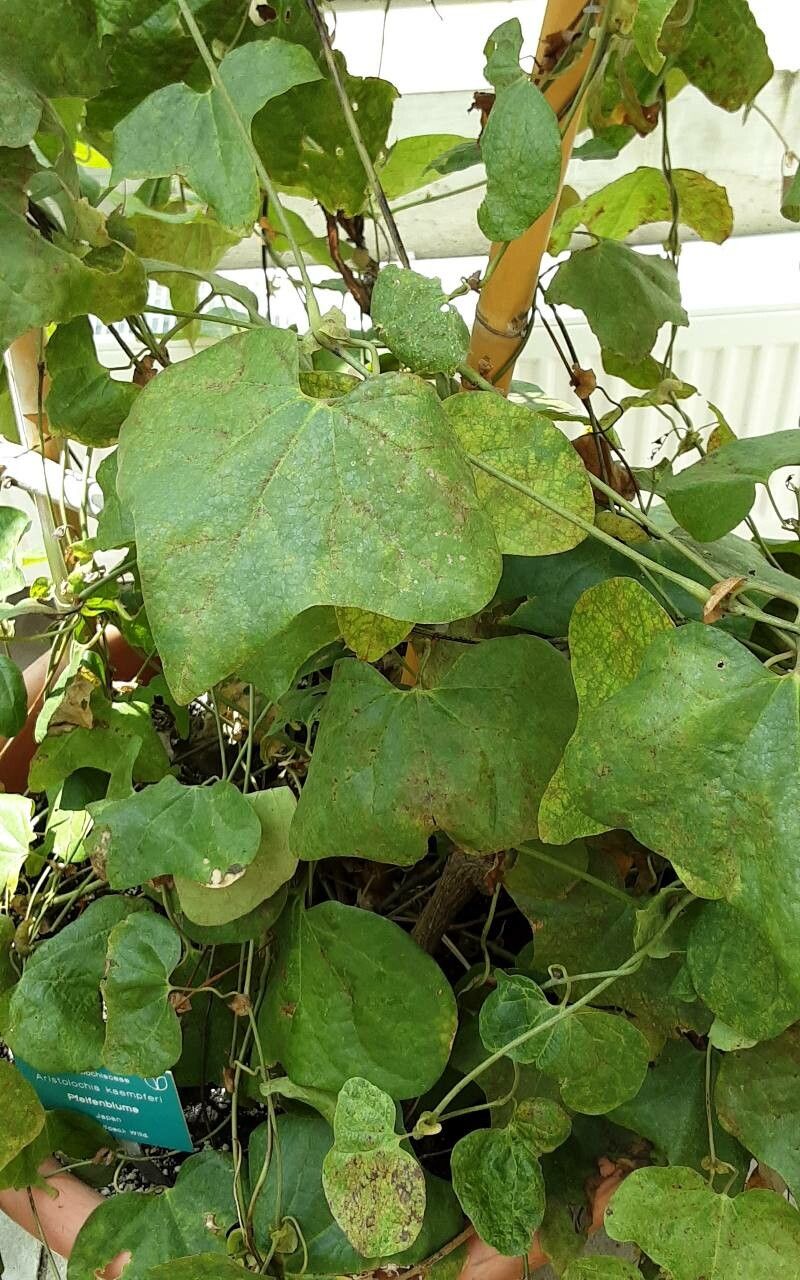
Propagating the Dutchman’s Pipe: A Guide to Aristolochia kaempferi
Aristolochia kaempferi, commonly known as the Japanese Dutchman’s Pipe, is a captivating climbing plant prized for its unique, strangely beautiful flowers. These flowers, resembling bizarre pipes or perhaps even alien spacecraft, are a deep reddish-purple with a netted veined interior, attracting pollinators with their intriguing shape and scent. Its heart-shaped leaves provide lush green foliage, adding to its overall ornamental appeal. This makes Aristolochia kaempferi a sought-after addition to many gardens, but its propagation can present certain challenges. This article explores various methods, outlining their successes and drawbacks.
Seed Germination:
Currently, there are no known reliable methods for seed germination propagation of Aristolochia kaempferi. While seeds may be produced, their germination rate is notoriously low, and success remains elusive even with techniques used successfully on other Aristolochia species. Further research is needed to determine optimal conditions for germination.
Cuttings:
Cuttings offer a more reliable method of propagation for Aristolochia kaempferi.
Challenges: Success depends on timing and technique. Semi-hardwood cuttings taken in late spring or early summer usually yield the best results. The cuttings need to be long enough to possess several nodes and leaves for optimal root development. Root rot is a significant risk, requiring careful attention to moisture levels and using a well-draining medium.
Practical Tips: Take 4-6 inch cuttings from healthy, non-flowering stems. Remove lower leaves to prevent rot, dip the cut ends in rooting hormone, and insert into a moist propagation mix (e.g., perlite and vermiculite or a peat-based mix). Maintain high humidity (using a propagation dome or plastic bag) and bottom heat to encourage rooting. Mist regularly but avoid overwatering.
- Rewards: Cuttings allow for the preservation of desirable traits from a mature plant and are a relatively straightforward method for modest-scale propagation.
Division:
Division is a viable propagation method for established Aristolochia kaempferi plants.
Challenges: This method is only suitable for larger, mature plants with well-developed root systems. Care must be taken to avoid damaging the roots during the division process, as this can significantly weaken the plants. The timing of division is important; generally, early spring or autumn when the plant is less actively growing is preferable.
Practical Tips: Carefully dig up the plant, gently loosen the root ball, and separate it into several divisions, each with its own set of roots and stems. Replant the divisions immediately in well-prepared soil, ensuring adequate spacing.
- Rewards: Division offers a fast way to increase the number of plants, maintaining the genetic characteristics of the parent plant. It’s ideal for expanding existing plantings or sharing with other gardeners.
Tissue Culture:
Tissue culture is a highly specialized method, not typically undertaken by home gardeners.
Challenges: This method requires a sterile laboratory environment, specialized equipment, and expertise in plant tissue culture techniques. It is a complex and time-consuming process.
Practical Tips: This method is best left to professionals or specialized laboratories.
- Rewards: Tissue culture offers the potential for rapid, large-scale propagation and the elimination of diseases.
Conclusion:
Propagating Aristolochia kaempferi presents unique challenges, with seed germination proving unreliable. Cuttings and division are the most accessible and practical methods for the average gardener. While these require patience and attention to detail, the rewards are substantial. Successfully cultivating this remarkable plant, overcoming the inherent propagation difficulties, provides a profound sense of accomplishment. The unique beauty and intriguing characteristics of the Japanese Dutchman’s Pipe make the effort well worthwhile. Don’t be discouraged by initial setbacks. Persistent experimentation, diligent care, and a touch of horticultural patience will ultimately lead to the successful propagation of this fascinating climber.