
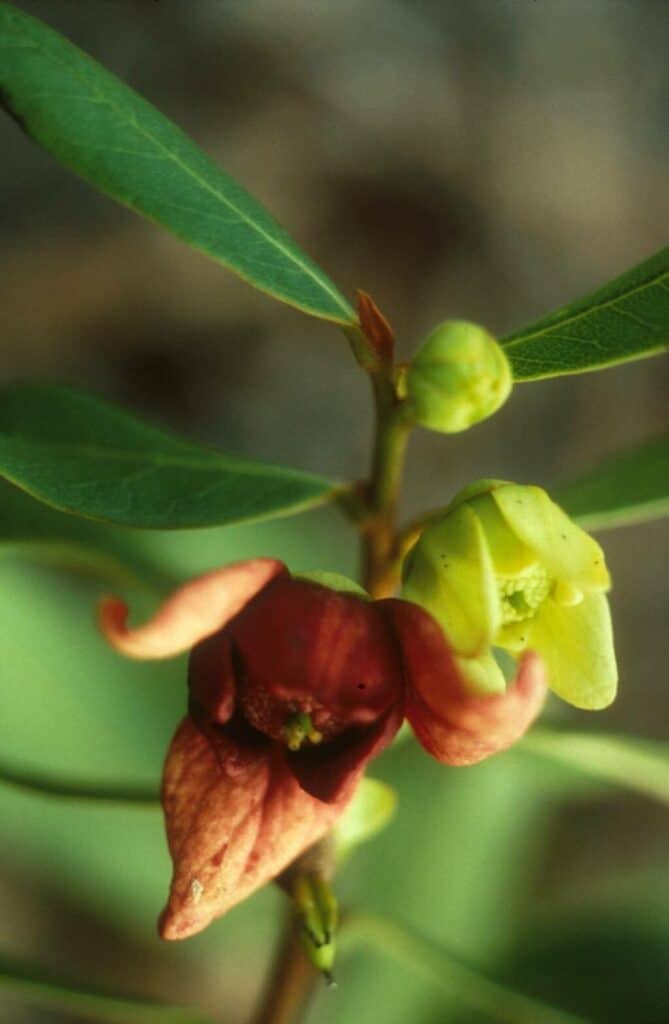
Unlocking the Secrets of the Four-Petal Pawpaw: Propagating Asimina tetramera
The Four-petal pawpaw, or Asimina tetramera, is a rare and beautiful shrub native to the Florida scrub. With its stunning burgundy flowers and unique, edible fruit, this plant captivates those lucky enough to encounter it. But cultivating Asimina tetramera isn’t for the faint of heart. This blog post delves into the secrets of propagating this intriguing species, discussing both sexual and asexual methods.
The Challenge of Seed Propagation
Like other pawpaw species, Asimina tetramera can be grown from seed. However, success hinges on acquiring fresh seeds, as they quickly lose viability. The seeds also possess a double dormancy, meaning they require a two-stage stratification process to break dormancy and germinate.
The Process:
- Extraction and Cleaning: Extract fresh seeds from ripe fruit and remove any pulp or fruit remnants.
- Warm Stratification: Sow seeds in a moist, well-draining medium and place them in a warm location (around 70-80°F) for 90-120 days.
- Cold Stratification: After the warm period, move the seeds to a cold environment (around 40°F) for another 90-120 days. This can be achieved in a refrigerator or a cold cellar.
- Sowing: After the cold stratification, pot the seeds in a suitable growing medium and keep them consistently moist.
- Patience: Germination can be erratic and may take several months or even a year.
Vegetative Propagation: A More Reliable Approach
While seed propagation is possible, it can be unpredictable and time-consuming. Vegetative methods, on the other hand, provide a quicker and often more successful route to propagating Asimina tetramera.
1. Root Cuttings:
- During the dormant season, carefully extract a portion of healthy roots from an established plant.
- Cut the roots into 2-3 inch sections, ensuring each section has at least one growth bud.
- Place the sections horizontally in a moist, well-draining medium, burying them about an inch deep.
- Maintain consistent moisture and temperature, and root development should occur within a few months.
2. Layering:
- Choose a low-growing, flexible branch on a mature plant.
- Gently wound the underside of the branch and apply rooting hormone for boosted success.
- Bury the wounded portion in the soil, ensuring the tip of the branch remains above ground.
- Secure the branch in place with a stake or rock.
- In time, roots will develop from the wounded area, and you can detach the new plant.
Essential Considerations for Success
- Soil: Asimina tetramera thrives in well-drained, slightly acidic soil.
- Sunlight: While the plants tolerate partial shade, they flower and fruit best in full sun to partial shade.
- Moisture: Provide regular watering, especially during dry periods, but avoid waterlogging the soil.
- Patience: Remember, this species can be slow-growing, requiring patience and persistence for successful propagation.
Propagating Asimina tetramera offers a rewarding challenge for plant enthusiasts. While challenging, successfully establishing this rare and beautiful species brings immense satisfaction and contributes to its conservation. So, embrace the challenge, follow these tips, and experience the joy of nurturing this botanical treasure.