
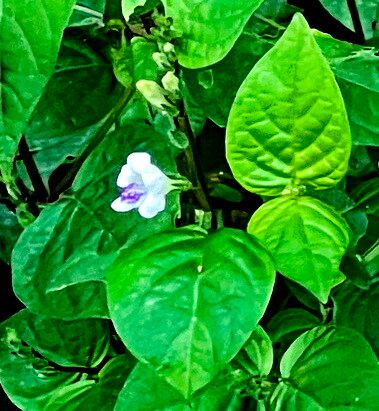
Propagating Asystasia intrusa: A Gardener’s Guide to the Creeping Foxglove
Asystasia intrusa, commonly known as creeping foxglove, is a vigorous, sprawling herbaceous perennial prized for its attractive, light purple to white flowers and its ability to thrive in various conditions. Its ease of propagation contributes to its popularity amongst gardeners, especially those seeking ground cover or a low-maintenance flowering plant. However, while seemingly straightforward, successful propagation of Asystasia intrusa presents some unique challenges depending on the chosen method.
Seed Germination:
Currently, there are no known reliable methods for seed germination propagation of Asystasia intrusa. While the plant does produce seeds, germination rates are notoriously low, and successful seedling establishment is exceptionally challenging. Further research into specific seed treatment techniques might be necessary to unlock this propagation method, as the potential for increased genetic diversity makes it a desirable avenue to explore.
Cuttings:
Cuttings are the most reliable and widely used method for propagating Asystasia intrusa.
Challenges: The main challenge lies in ensuring sufficient humidity and preventing fungal diseases while the cuttings root. Overwatering is a common pitfall.
Practical Tips: Take 8-10cm long stem cuttings with several nodes. Remove lower leaves to prevent rotting. Use a well-draining rooting medium such as a mix of perlite and vermiculite. Dip the cut ends in rooting hormone for improved success. Propagate in a humid environment, either using a propagator or by covering the cuttings with a plastic bag or humidity dome. Ensure adequate light but avoid direct sunlight.
Rewards: High success rates, relatively quick propagation, and maintaining the parent plant’s characteristics.
Division:
Division is another effective method, particularly for established plants.
Challenges: Dividing the plant too small can result in weak or slow-growing sections. The process itself can be slightly disruptive to the parent plant. Careful execution is key to prevent damage.
Practical Tips: Divide the plant during its dormant period or early spring. Ensure each division contains a healthy root system and several stems. Plant the divisions immediately after separating, ensuring enough spacing between them. Water thoroughly but avoid overwatering.
Rewards: Relatively easy technique, resulting in multiple plants quickly.
Tissue Culture:
Tissue culture is a viable, albeit more technically demanding, method for propagating Asystasia intrusa.
Challenges: Requires specialized equipment, sterile conditions, and a working knowledge of plant tissue culture techniques. This method is not typically suitable for home gardeners.
Practical Tips: Sterilization of all materials is paramount. A suitable plant growth regulator (PGR) medium is crucial for optimal growth. Maintaining sterile conditions throughout the entire process prevents contamination.
Rewards: Large-scale propagation is possible, ensuring uniformity and disease-free plants. Preservation of rare or endangered varieties is also facilitated.
Conclusion:
Propagating Asystasia intrusa, while achievable, presents certain hurdles depending on the selected method. Cuttings and division offer the most practical and reliable approaches for home gardeners, boasting high success rates. Though seed propagation currently poses significant challenges, tissue culture offers potential for large-scale production. The satisfaction of nurturing a small cutting into a thriving plant, overcoming the challenges inherent in propagation, is a rewarding experience for any gardener. The seemingly effortless sprawl of the creeping foxglove is a testament to its resilience – a quality mirrored in the perseverance of the propagator. Don’t be discouraged by initial setbacks; experiment with different techniques and remain patient, and you will be rewarded with the vibrant beauty of this adaptable plant.