
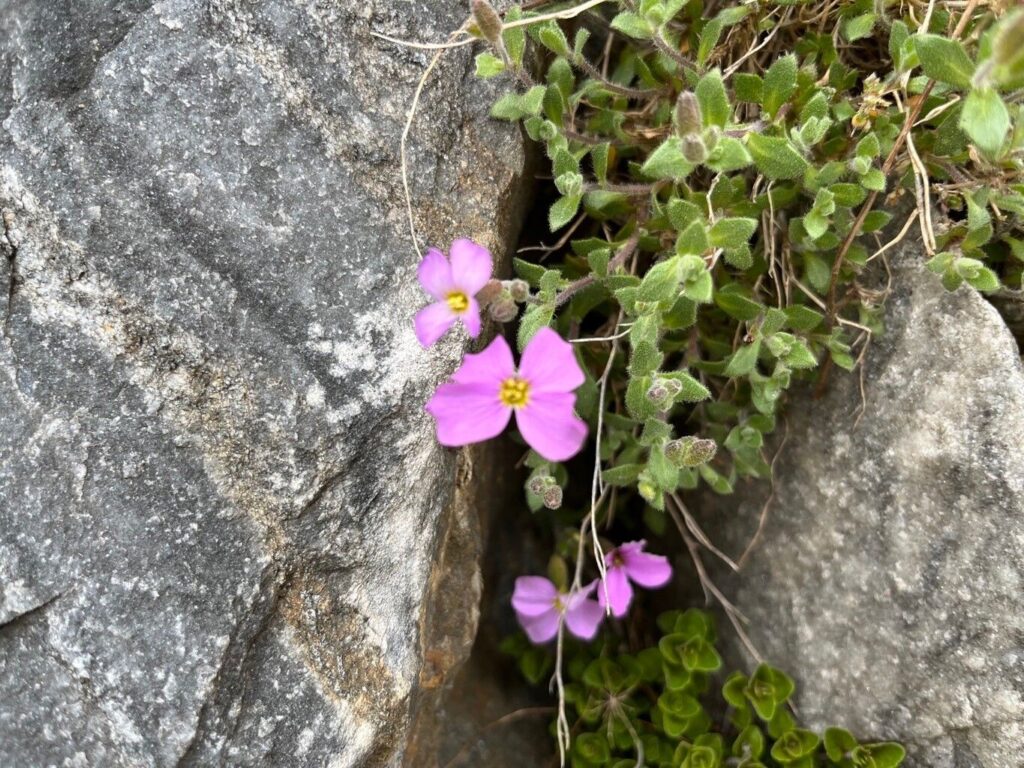
Propagating Aubrieta olympica: A Gardener’s Guide to Grecian Beauty
Aubrieta olympica, also known as Greek Aubrieta, is a captivating low-growing perennial boasting vibrant clusters of small, four-petaled flowers in shades of purple, pink, and white. Native to the mountains of Greece, this hardy plant is prized by gardeners for its cascading habit, making it ideal for rock gardens, walls, and containers. Its long flowering period and tolerance of harsh conditions contribute to its enduring popularity. However, propagating this delightful plant can present unique challenges. Let’s explore the various methods.
Seed Germination:
Currently, there are no known reliable methods for seed germination propagation of Aubrieta olympica. While Aubrieta species in general can produce seed, the germination rate is notoriously low and unpredictable for A. olympica. Attempts at stratification (a process simulating winter conditions to break seed dormancy) have yielded inconsistent results. Therefore, relying on seeds for large-scale propagation of this specific species is not recommended.
Cuttings:
This is the most reliable method for propagating Aubrieta olympica.
Challenges: While relatively straightforward, success depends on timing and technique. Taking cuttings too early or late can reduce success rates. Proper sanitation to prevent fungal diseases is also crucial.
Tips: The best time to take cuttings is in spring or early summer, using semi-hardwood cuttings (partially matured stems). Take 10-15cm cuttings, removing lower leaves to prevent rot. Dip the cut ends in a rooting hormone powder before planting in a well-draining, moist propagation mix (perlite and peat moss are suitable). Maintain high humidity (e.g., using a propagator or clear plastic bag) and a temperature around 18-21°C. Rooting should occur within 4-6 weeks.
Rewards: Cuttings offer a rapid and effective way to produce multiple clones of a desirable Aubrieta olympica plant, preserving its specific traits.
Division:
Division is another viable method, though less readily applicable than cuttings.
Challenges: Aubrieta olympica forms dense mats, and dividing them requires care to avoid damaging the root system. This method is best suited for established plants.
Tips: Divide the plant in spring or autumn, carefully separating the root crown into sections, ensuring each division has adequate roots and shoots. Replant immediately into well-drained soil, spacing them appropriately for optimal growth.
Rewards: Division is a simple and effective method for increasing the number of plants, particularly when a larger clump is already established.
Tissue Culture:
Tissue culture propagation, while technically possible for Aubrieta species, is generally not a practical method for home gardeners.
Challenges: Tissue culture requires specialized equipment, sterile conditions, and expertise in plant tissue culture techniques. It is expensive and time-consuming.
Tips: This method is best left to commercial nurseries or research facilities.
Rewards: While offering the potential for large-scale propagation and disease-free plants, the high costs and technical demands outweigh the benefits for most individuals.
Conclusion:
Propagating Aubrieta olympica presents diverse challenges depending on the chosen method. Seed germination is unreliable, making cuttings the recommended approach for home gardeners. Division offers a simpler alternative for established plants. Tissue culture is best left to professionals. Despite the hurdles, the satisfaction of successfully propagating this beautiful plant, rewarding you with a vibrant display of colour in your garden, is a truly fulfilling gardening achievement. Don’t be discouraged by initial setbacks; persevere, learn from your experiences, and the breathtaking blooms of your own meticulously propagated Greek Aubrieta will surely be worth the effort.