
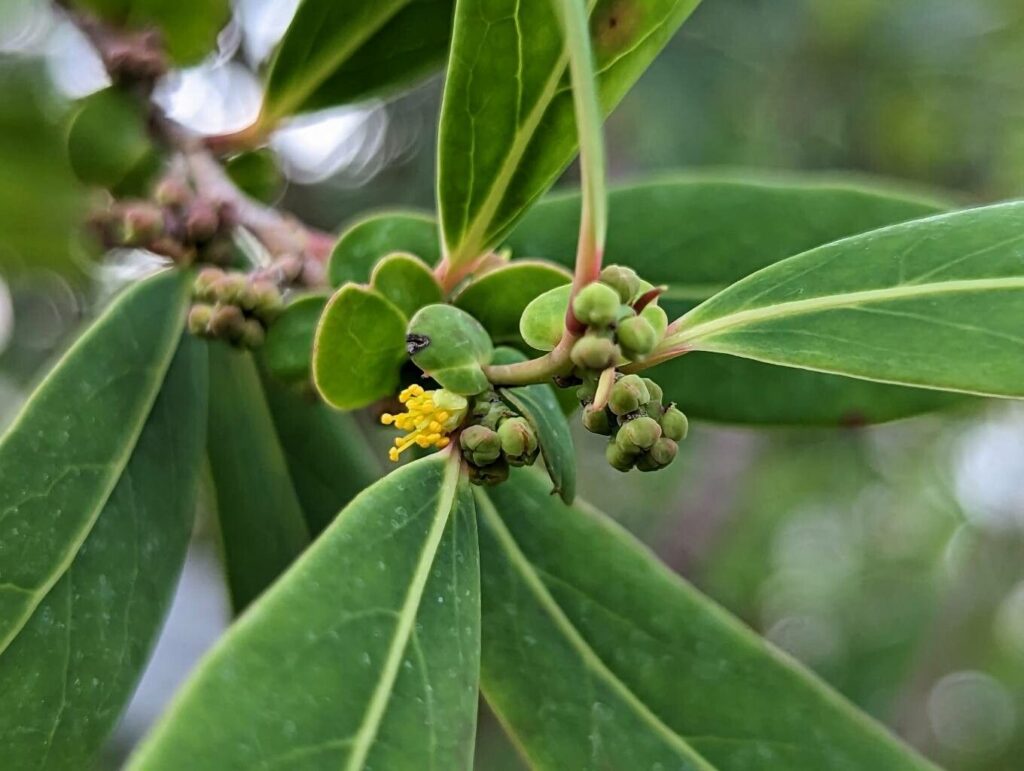
Propagating the Sweet-Scented Azara: A Gardener’s Guide to Azara uruguayensis
Azara uruguayensis, commonly known as the Sweet Azara or Uruguay Azara, is a captivating evergreen shrub prized for its intensely fragrant, tiny yellow flowers that bloom profusely in late winter and early spring. Its delicate, glossy foliage adds year-round interest to the garden. While relatively uncommon compared to other garden shrubs, its unique charm and delightful scent have earned it a devoted following among gardeners seeking something special. However, propagating this beauty presents certain challenges, making successful cultivation all the more rewarding.
Seed Germination:
Currently, there are no known reliable methods for seed germination propagation of Azara uruguayensis. While seeds may be produced, their germination rate is exceptionally low, and the process is largely unpredictable. Further research into specific stratification techniques or other pre-treatment methods is needed to determine if seed propagation is a viable option for this species.
Cuttings:
Cuttings offer a more reliable method for propagating Azara uruguayensis.
Challenges: Rooting cuttings can be slow and prone to failure due to susceptibility to fungal diseases. Using hardwood cuttings (taken from mature wood in late autumn/winter) offers slightly better chances than softwood cuttings (new growth).
Practical Tips: Take semi-hardwood cuttings of about 10-15cm in length, ideally in late summer or early autumn. Remove lower leaves to prevent rot. Treat the cut ends with a rooting hormone powder, then plant into a well-draining, sterile propagation mix (e.g., a mix of peat moss and perlite). Maintain high humidity using a propagation dome or plastic bag. Place in a warm, bright location (but out of direct sunlight). Rooting can take several months.
Rewards: Cuttings offer a high degree of genetic consistency, ensuring that new plants are identical to the parent plant. This is particularly useful for propagating cultivars with desirable traits.
Division:
Division is not a practical method for propagating Azara uruguayensis. The plant’s root system is not easily divided, and attempts at division often result in the death of the parent plant or the resulting divisions failing to thrive.
Tissue Culture:
Tissue culture presents a potential, albeit specialized, method for propagating Azara uruguayensis.
Challenges: Tissue culture requires a sterile laboratory environment, specific growth media, and specialized expertise. It is not a technique feasible for the average home gardener.
Practical Tips: Establishment of a sterile culture requires strict aseptic techniques and specialized media formulation tailored for Azara uruguayensis. Successful propagation would involve the extraction, sterilization, and culture of plant tissue (e.g., shoot tips, nodal segments) on a nutrient-rich agar medium.
Rewards: Tissue culture offers the potential for rapid and large-scale propagation, allowing for the efficient production of clones even from a limited supply of plant material. It also minimizes the risk of disease transmission.
Conclusion:
Propagating the sweet azara presents specific challenges, with cuttings proving to be the most reliable method accessible to home gardeners, albeit with patience and careful technique. Although seed propagation and division remain unlikely options, the potential of tissue culture offers hope for future large-scale production. Regardless of the chosen method, successfully propagating Azara uruguayensis is a rewarding experience. The journey from a small cutting to a flourishing shrub, bearing its intoxicating fragrance, provides a unique satisfaction that speaks to the enduring appeal of connecting with nature on this intimate level. Don’t be discouraged by the initial challenges; persistence and attention to detail will ultimately yield the delightful rewards of cultivating this special plant.