
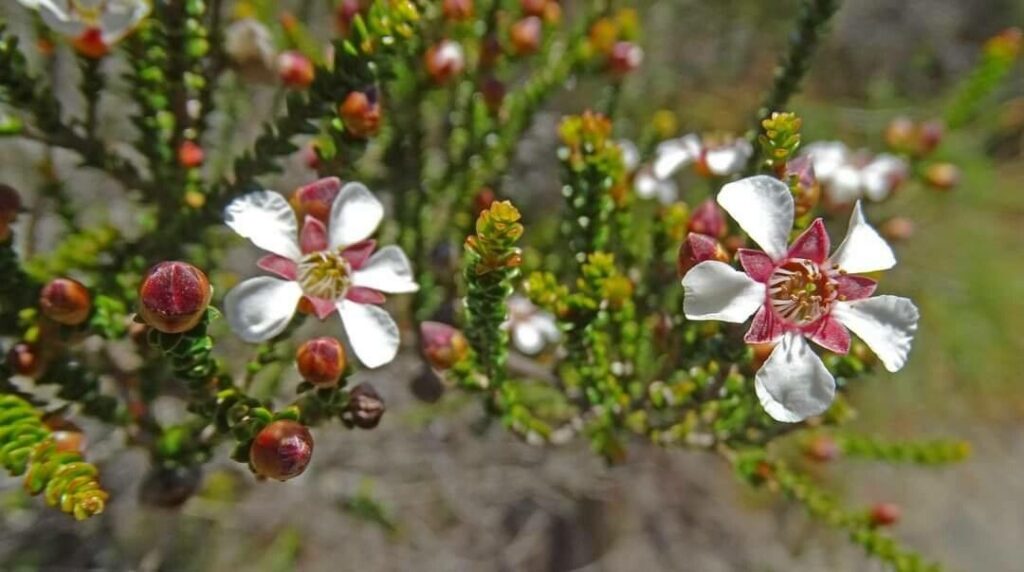
Propagating Baeckea brevifolia: A Gardener’s Guide to the Coast Rosemary
Baeckea brevifolia, commonly known as Coast Rosemary, is a charming, low-growing shrub native to coastal areas of Australia. Its delicate, needle-like foliage and profusion of small, white or pink flowers make it a highly desirable plant for rock gardens, borders, and coastal landscaping. Its tolerance for harsh conditions, including salt spray and poor soils, adds to its horticultural appeal. However, propagating Coast Rosemary can present some unique challenges. Let’s explore the various methods available.
Seed Germination:
Currently, there are no known reliable methods for seed germination propagation of Baeckea brevifolia. While seeds may be produced, their germination rate is notoriously low, and successful germination under controlled conditions has not been widely documented. Further research into specific germination requirements, such as light exposure, temperature stratification, or pre-treatment, may be necessary to unlock this propagation method.
Cuttings:
Cuttings represent the most reliable method of propagating Baeckea brevifolia.
Challenges: Rooting can be slow and inconsistent, especially if not undertaken at the optimal time of year. The use of rooting hormones is often beneficial.
Practical Tips: Semi-hardwood cuttings taken in late spring or early summer show the best results. Cuttings should be approximately 10-15cm long, taken from the current year’s growth. Remove lower leaves to prevent rotting and dip the cut end in a rooting hormone powder. Plant cuttings in a well-draining propagation mix, such as a blend of perlite and peat moss. Maintain consistently moist conditions (but not waterlogged) and high humidity, ideally using a humidity dome or propagator.
Rewards: Cuttings offer a relatively quick way to obtain genetically identical clones of a desirable mother plant, preserving its unique characteristics. This makes it ideal for garden propagation.
Division:
Division of established Baeckea brevifolia plants is possible, but it’s not a common practice.
Challenges: Coast Rosemary often has a shallow, fibrous root system, making it difficult to divide without causing significant root damage. Larger, more mature plants are better suited to division.
Practical Tips: Division should be carried out in spring or autumn when the plant is actively growing. Carefully dig up the plant and gently separate it into smaller sections, ensuring each section has a good portion of roots and healthy stems. Replant the divisions promptly and water well.
Rewards: Division can be a less resource-intensive method than cuttings when propagating a few plants from a large, well-established specimen.
Tissue Culture:
Tissue culture propagation for Baeckea brevifolia is largely unexplored.
Challenges: Establishing a successful tissue culture protocol requires specialized knowledge, equipment, and sterile conditions. The optimal media composition and growth regulators for Baeckea brevifolia would need to be determined through experimentation.
Practical Tips: This method is not recommended for home propagators due to the complexity and specialized requirements.
Rewards: Tissue culture offers the potential for mass propagation, disease-free clones, and preservation of genetic material.
Conclusion:
Propagating Baeckea brevifolia presents varying degrees of difficulty across different methods. While seed germination appears currently unviable, cuttings provide the most reliable and accessible approach for home gardeners. Division is possible but requires careful technique, and tissue culture remains largely uncharted territory. Despite the challenges, the unique beauty and hardiness of Coast Rosemary make the effort worthwhile. The satisfaction derived from successfully cultivating this delightful plant, especially through cuttings, far outweighs the initial difficulties. So, arm yourself with patience and perseverance, and enjoy the journey of bringing more Coast Rosemary into your garden!