
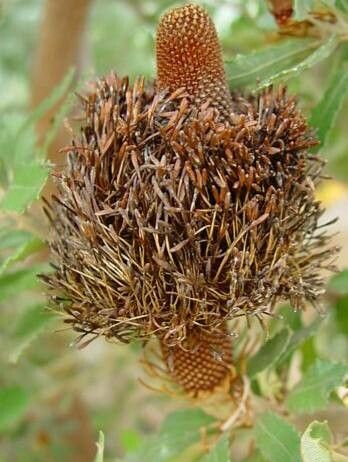
Propagating the Giant Banksia: Challenges and Rewards of Cultivating Banksia grandis
Introduction
Banksia grandis, also known as the Giant Banksia, is a striking Australian native tree prized for its impressive size, large, showy flower spikes, and attractive foliage. Its majestic presence commands attention in any garden, making it a popular choice among gardeners seeking a statement plant. However, propagating this species presents distinct challenges, requiring patience and a solid understanding of its specific needs. The unique aspects of Banksia grandis propagation primarily revolve around its relatively slow growth rate and the sometimes unpredictable success rates of various methods.
Seed Germination
Seed germination is a viable method for propagating Banksia grandis, but it’s not without its challenges. Giant Banksia seeds benefit from a period of stratification – a process mimicking natural winter conditions to break dormancy. This can be achieved by either:
- Cold stratification: Storing seeds in a moist medium (e.g., vermiculite or perlite) in a refrigerator at approximately 4°C (39°F) for 6-8 weeks.
- Warm stratification: Some sources suggest a warm stratification period of up to 8 weeks at around 20-25°C before cold stratification.
Following stratification, seeds should be sown in a well-draining seed-raising mix, preferably one with added coarse sand to improve drainage. Keep the mix consistently moist but not waterlogged. Germination can take several weeks or even months, and germination rates are often variable.
Challenges: Low germination rates, inconsistent results, the length of time required for germination.
Tips: Use fresh seeds collected from mature plants; ensure excellent drainage; maintain consistent moisture levels but avoid overwatering; be patient.
Rewards: High genetic diversity amongst offspring, potential for large-scale propagation, relatively inexpensive method.
Cuttings
Propagating Banksia grandis from cuttings is challenging and generally considered less effective than seed propagation. While some success may be achieved using semi-hardwood cuttings taken in autumn or spring, the success rate remains low.
Challenges: Low rooting success rates, difficulty in inducing root formation.
Tips: Use hormone rooting powder; provide a consistently humid environment; maintain good hygiene to prevent fungal infections.
Rewards: Faster establishment than seed-grown plants (if successful).
Division
Division is not a practical or feasible method for propagating Banksia grandis. This species does not readily form suckers or offsets suitable for division.
Division: Currently, there are no known reliable methods for division propagation of Banksia grandis.
Tissue Culture
Tissue culture offers a potential pathway for large-scale propagation of Banksia grandis, enabling the production of numerous genetically identical plants from a single source. However, this method requires specialized equipment, sterile conditions, and expertise in plant tissue culture techniques. It is not generally a method suitable for home gardeners.
Challenges: High initial costs associated with equipment and expertise; need for specialized knowledge and sterile conditions; maintaining sterility throughout the process.
Rewards: Large-scale propagation; production of clones with desirable traits; potential for rapid multiplication.
Conclusion
Propagating Banksia grandis presents a variety of challenges, but the rewards of successfully cultivating this magnificent tree are significant. Seed germination, while unpredictable, offers the greatest potential for achieving success, particularly if you carefully follow the stratification steps and pay close attention to proper drainage and moisture levels. Cuttings remain a difficult yet potentially quicker route that with perseverance, may offer success, while division and tissue culture are beyond the scope of the average home gardener. The unique satisfaction derived from nurturing a Giant Banksia from seed – witnessing its slow but steady progress from a tiny seedling to a mature specimen – is a testament to dedication and patience. Don’t be discouraged by initial setbacks; the perseverance required to cultivate this stunning plant ultimately contributes to the immense pride and fulfillment experienced upon success.