
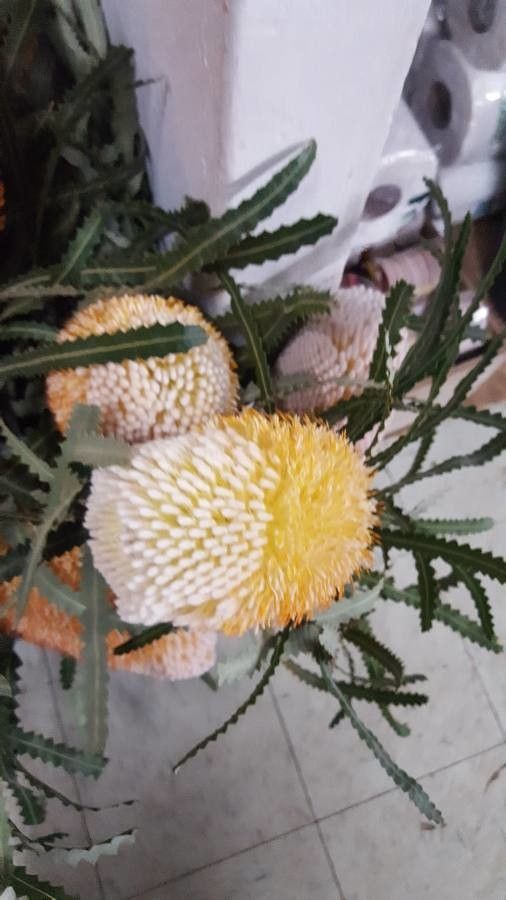
Propagating Banksia victoriae: A Gardener’s Guide to the Woolly Banksia
Introduction:
Banksia victoriae, commonly known as the Woolly Banksia, is a captivating Australian native shrub prized for its striking silvery-grey foliage and impressive, cylindrical flower spikes that emerge in shades of creamy yellow to pale orange. Its tolerance to drought and poor soils makes it a popular choice among gardeners seeking hardy, low-maintenance landscaping options. However, propagating Banksia victoriae presents unique challenges, requiring patience and attention to detail. Unlike some Banksia species readily propagated from seed, B. victoriae presents a more complex propagation scenario, making success particularly rewarding.
Seed Germination:
Seed germination for Banksia victoriae is possible but notoriously slow and unreliable. The hard seed coat requires significant scarification to allow water uptake and initiate germination.
Challenges: Low germination rates, slow germination time (months), susceptibility to fungal diseases in moist conditions.
Practical Tips: Pre-treat seeds by soaking in boiling water for a few seconds, followed by a 24-hour soak in cold water, before sowing. Alternatively, consider gentle mechanical scarification with sandpaper. Sow seeds in a well-drained seed-raising mix, maintaining consistent moisture (but not waterlogged conditions) and good ventilation. Consider the use of a fungicide to prevent damping off. Warm temperatures are beneficial.
Rewards: Genetic diversity within resulting plants, potential for large-scale propagation for conservation or horticultural purposes, cost-effective compared to other methods if successful.
Cuttings:
Propagation via cuttings for Banksia victoriae offers higher success rates than seed germination.
Challenges: Requires specialized techniques and considerable patience. Not all cuttings will root. Finding the optimal hormone treatment and rooting medium is crucial.
Practical Tips: Semi-hardwood cuttings taken in late spring or early summer have higher success rates. The cuttings should be approximately 10-15 cm long, taken from non-flowering stems. Dip the base of each cutting in a rooting hormone solution and plant into a well-draining potting mix containing perlite or vermiculite. Maintain high humidity using a propagator or by covering with a plastic bag. Mist regularly but avoid excess watering, which can lead to rotting.
Rewards: Faster establishment than seed-grown plants, higher success rate than seed propagation, preservation of desirable traits from the parent plant (e.g., flowering characteristics).
Division:
Division is generally not a viable propagation method for Banksia victoriae. The plant’s root system isn’t ideally suited for division, often resulting in damage and failure to re-establish.
Tissue Culture:
Tissue culture propagation of Banksia victoriae is a possibility, though it’s a complex and expensive method typically done in specialized labs.
Challenges: Requires specialized equipment, knowledge, and aseptic conditions, necessitating significant investment and expertise.
Practical Tips: The process involves establishing sterile cultures from plant tissues, followed by multiplication and rooting of plantlets in a controlled environment. This is best left to professional nurseries specializing in plant tissue culture.
Rewards: High propagation rates, the ability to produce large numbers of genetically identical plants, potential for disease-free plants.
Conclusion:
Propagating Banksia victoriae, while challenging, is achievable through cuttings, with seed propagation offering a more challenging but potentially rewarding alternative. Division and tissue culture present further challenges that may not be feasible for most home gardeners. The rewards, however, are great: the satisfaction of nurturing a difficult-to-propagate native plant through to maturity and the preservation of this magnificent shrub in your garden (or beyond through seed propagation) far outweigh the effort. Don’t be discouraged by initial setbacks; persistence and careful attention to detail are key to success. Every successful propagation is a testament to your gardening skills and a celebration of this stunning Australian native.