
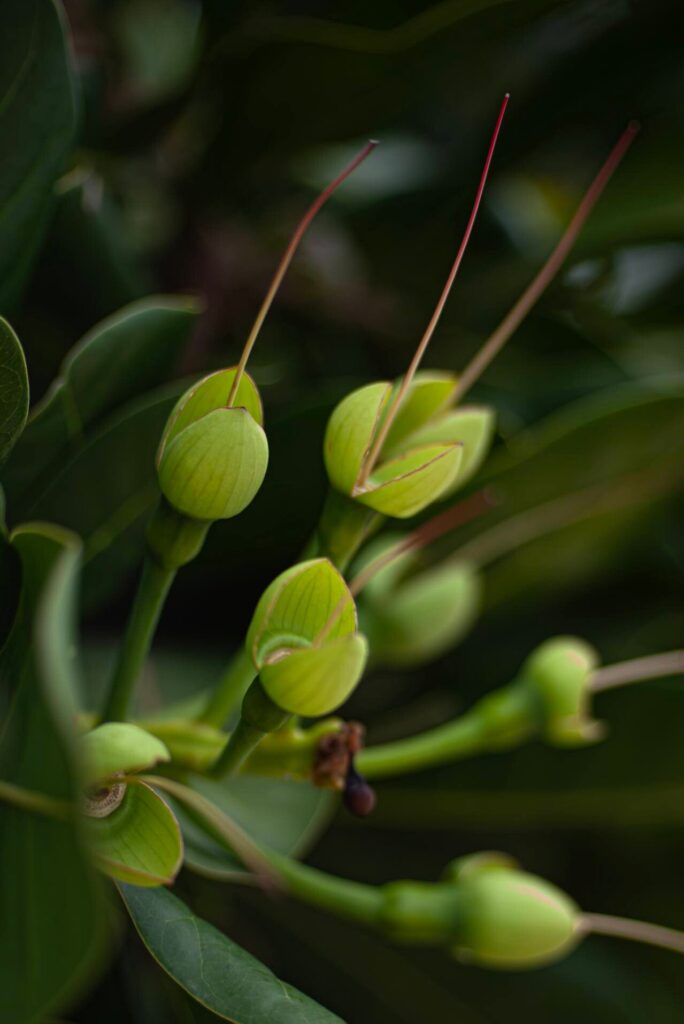
Propagating the Fish Poison Tree: A Guide to Barringtonia asiatica
Introduction:
Barringtonia asiatica, also known as the Fish Poison Tree, sea poison tree, or Box-fruit tree, is a striking tropical tree renowned for its beautiful, large, leathery leaves, and dramatic, pendulous clusters of showy pink or white flowers followed by distinctive, four-angled, woody fruits. Its captivating appearance makes it a highly prized ornamental plant in coastal gardens worldwide. However, its propagation presents unique challenges due to its specific environmental needs and the nature of its seeds and tissues. This article explores various propagation methods, highlighting their feasibility and associated difficulties.
Seed Germination:
Seed germination is a viable method for propagating Barringtonia asiatica, but it presents several challenges. The seeds have a relatively short viability period and require specific conditions for successful germination.
Challenges: Freshness is paramount; seeds rapidly lose viability after ripening. Dormancy can also be an issue, delaying germination. Furthermore, fungal infections can significantly reduce germination rates.
Practical Tips: Collect seeds only from mature, fully developed fruits. Remove the pulp immediately to prevent fungal growth. Pre-sowing treatment might include soaking seeds in water for 24-48 hours to soften the seed coat. Sowing should be conducted in well-drained, slightly acidic soil mix (e.g., a mixture of peat moss, perlite, and vermiculite), keeping the seed shallowly buried and the soil consistently moist but not waterlogged. Germination typically occurs within 4-8 weeks under warm, humid conditions (25-30°C).
Rewards: Seed propagation offers the advantage of genetic diversity, producing a wide array of plants with potentially varied characteristics. It also allows for large-scale propagation, making it suitable for reforestation projects and commercial nurseries.
Cuttings:
Propagating Barringtonia asiatica through cuttings is generally considered less successful than seed propagation.
Challenges: Cuttings often fail to root readily due to the difficulty in inducing callus formation and root development. The success rate is notoriously low, even with the use of rooting hormones.
Practical Tips: Semi-hardwood cuttings (taken from new growth that has partially lignified) taken during the active growing season may offer a slightly higher chance of success. Use a rooting hormone and a suitable propagation medium (e.g., perlite or vermiculite) maintained under high humidity conditions.
Rewards: If successful, cuttings offer a faster way to propagate desirable cultivars compared to seed propagation, preserving clonal traits. However, given the low success rate, this method is not extensively used.
Division:
Division is not a practical method for propagating Barringtonia asiatica. Its deep taproot system makes division extremely difficult and damaging to the mother plant, usually resulting in the death of both the parent plant and the separated portions.
Tissue Culture:
Tissue culture offers a potential, albeit technically demanding, method for propagating Barringtonia asiatica.
Challenges: Establishing a sterile culture and determining the optimal media composition and growth regulators are complex procedures requiring specialized knowledge and equipment. Contamination is a significant risk, often resulting in the loss of the entire culture.
Practical Tips: Specialized facilities and expertise are needed. Sterilization procedures using disinfectants and controlled environments are crucial. The process requires the use of plant growth regulators like auxins and cytokinins to induce shoot proliferation and rooting.
Rewards: Tissue culture enables mass production of genetically identical plants, preserving desirable traits and facilitating large-scale propagation. It also allows for the rapid multiplication of rare or endangered varieties.
Conclusion:
Propagating Barringtonia asiatica presents a unique set of challenges across different methods. Seed propagation, while viable, requires careful attention to seed freshness and optimal environmental conditions to achieve satisfactory germination rates. Cuttings are generally unsuccessful, and division is impractical. Tissue culture offers the best potential for large-scale propagation but requires substantial expertise and resources. Successfully cultivating this magnificent tree, despite the hurdles, offers immense satisfaction. The reward of witnessing these striking plants thrive, born from your own efforts, makes the challenges worthwhile. For aspiring propagators, patience, attention to detail, and a willingness to learn are vital for success. Begin with seed propagation, mastering the basics before venturing into the complexities of tissue culture. Don’t be discouraged by initial setbacks – the beauty and tenacity of Barringtonia asiatica are worth the effort.