
Propagating the Coral Plant: A Gardener’s Guide to Berberidopsis corallina
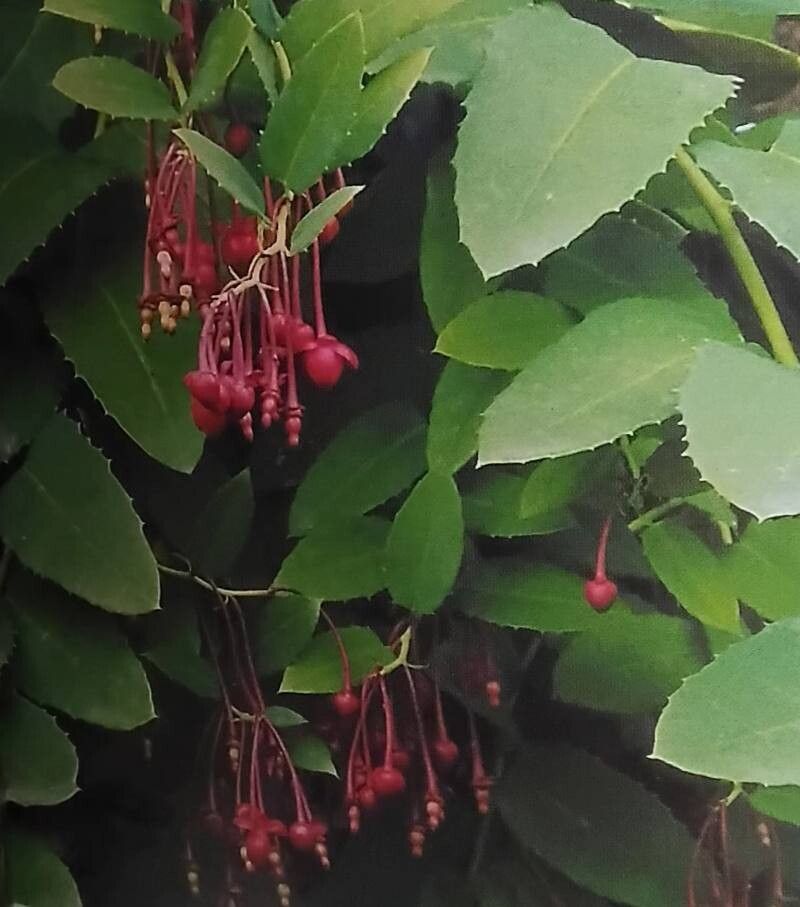
Berberidopsis corallina, commonly known as the Coral Plant or Chilean Coral Plant, is a captivating climber prized for its vibrant, coral-red pendulous flowers and its unique, almost prehistoric appearance. Native to the Valdivian temperate rainforests of Chile, this relatively rare plant has garnered significant popularity amongst discerning gardeners for its striking beauty and challenging nature. Its propagation, therefore, presents an equally rewarding and demanding endeavor. The unique characteristics of Berberidopsis, including its specific environmental needs and somewhat recalcitrant nature make propagating it more of an art than a science.
Seed Germination:
Currently, there are no known reliable methods for seed germination propagation of Berberidopsis corallina. While seeds may be produced, their viability is extremely low, and successful germination rates are practically nonexistent under typical horticultural conditions. The inherent dormancy mechanisms and specific microclimatic requirements of the seeds in their natural environment are likely significant hindering factors. Further research into the specific germination requirements would be needed.
Cuttings:
Cuttings present a more promising avenue for propagation, although it remains challenging.
Challenges: Berberidopsis cuttings are notoriously slow to root and prone to fungal diseases. The success rate is heavily dependent on maintaining consistently high humidity, sterile conditions, and optimal temperature.
Practical Tips: Semi-hardwood cuttings taken in late summer or early autumn are considered ideal. Use a sharp, sterilized blade to take 8-10cm cuttings with several nodes. Remove lower leaves to prevent rot and dip the cut ends in a rooting hormone. Propagate in a well-draining mix with high humidity – consider using a propagation tray with a lid or misting regularly. Bottom heat can significantly improve rooting success.
Rewards: Successful rooting of cuttings provides a relatively quick method for obtaining genetically identical plants. This is valuable for preserving desirable traits in a chosen cultivar.
Division:
Division is rarely feasible for Berberidopsis corallina as it typically doesn’t produce readily separable crowns or rhizomes suitable for division. Attempts at forcibly dividing established plants are likely to result in significant damage and loss of the parent plant.
Tissue Culture:
Tissue culture offers the most controlled and potentially effective approach to propagating Berberidopsis corallina, though it requires specialized knowledge, laboratory equipment, and sterile techniques.
Challenges: Establishing aseptic cultures and finding the optimal media composition for Berberidopsis are significant hurdles. The relatively slow growth rate of the plant may also slow propagation.
Practical Tips: Experienced tissue culturists would need to experiment with various growth media and hormone combinations to determine the optimal protocol for shoot multiplication and rooting.
Rewards: Tissue culture enables mass production of genetically uniform plants, offering the potential for large-scale propagation and commercialization. It also allows for the clonal propagation of rare or desirable cultivars.
Conclusion:
Propagating Berberidopsis corallina presents a significant challenge, demanding patience, meticulous care, and a degree of experimentation. While seed germination is currently unreliable, cuttings offer a more viable option, though demanding careful technique. Division is generally impractical. Tissue culture holds the most potential for large-scale propagation but requires specialist expertise.
The unique satisfaction of bringing this remarkable plant into cultivation, however, is significantly enhanced by the difficulties involved. Each rooted cutting, each successfully cultured plant represents a small victory, a testament to perseverance and skill. Aspiring propagators should approach the task with realistic expectations, a commitment to diligent care and the understanding that setbacks are a part of the process. The vibrant beauty of the Chilean Coral Plant, when successfully propagated truly rewards the endeavor.