
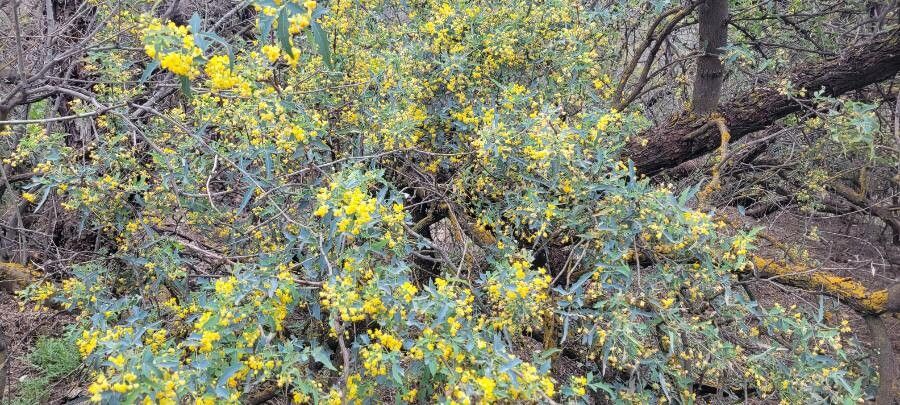
Propagating Fremont’s Barberry (Berberis fremontii): A Gardener’s Guide
Introduction
Berberis fremontii, commonly known as Fremont’s barberry, is a captivating deciduous shrub prized for its vibrant yellow flowers, striking blue-black berries, and attractive fall foliage. Native to the southwestern United States, this drought-tolerant species is gaining popularity among gardeners seeking low-maintenance, aesthetically pleasing additions to their landscapes. Its unique adaptation to arid conditions and its ability to attract pollinators make it a particularly desirable plant. Propagating Fremont’s barberry, however, presents unique challenges, requiring a deeper understanding of its specific needs. This article explores various propagation methods, outlining their feasibility and highlighting the rewards for those willing to undertake the task.
Seed Germination:
Currently, there are no known reliable methods for seed germination propagation of Berberis fremontii. While seeds may be produced, germination rates are notoriously low, even with pre-treatment methods such as stratification (exposure to cold, moist conditions). This low success rate makes seed propagation impractical for most gardeners.
Cuttings:
Cuttings offer a more viable approach to propagating Fremont’s barberry. However, success is contingent upon meticulous technique and optimal conditions.
Challenges: Hardwood cuttings taken in late autumn or winter show higher success rates but are slower to root. Semi-hardwood cuttings taken in summer may root more quickly, however, they are more susceptible to disease. Proper sanitation to prevent fungal infections is crucial. Root rot is a common problem.
Practical Tips: Use sharp, clean tools to take 4-6 inch cuttings from non-flowering stems. Remove lower leaves to prevent rotting and dip the cut ends in rooting hormone. Plant cuttings in a well-draining rooting medium (e.g., a mixture of perlite and peat moss) and maintain consistently moist but not soggy conditions. A propagation chamber or humidity dome can significantly improve success rates. Bottom heat can also aid root development.
- Rewards: Cuttings provide a faster method of propagation than other vegetative methods, allowing for quicker establishment of new plants. They also maintain the genetic characteristics of the parent plant, ensuring uniformity.
Division:
Division of established Fremont’s barberry plants is a feasible method, albeit limited by the plant’s size and growth habit.
Challenges: This method is only practical for mature plants that have developed a substantial root system and is prone to damaging the parent plant. Careful division is essential to avoid injuring critical roots.
Practical Tips: It’s best to divide in early spring or late fall, when the plant is relatively dormant. Dig up the entire plant, carefully separate the root mass into smaller divisions, ensuring each division contains healthy roots and shoots. Replant immediately, providing consistent moisture to help them establish.
- Rewards: Division provides a relatively quick way to increase plant stock, preserving the desirable characteristics of the parent plant.
Tissue Culture:
Tissue culture propagation, a specialized laboratory technique, offers the potential for large-scale propagation of Berberis fremontii.
Challenges: This method requires specialized equipment, sterile conditions, and expertise in plant tissue culture techniques. It is the most expensive and labour intensive method.
Practical Tips: This method is best left to professional nurseries or research institutions with the necessary infrastructure and experience.
- Rewards: Tissue culture offers the ability to mass-produce genetically identical plants, rapidly multiplying valuable cultivars and facilitating wider distribution. It also minimizes the risk of disease transmission.
Conclusion:
Propagating Fremont’s barberry presents a unique set of challenges, with seed propagation currently proving unreliable. Cuttings and division offer more achievable methods, requiring patience, careful technique, and attention to detail. Tissue culture presents a potential solution for large-scale production, but requires specialized resources. While the challenges may seem daunting, the reward of successfully cultivating this attractive and resilient native shrub is undeniably rewarding. The satisfaction of nurturing a cutting from a small piece of stem into a thriving plant is a testament to the gardener’s skill and patience. For aspiring propagators, starting with cuttings is recommended, focusing on proper sanitation and humidity control. Remember, experimentation and learning from successes and failures are part of the journey. The unique beauty and resilience of Berberis fremontii make the effort undeniably worthwhile.