
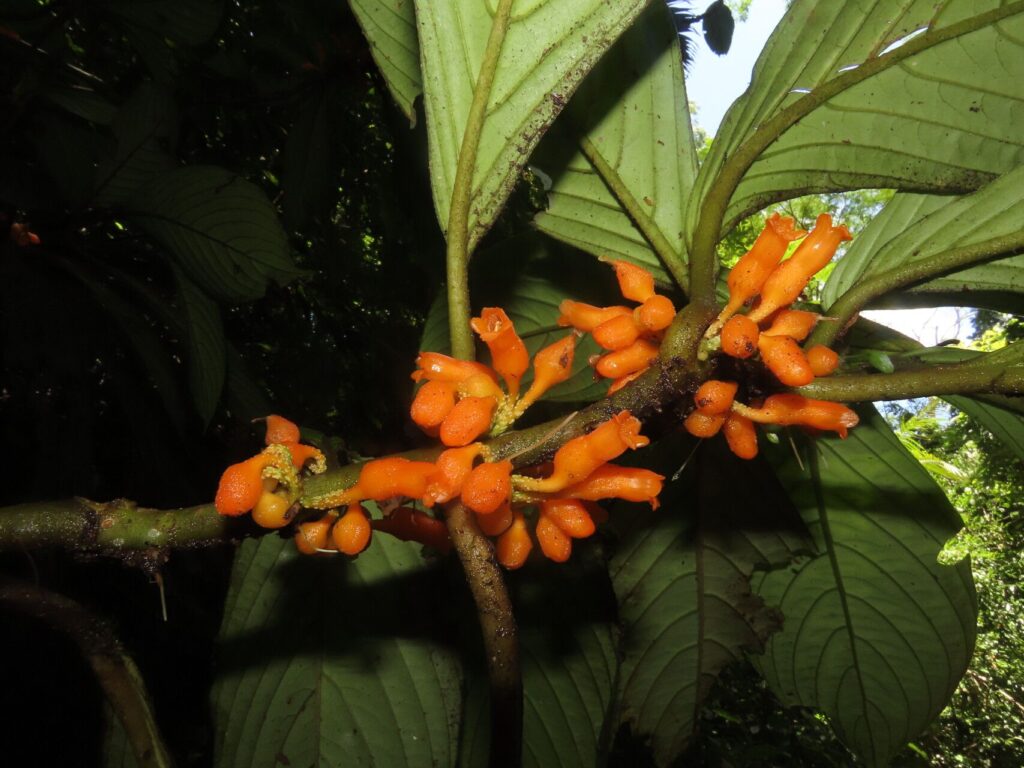
Propagating Besleria robusta: A Gardener’s Guide to a Challenging but Rewarding Endeavor
Besleria robusta, a member of the Gesneriaceae family, is a captivating plant prized for its vibrant, often pendulous, flowers and lush foliage. While its exact common name isn’t widely established, it’s often simply referred to as Besleria robusta within horticultural circles. Its beauty and unique characteristics make it a desirable addition to any collection specializing in tropical or shade-loving plants, but its propagation presents a unique set of challenges. This article explores various propagation methods, outlining their feasibility and offering practical advice for successful cultivation.
Seed Germination:
Currently, there are no known reliable methods for seed germination propagation of Besleria robusta. While the plant does produce seeds, their viability and germination rates appear to be exceptionally low, possibly due to factors such as seed dormancy, specific environmental requirements, or the need for mycorrhizal fungi for successful germination. Further research is needed to determine if controlled germination conditions could be developed.
Cuttings:
Cuttings offer a more promising approach to propagating Besleria robusta.
Challenges: Successfully rooting cuttings can prove difficult. The cuttings can be prone to fungal diseases and rot if not treated with appropriate fungicides and provided with optimal humidity levels.
Tips: Semi-hardwood cuttings taken in late spring or early summer show the best results. Use a sharp, clean blade to take 4-6 inch cuttings, removing lower leaves to prevent rot. Dip the cuttings in a rooting hormone before planting them in a well-draining mix (e.g., perlite and peat moss) kept consistently moist but not waterlogged. High humidity, preferably using a propagation dome or plastic bag, is crucial. Bottom heat can also improve rooting success.
Rewards: Cuttings offer a relatively quick way to multiply existing plants, preserving the genetic characteristics of the parent plant.
Division:
Besleria robusta, depending on its growth habit in cultivation, might be propagated by division.
Challenges: Division is only feasible if the plant produces multiple stems or offshoots from the base. Care must be taken not to damage the roots during the process.
Tips: Division should ideally be undertaken during the plant’s active growing season (spring or early summer). Carefully separate the plant into smaller sections, ensuring each division has a healthy root system and sufficient foliage. Plant the divisions in a well-draining potting medium and provide consistent moisture.
Rewards: Division offers a straightforward method for increasing the number of plants if the plant exhibits the appropriate growth structure. It’s usually less technically demanding than other methods.
Tissue Culture:
Tissue culture offers the potential for large-scale propagation of Besleria robusta.
Challenges: This method requires specialized equipment, a sterile environment, and expertise in plant tissue culture techniques. Finding the optimal culture medium and growth regulators for Besleria robusta may require experimentation.
Tips: Contact a specialized plant tissue culture laboratory for assistance. The process typically involves sterilizing plant material, culturing it on a nutrient agar medium, and then transferring the resulting plantlets into a growth medium before acclimating them to greenhouse conditions.
Rewards: Tissue culture enables the rapid propagation of many genetically identical plants and can be used to produce disease-free plants.
Conclusion:
Propagating Besleria robusta presents significant challenges, with seed germination currently proving unreliable. Cuttings offer the most accessible method for most home gardeners, but success requires patience, attention to detail, and the maintenance of high humidity. Division is possible if the plant’s growth habit is suitable. While tissue culture offers potential for large-scale propagation, it demands specialized skills and resources. The rewards—cultivating this beautiful and unusual plant—make the effort worthwhile for dedicated plant enthusiasts. Don’t be discouraged by initial setbacks; persistence, careful observation, and a willingness to experiment will ultimately lead to the satisfaction of successfully propagating this captivating species.