
Propagating the Poison Bulb: A Guide to Boophone disticha
Introduction:
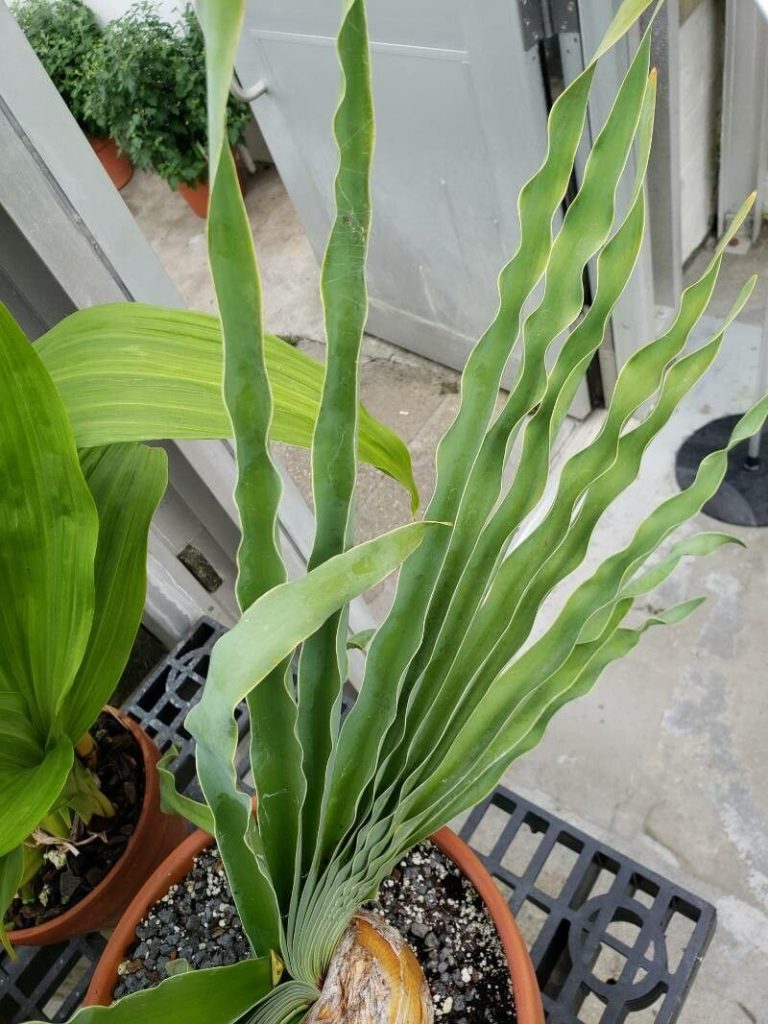
Boophone disticha, commonly known as the poison bulb, is a striking succulent geophyte native to southern Africa. Its distinctive, broad, strap-like leaves radiate from a large, subterranean bulb, often emerging only during the growing season. The captivating umbels of pinkish-purple flowers further enhance its appeal, making it a highly sought-after plant amongst succulent enthusiasts. However, its propagation presents unique challenges due to its slow growth and the toxicity of its sap. This article explores the various methods available, analyzing their viability and offering practical advice.
Seed Germination:
Seed germination for Boophone disticha is viable, but presents significant challenges. The seeds possess a hard seed coat that inhibits germination, requiring pretreatment.
Challenges: Low germination rates are common even with pre-treatment, and seedlings are slow-growing and delicate.
Practical Tips: Scarification (nicking the seed coat) or soaking in warm water for 24-48 hours can improve germination rates. Sow seeds in a well-draining, sandy mix, keeping the substrate consistently moist but not waterlogged. A warm temperature (around 25°C) and good light are crucial. Consider using a humidity dome to maintain high humidity during germination. Stratification (a period of cold treatment) may not be necessary, but some sources suggest a short period (4-6 weeks) at 4°C could be beneficial.
Rewards: Seed propagation offers the potential to generate high genetic diversity, leading to a wider range of plant characteristics. It is also a cost-effective method for large-scale propagation if successful.
Cuttings:
Currently, there are no known reliable methods for propagation of Boophone disticha using cuttings. The plant’s structure and physiology do not lend themselves to successful propagation from leaf or stem cuttings.
Division:
Division of the bulb is a viable method for propagation, but it carries its own set of considerations.
Challenges: The large, fragile bulb needs careful handling to avoid damage. Dividing the bulb incorrectly can harm the mother plant and the offsets, leading to failure. Furthermore, offsets are not always readily produced.
Practical Tips: Division is best undertaken during the plant’s dormant period. Ensure each division retains a portion of the root system and a healthy growing point. Plant the divisions in well-draining soil and water sparingly until new growth emerges.
Rewards: Division offers a relatively quick way to increase the number of plants, and the resulting plants are genetically identical to the parent plant.
Tissue Culture:
Tissue culture is a viable but complex method requiring specialized equipment and expertise.
Challenges: Establishing sterile conditions and finding the optimal growth media is challenging. The success rate relies on precise techniques and considerable experience in plant tissue culture.
Practical Tips: This method requires a controlled environment, sterile lab equipment, and a detailed understanding of plant tissue culture protocols. Sourcing a suitable explant (part of the plant for culturing) is also critical.
Rewards: Tissue culture permits rapid mass propagation of Boophone disticha, offering a chance to produce many genetically identical plants from a single source.
Conclusion:
Propagating Boophone disticha presents several challenges, regardless of the chosen method. Seed germination has the potential for genetic diversity but involves a low success rate, while division is simpler but more limited. Tissue culture offers the potential for large-scale propagation but demands significant expertise. Successful propagation requires patience, attention to detail, and a thorough understanding of the plant’s needs. However, the unique beauty and resilience of this intriguing plant make the effort rewarding. The satisfaction of nurturing a tiny seed to maturity or coaxing life from a bulb division is beyond compare. To those aspiring to propagate the poison bulb, remember that every setback is a learning experience, bringing one closer to achieving success with this captivating succulent.