
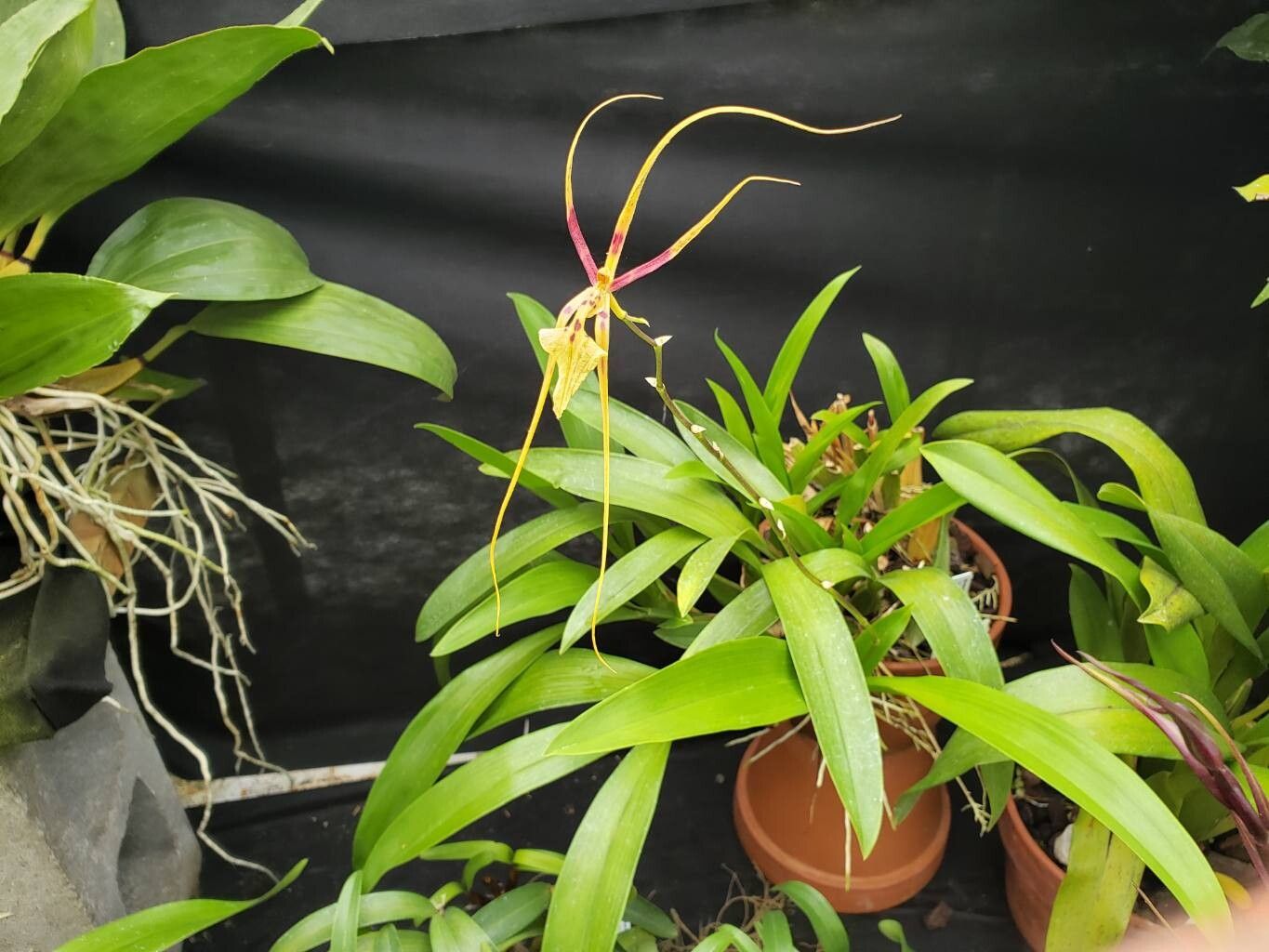
Propagating the Spider Orchid: A Guide to Brassia gireoudiana
Brassia gireoudiana, also known as the Spider Orchid, is a captivating member of the orchid family prized for its remarkable spidery flowers. Characterized by long, slender sepals and petals that radiate outward, creating a striking resemblance to a spider, this orchid delights gardeners with its unique beauty and relatively easy care compared to some other orchid species. Its popularity stems not only from its visual appeal but also from its relatively consistent flowering, making it a rewarding choice for orchid enthusiasts of all levels. However, propagating this beauty presents a unique set of challenges and rewards.
Seed Germination:
Currently, there are no known reliable methods for seed germination propagation of Brassia gireoudiana. Orchid seeds are notoriously tiny and lack endosperm, the nutrient-rich tissue that sustains germination in many other plants. They require a symbiotic relationship with specific fungi for successful germination, a complex process rarely replicated outside of specialized laboratory settings. While some orchid enthusiasts experiment with seed germination, consistent success with Brassia gireoudiana remains elusive.
Cuttings:
Brassia gireoudiana, like many orchids, cannot be propagated effectively from stem or leaf cuttings. Unlike some plants, orchids do not readily develop roots from these parts. Therefore, this method is not viable.
Division:
Division is the most commonly successful and practical method of propagating Brassia gireoudiana. This technique involves carefully separating a mature, established orchid plant into multiple smaller divisions, each containing its own roots and a sufficient number of pseudobulbs (swollen stems that store water and nutrients).
Challenges: The main challenge lies in ensuring each division has a healthy root system and enough pseudobulbs to support growth. Dividing too aggressively can weaken or kill the parent plant and the divisions.
Practical Tips: The best time to divide a Brassia gireoudiana is during the spring, when new growth is starting. Use a sharp, sterile knife to carefully sever the rhizome (underground stem) connecting the divisions. Ensure each division has at least three to four mature pseudobulbs and a healthy root system. Pot each division in a well-draining orchid medium, keeping it moist but not waterlogged.
Rewards: Division offers a relatively quick and reliable way to increase the number of Brassia gireoudiana plants. It allows for the maintenance of the parent plant’s genetic characteristics.
Tissue Culture:
Tissue culture offers a sophisticated method for propagating Brassia gireoudiana. This laboratory-based technique involves growing plantlets from small sections of tissue, such as leaf sections or meristem tips, in a sterile, nutrient-rich medium.
Challenges: Tissue culture requires specialized equipment, a sterile environment, and a thorough understanding of plant tissue culture techniques. It can be expensive and time-consuming, requiring a significant initial investment in equipment and training. Sterility is crucial to prevent contamination, which would rapidly jeopardize the entire culture.
Practical Tips: This is best left to professional labs or highly experienced orchid hobbyists with extensive knowledge and equipment. Specific media recipes and growth conditions need to be carefully controlled.
Rewards: This allows for mass propagation of genetically identical plants, ensuring uniformity vital for commercial applications. Tissue culture also enables the conservation of rare or endangered Brassia gireoudiana varieties.
Conclusion:
Propagating Brassia gireoudiana presents unique challenges, with division offering the most accessible method for the average enthusiast. While seed germination and tissue culture are technically possible, they require specialized knowledge and resources. The rewards of successful propagation are significant, however. The unique satisfaction derived from nurturing a small division into a thriving, flowering plant, or from creating a large-scale propagation through tissue culture, far outweighs the difficulties involved. For aspiring propagators, the key is patience, careful attention to detail, and a willingness to learn from both successes and setbacks. The journey will undoubtedly enrich your understanding and appreciation for the beauty and resilience of this fascinating orchid.