
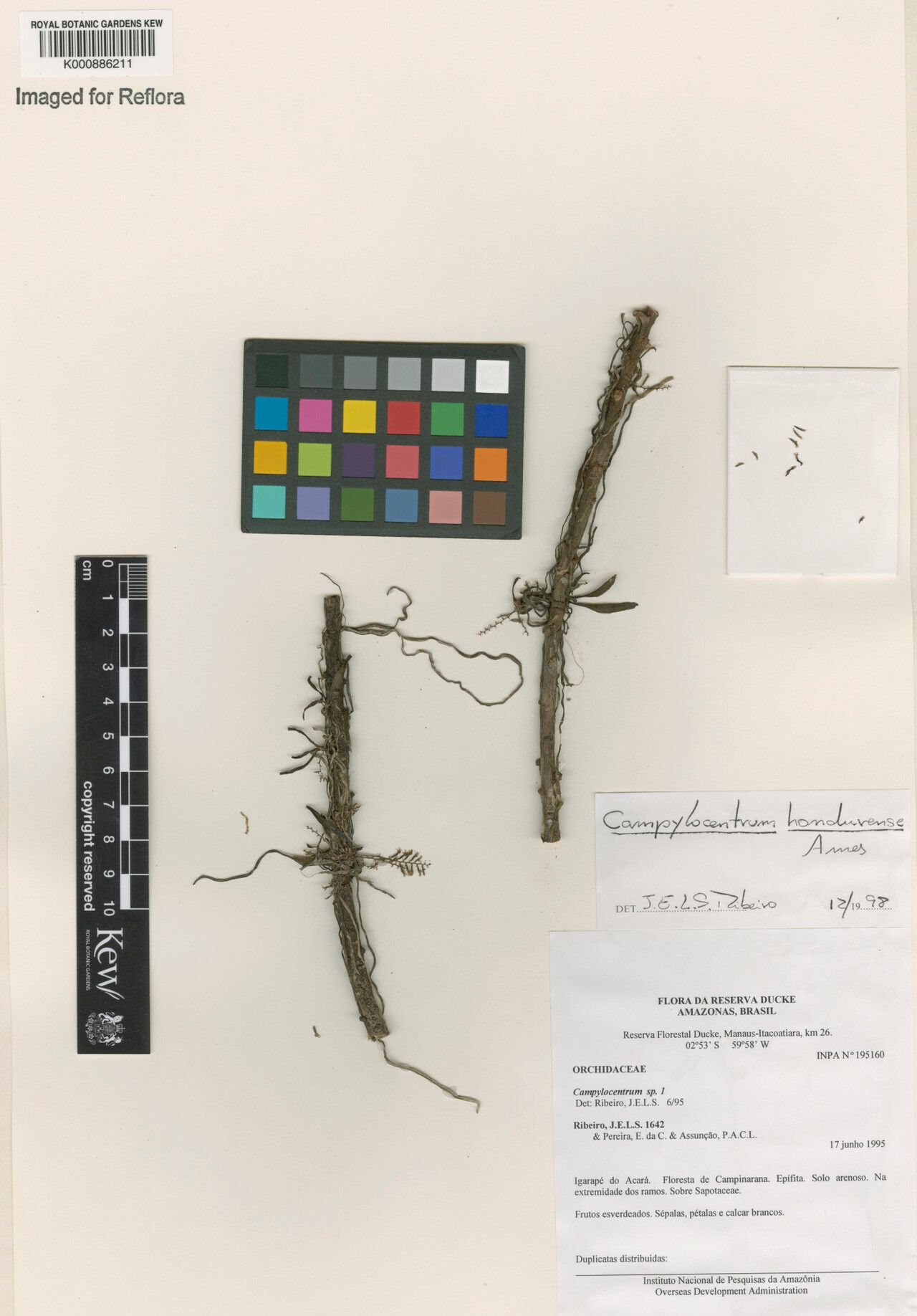
Propagating Campylocentrum hondurense: A Guide for Orchid Enthusiasts
Introduction:
Campylocentrum hondurense, also known as the Honduran Campylocentrum, is a captivating miniature orchid belonging to the Orchidaceae family. This epiphyte, native to Central America, enchants with its delicate, almost translucent, small white flowers and its pendulous, slender stems clad in thick, fleshy leaves. Its relatively easy cultivation and unique aesthetic qualities have earned it a growing popularity among orchid enthusiasts, although propagating it presents some challenges. This guide will explore various propagation methods, highlighting their viability and offering practical advice.
Seed Germination:
Currently, there are no known reliable methods for seed germination propagation of Campylocentrum hondurense. Orchid seeds, including those of Campylocentrum, are notoriously minute and lack endosperm (the nutritive tissue that supports germination in many seeds). They require a symbiotic relationship with specific mycorrhizal fungi for successful germination, a relationship difficult to replicate in a home environment. While laboratory settings utilizing sterile media and fungal inoculations might be successful, this is beyond the scope of the average orchid hobbyist.
Cuttings:
Cuttings offer a potentially viable method for propagating Campylocentrum hondurense.
Challenges: The success rate can be variable. Older, more mature stems are more likely to root successfully. Infection from fungi or bacteria is a risk if proper sterilization techniques aren’t followed.
Practical Tips: Take cuttings of approximately 4-6 inches long, ensuring each cutting has several nodes (the points from which roots and leaves emerge). Remove the lower leaves from the bottom inch or two to prevent rotting. Treat the cut ends with a rooting hormone (optional, but recommended). Plant the cuttings in a well-draining medium such as sphagnum moss or a bark-based mix, keeping it consistently moist but not waterlogged. High humidity is essential. Maintain a warm environment (around 75-80°F) with bright, indirect light.
Rewards: Cuttings are a relatively straightforward method, allowing for the propagation of genetically identical plants to the mother plant. This method allows for quicker multiplication than division.
Division:
Division, separating established plants into smaller portions, is a viable and relatively simple method for propagating Campylocentrum hondurense.
Challenges: Over-division can stress the plant, potentially causing it to die back. Care should be taken not to damage the delicate roots during the process.
Practical Tips: Division is best performed during the active growing season. Gently remove the plant from its pot and carefully separate the rhizomes (underground stems) into sections, ensuring each division has several mature growths and a good root system. Repot each division in fresh, well-draining medium. Provide adequate humidity and warmth.
Rewards: Division offers a quick and easy way to increase the number of plants, particularly helpful when a mature plant becomes overcrowded.
Tissue Culture:
Tissue culture offers the potential for large-scale propagation of Campylocentrum hondurense, offering the potential for creating disease-free plants.
Challenges: This method requires specialized equipment, a sterile laboratory environment, and a knowledge of plant tissue culture techniques. It is not a feasible method for the average home propagator.
Practical Tips: This is best left to specialized laboratories or experienced tissue culture practitioners.
Rewards: Tissue culture allows for the rapid multiplication of plants and the elimination of pathogens. It allows for much larger-scale propagation.
Conclusion:
Propagating Campylocentrum hondurense presents unique challenges, with seed germination currently proving unreliable. Cuttings and division are the most achievable methods for the home grower, offering reasonable success rates with careful attention to detail. While tissue culture provides a path for large-scale propagation, it remains beyond the reach of most hobbyists. The rewards of cultivating these delicate orchids, however, are significant. The triumph of successfully propagating this beautiful species, despite the inherent difficulties, is deeply satisfying, offering a unique connection to the world of exotic plants. Don’t be discouraged by initial setbacks; experiment with different techniques, learn from your experiences, and relish the unique joys of successfully growing and propagating these charming miniatures.