
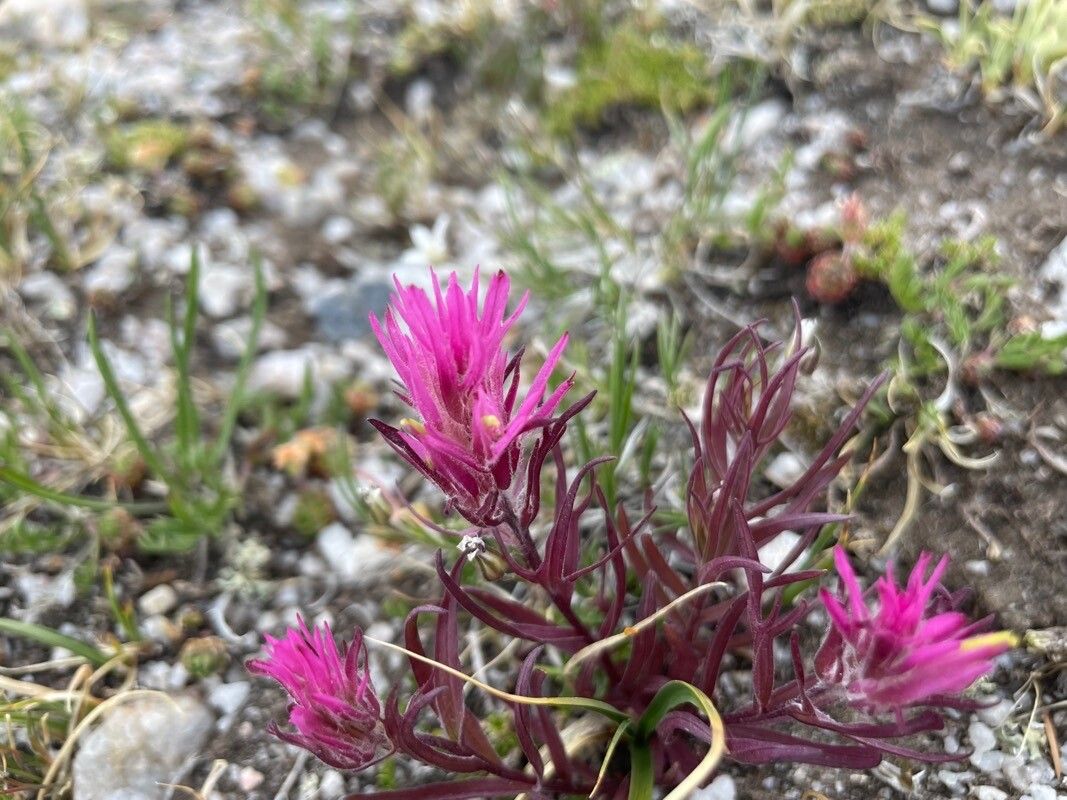
Propagating Castilleja parviflora: A Guide to the Small-Flowered Indian Paintbrush
Introduction:
Castilleja parviflora, commonly known as the small-flowered Indian paintbrush, is a captivating member of the Orobanchaceae family. This charming wildflower, prized for its vibrant bracts (often mistaken for petals) in shades of red, orange, or yellow, is a highly sought-after addition to native plant gardens. Its hemiparasitic nature—meaning it derives some nutrients from host plants—adds intrigue and presents unique propagation challenges not encountered with typical garden plants. Its popularity amongst gardeners, particularly those focused on native landscapes, stems from its ability to bring a splash of bright colour and attract pollinators. The relatively low success rate for propagation only enhances its appeal to skilled gardeners.
Seed Germination:
Currently, there are no known reliable methods for seed germination propagation of Castilleja parviflora. The seeds are notoriously tiny and require specific, often unpredictable, mycorrhizal fungal associations for successful germination. These fungal partnerships are crucial for nutrient uptake, a factor that is extremely difficult to replicate in a controlled gardening environment. Further research into the specific fungal requirements is necessary before reliable seed germination techniques can be developed.
Cuttings:
Cuttings present a more promising, albeit still challenging, method for propagating Castilleja parviflora.
Challenges: The success rate for cuttings is low and highly dependent on numerous factors, including the timing of the cutting, the use of rooting hormone, and maintaining high humidity levels. The hemiparasitic nature of the plant means cuttings need appropriate host roots nearby to thrive.
Practical Tips: Take semi-hardwood cuttings in late spring or early summer. Use a sharp, sterile blade to minimize tissue damage. Dip the cut ends in rooting hormone and plant them in a well-draining, moist mix (e.g., a mix of perlite and peat moss) under high humidity. Consider using a humidity dome or propagation chamber. The proximity of established host plants is crucial for successful rooting.
Rewards: Successfully propagating Castilleja parviflora from cuttings provides genetically identical offspring, thereby preserving desirable traits. It is a more reliable method than seed propagation, offering a more predictable outcome for smaller-scale propagation.
Division:
Division is a relatively straightforward propagation method for Castilleja parviflora, provided the plant is established and has developed sufficient rhizomes.
Challenges: Dividing the plant too early can severely weaken or even kill the mother plant. Careful consideration of the root system and the selection of appropriate planting locations with suitable host plants is essential.
Practical Tips: Divide established plants in early spring or fall, when the plant is actively growing or dormant. Ensure each division has a healthy portion of roots and several actively growing stems. Plant the divisions immediately in a well-drained soil amended with organic matter, close to suitable host plants.
Rewards: Division leads to quick establishment of new plants and offers a relatively high success rate compared to other methods.
Tissue Culture:
Tissue culture represents a potentially effective method for mass propagation of Castilleja parviflora.
Challenges: Tissue culture requires specialized equipment, expertise, and a sterile environment. Finding the optimal growth medium and identifying the appropriate plant hormones for effective shoot proliferation and root formation can be challenging. The hemiparasitic nature presents added complexity.
Practical Tips: Consult a tissue culture specialist who has experience with recalcitrant plant species. Experimentation with different growth media and hormone combinations will likely be necessary to optimize the protocol.
Rewards: Tissue culture offers the possibility of mass producing large numbers of genetically identical plants, particularly useful for conservation purposes, restoration projects, or commercial production.
Conclusion:
Propagating Castilleja parviflora presents unique and considerable challenges. While seed germination is currently unreliable, cuttings and division offer more promising outcomes, with division being the most practical for the home gardener. Tissue culture holds the potential for large-scale propagation but requires significant expertise. Regardless of the method chosen, careful consideration of the plant’s hemiparasitic nature and the need for suitable host plants is essential for success. The satisfaction of successfully cultivating this stunning plant, however, far outweighs the difficulties. For aspiring propagators, patience, persistence, and attention to detail are key. Begin with the easier methods and gradually explore more complex techniques. The rewarding sight of vibrant Indian paintbrush thriving in your garden will make the effort more than worthwhile.