
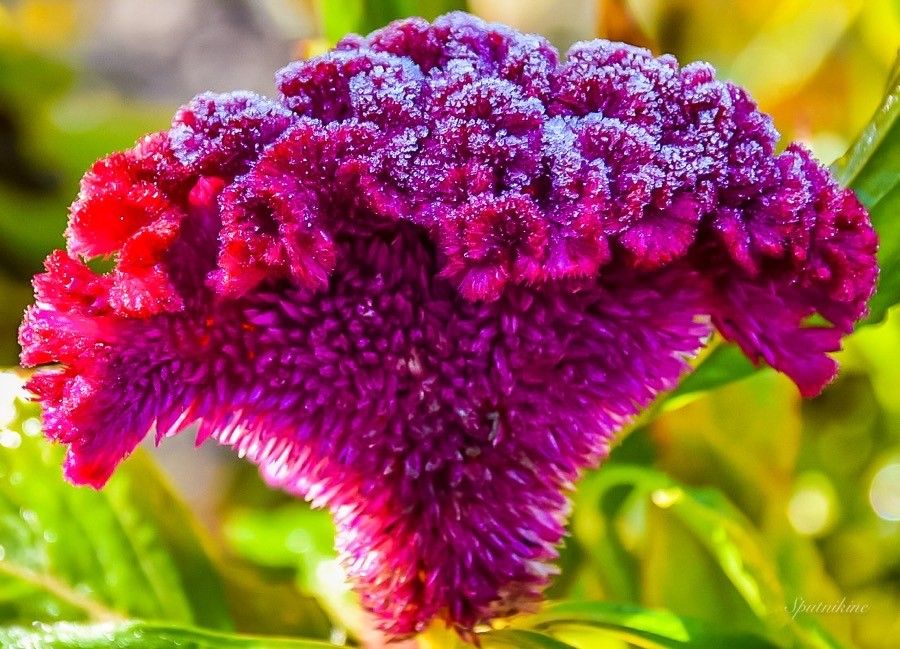
Propagating the Silver Cock’s Comb: A Guide to Celosia argentea Cultivation
Introduction:
Celosia argentea, commonly known as the silver cock’s comb or plumed cockscomb, is a captivating annual belonging to the Amaranthaceae family. Its striking, feathery flower heads, ranging in color from creamy white to vibrant reds and yellows, make it a popular choice among gardeners for borders, containers, and cut flower arrangements. The ease with which some Celosia varieties propagate makes it a rewarding plant for both amateur and experienced cultivators. However, specific propagation methods can vary in success depending on the cultivar. This article explores different propagation techniques for Celosia argentea, highlighting their challenges and rewards.
Seed Germination:
Seed germination is a highly viable and popular method for propagating Celosia argentea. Seeds are readily available and relatively inexpensive.
Challenges: While germination is generally easy, challenges include overcrowding of seedlings if sown too densely, and damping-off (a fungal disease affecting seedlings) in overly wet conditions. Some germination may be slow, depending on the cultivar and environmental conditions.
Practical Tips: Sow seeds directly outdoors after the last frost or start indoors 6-8 weeks before the last frost. Use a well-draining seed-starting mix, and sow seeds thinly, covering them lightly with soil. Maintain consistently moist (but not soggy) conditions and a warm temperature (70-75°F or 21-24°C). Ensure adequate light, preferably with supplemental grow lights indoors. Thin seedlings once they have a few true leaves.
Rewards: Seed propagation offers the highest level of genetic diversity, allowing for the selection and cultivation of unique varieties over time. It’s also the most cost-effective method for large-scale propagation, ideal for gardeners looking to produce many plants.
Cuttings:
Cuttings are a less common, but still viable, method of propagation for Celosia argentea.
Challenges: Rooting success from stem cuttings can be inconsistent. The plant’s somewhat succulent nature makes it prone to rotting if cuttings are not properly prepared and maintained.
Practical Tips: Take softwood cuttings (from new growth) in spring or summer. Use a sharp, clean knife or shears to make a clean cut, removing lower leaves to prevent rotting. Dip the cut end in rooting hormone to improve success rates. Plant the cuttings in a well-draining propagation mix, covering them with a clear plastic dome or humidity propagator to maintain high humidity. Keep the mix consistently moist.
Rewards: Cuttings allow for the rapid multiplication of genetically identical plants preserving desirable traits of a parent plant. This is particularly useful for preserving rare or superior cultivars.
Division:
Division is generally not a practical method for propagating Celosia argentea as it is typically cultivated as an annual. The plant does not produce easily separable sections suitable for division like some perennials.
Tissue Culture:
Tissue culture is a highly specialized technique rarely used for propagating Celosia argentea on a home-gardening scale.
Challenges: Tissue culture requires specialized equipment, sterile conditions, and expertise in plant tissue culture techniques. Therefore, it’s not a practical option for most hobbyists.
Practical Tips: This method is generally performed in a laboratory setting, beyond the scope of a typical home gardener.
Rewards: Though very advanced, tissue culture offers the potential for mass propagation of disease-free plants and the production of large numbers of genetically identical plants, especially valuable in commercial settings.
Conclusion:
Propagating Celosia argentea presents varying challenges depending on the chosen method. Seed germination offers the most accessible route to a wide variety of plants, but requires attention to sowing density and disease prevention. Cuttings provide advantages for preserving specific traits but require more technical skill to achieve success. Division and tissue culture, however, are unsuitable for home gardeners. Despite the challenges, successfully propagating Celosia argentea by seed or cuttings is a rewarding experience. The vibrant color and fascinating form of these plants, coupled with the satisfaction of nurturing them from seed or cutting to maturity, creates a strong sense of accomplishment. Don’t be discouraged by initial setbacks; experimentation and patience are key to mastering the art of cultivating these captivating additions to any garden or floral display.