
Propagating the Majestic Cattleya warscewiczii: A Guide for Orchid Enthusiasts
Introduction
Cattleya warscewiczii, often called the "Warscewicz’s Cattleya" or simply the "Warscewicz," is a magnificent orchid species native to the cloud forests of Colombia and Panama. Its large, intensely fragrant flowers, boasting a captivating blend of colors ranging from deep rose-pink to lavender, make it a highly sought-after addition to any orchid collection. Its popularity among orchid growers stems not only from its stunning blooms but also from the challenge and rewarding experience of cultivation and propagation. The unique aspects of its propagation, primarily due to its symbiotic relationship with mycorrhizal fungi in nature, make it a particularly interesting subject for orchid enthusiasts.
Seed Germination
Currently, there are no known reliable methods for seed germination propagation of Cattleya warscewiczii outside of a highly specialized laboratory setting. The seeds require a symbiotic relationship with specific mycorrhizal fungi to germinate successfully, a condition extremely difficult to replicate in a home environment. While some success may be achieved by experienced orchid growers deploying sterile seed sowing techniques in conjunction with fungal inoculum isolation, this process is highly complex, expensive, and demands considerable time for even a modest yield.
Cuttings
Cuttings are not a viable method for propagating Cattleya warscewiczii. Unlike some other orchid genera, Cattleya species do not readily root from stem cuttings. Attempts will almost certainly result in the death of the cutting.
Division
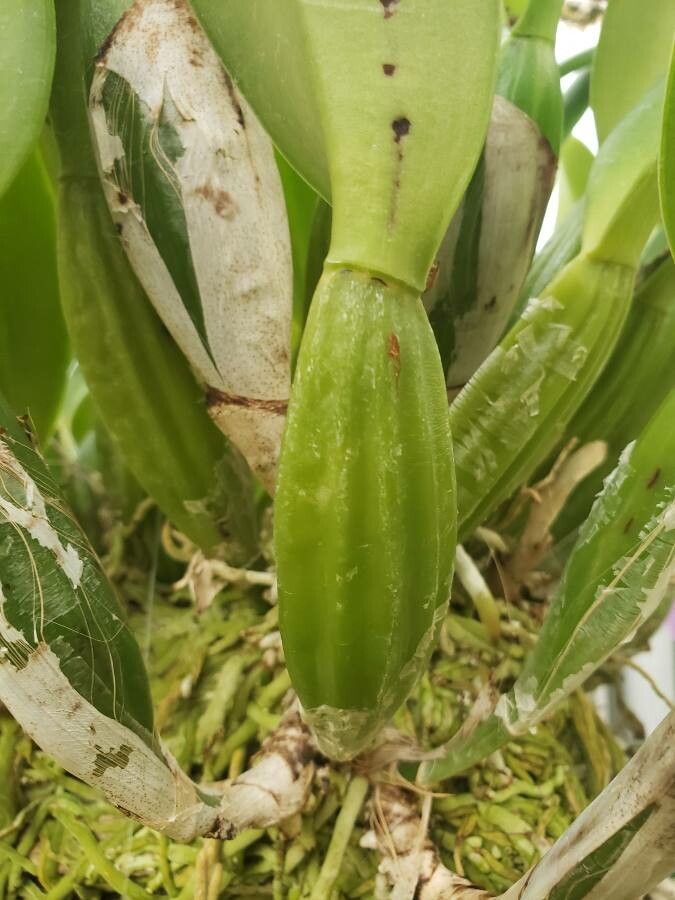
Division is the most practical and successful method for propagating mature Cattleya warscewiczii plants. This involves carefully separating the plant into multiple sections, each containing several pseudobulbs and roots.
Challenges: Successfully dividing Cattleya warscewiczii requires careful attention to detail to avoid damaging the roots and pseudobulbs. The plant needs to be sufficiently mature to possess multiple growth points capable of independent survival.
Practical Tips: Divide the plant only during the period of active growth after blooming. Use sharp, sterile tools to minimize trauma. Each division should have at least three mature pseudobulbs and a healthy root system. Pot each division in a well-draining orchid potting mix and maintain high humidity and appropriate light levels.
Rewards: Division provides a relatively straightforward method to increase the numbers of Cattleya warscewiczii in a collection without investing in expensive or complex techniques. It allows for the creation of genetically identical plants, preserving desirable traits.
Tissue Culture
Tissue culture is a viable, albeit complex and costly, method for propagating Cattleya warscewiczii. This method allows for large-scale propagation of genetically identical plants and offers the possibility of disease elimination.
Challenges: Tissue culture requires a sophisticated laboratory setup, specialized media, strict sterile conditions, and expertise in plant tissue culture techniques. The initial investment can be substantial.
Practical Tips: This method should be performed in a professional laboratory or by individuals with extensive experience in orchid tissue culture. Specific protocols for Cattleya warscewiczii may need to be adapted based on the specific culture conditions.
Rewards: Tissue culture offers the highest potential for mass propagation, allowing for the creation of many plants quickly. It’s also a method for propagating rare or otherwise hard-to-divide plants.
Conclusion
Propagating Cattleya warscewiczii presents challenges across all methods. While seed germination is effectively impossible outside controlled laboratory conditions, division is the most accessible method for orchid hobbyists. Tissue culture offers the potential for large-scale production, but requires significant investment and expertise. The rewards, however, are well worth the effort for those willing to engage in the process. Successfully cultivating this magnificent orchid, from propagation to bloom, offers an unparalleled sense of accomplishment and deep satisfaction, a true testament to the grower’s dedication and skill. For aspiring propagators, patience, attention to detail, and a willingness to learn are essential ingredients for success. Focus on mastering the division technique, building the necessary knowledge slowly, and enjoying the journey just as much as the end result will lead to rewarding outcomes.