
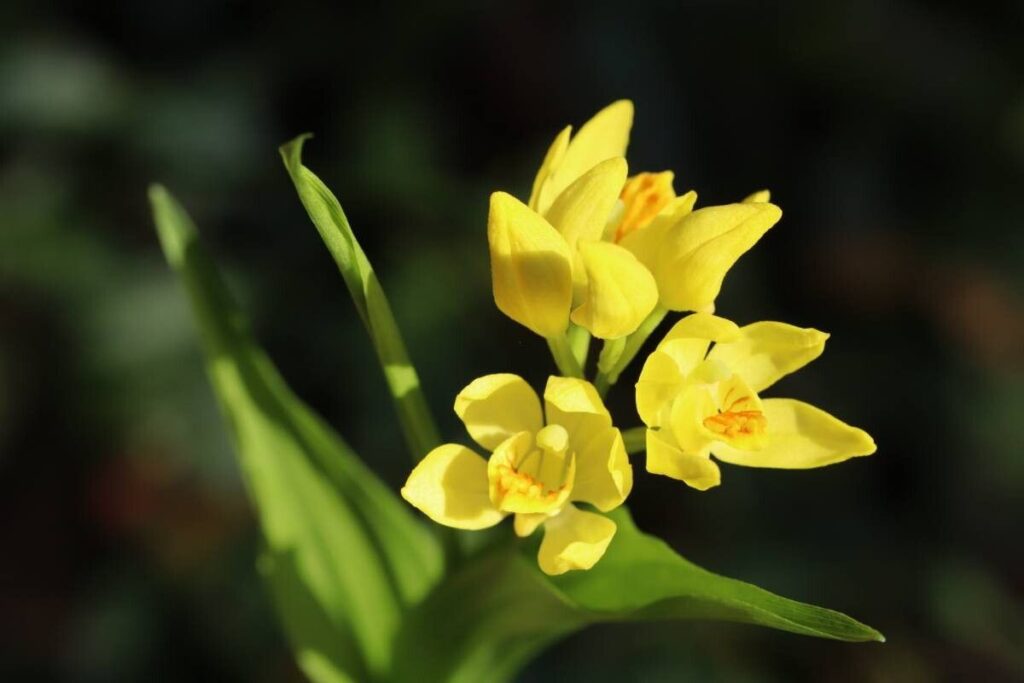
Beyond Beauty: Unlocking the Secrets of Propagating the Yellow Widelip Orchid (Cephalanthera falcata)
The Yellow Widelip Orchid (Cephalanthera falcata), with its elegant, bright yellow blooms peeking out from shady forest floors, is a sight to behold. But have you ever wondered how these delicate beauties multiply in the wild? Propagating orchids, especially terrestrial ones like the Yellow Widelip, can seem like a cryptic art, but understanding their unique lifecycle opens up a world of fascinating possibilities for orchid enthusiasts.
Unlike many flowering plants, the Yellow Widelip Orchid relies heavily on specific mycorrhizal fungi present in the soil for successful propagation. These fungi form a symbiotic relationship with the orchid’s roots, providing essential nutrients in exchange for sugars produced during photosynthesis. This delicate balance makes traditional methods like seed sowing or division quite challenging.
Dissecting the Challenges:
- Seed Dependency: Yellow Widelip Orchid seeds are dust-like and lack the endosperm found in most seeds, requiring the presence of specific mycorrhizal fungi for germination.
- Fungal Specificity: Identifying and cultivating the exact fungal partner needed for a particular orchid species is complex and often requires specialized labs.
- Environmental Sensitivity: Replicating the specific soil composition, moisture, and light conditions found in the orchid’s natural habitat is crucial for successful growth.
Navigating Propagation:
While challenging, propagating the Yellow Widelip Orchid isn’t impossible. Here are two approaches:
- Symbiotic Germination (In-situ):
- Location is Key: This method involves carefully collecting a few seed pods from a mature plant in the wild. The seeds are then sown directly back into the soil surrounding the parent plant, maximizing the chances of encountering the necessary fungi.
- Ethical Considerations: It’s essential to only collect a small amount of seed and minimize disturbance to the parent plant and its environment.
- Laboratory Propagation (Asymbiotic Germination):
- Advanced Techniques: Specialized laboratories can germinate Yellow Widelip Orchid seeds in sterile environments using nutrient-rich media. This eliminates the need for mycorrhizal fungi during the initial growth stages.
- Long-Term Care: Once seedlings develop, they are gradually introduced to the fungal partners and eventually transplanted into suitable habitats.
Understanding the Limitations:
It’s important to acknowledge that propagating the Yellow Widelip Orchid, especially through symbiotic means, has a low success rate. Factors like unpredictable weather patterns, animal disturbances, and even subtle changes in the soil composition can impact germination.
The Conservation Connection:
The challenges of propagating orchids like the Yellow Widelip Orchid underscore the importance of habitat conservation. Protecting their natural habitats ensures these beautiful orchids can thrive and reproduce naturally, preserving their genetic diversity for generations to come.
While propagating the Yellow Widelip Orchid is not for the faint of heart, understanding its unique lifecycle and the importance of its symbiotic relationships offers a rewarding learning experience. By appreciating the delicate balance of nature and supporting conservation efforts, we can help protect these botanical treasures for future generations.