
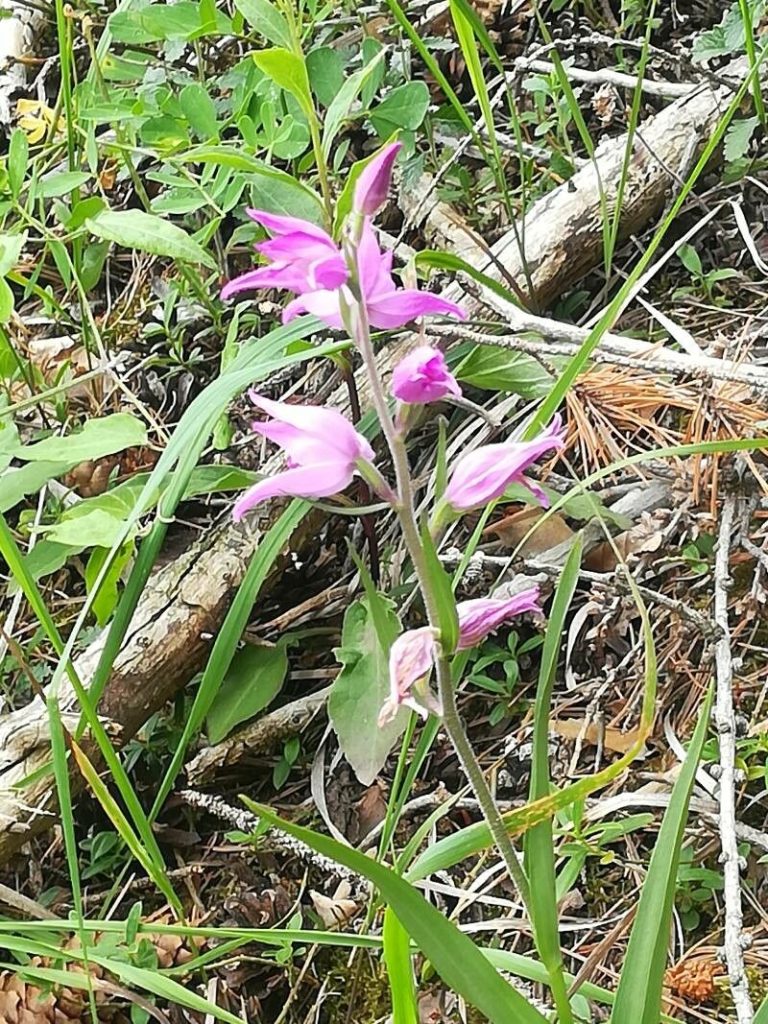
Propagating the Red Helleborine: Challenges and Rewards of Cultivating Cephalanthera rubra
Introduction
Cephalanthera rubra, commonly known as the Red Helleborine, is a captivating terrestrial orchid prized for its elegant, reddish-pink flowers and its preference for shady woodland conditions. Its beauty and relative rarity make it a highly sought-after plant among orchid enthusiasts and gardeners with a penchant for native species. However, propagating Cephalanthera rubra presents significant challenges, owing to its complex symbiotic relationships with mycorrhizal fungi and its notoriously difficult seed germination. Its unique propagation requirements add to the significant satisfaction obtained from successful cultivation.
Seed Germination
Currently, there are no known reliable methods for seed germination propagation of Cephalanthera rubra. The seeds of this orchid are dust-like and lack significant endosperm, making them entirely reliant on a specific mycorrhizal fungus for germination and early development. This symbiotic relationship is extremely difficult to replicate in a controlled environment. Even under ideal conditions mimicking its natural habitat, successful germination remains exceptionally rare.
Cuttings
Cuttings are not a viable method for propagating Cephalanthera rubra. This orchid does not readily produce adventitious roots from stem or leaf cuttings.
Division
Division is the most reliable method for propagating Cephalanthera rubra. However, it’s not without its challenges.
-
Challenges: Cephalanthera rubra typically grows slowly and forms relatively small clumps. Dividing the plant too frequently can weaken it, making it susceptible to disease and hindering its growth. Furthermore, each division must retain a sufficient amount of root system to survive. Improper division can damage the delicate roots and result in plant mortality. The timing of division is crucial, ideally carried out after flowering, but before new growth begins.
-
Practical Tips: Division should only be attempted when the plant is mature and has several healthy pseudobulbs. Carefully dig up the entire clump, gently separating the rhizomes into smaller sections, ensuring each section possesses several pseudobulbs and a good quantity of healthy roots. Plant these divisions immediately in well-drained, slightly acidic soil rich in organic matter, replicating the plant’s natural woodland habitat.
-
Rewards: Division offers the quickest route to increasing the number of Cephalanthera rubra plants, offering a relatively reliable method for propagation, provided careful technique is used.
Tissue Culture
Tissue culture offers the potential for large-scale propagation of Cephalanthera rubra, but it’s a highly specialized and technically demanding process.
-
Challenges: Establishing aseptic cultures and identifying the specific mycorrhizal fungi required for optimal growth are significant hurdles. The precise nutrient requirements and hormonal balances for successful growth in vitro are also not fully understood. Consequently, tissue culture propagation of this orchid is largely restricted to research laboratories and specialized nurseries.
-
Practical Tips: This method is beyond the scope of most hobbyists. If pursuing tissue culture, extensive research and specialized equipment are required.
-
Rewards: Successful tissue culture opens up possibilities for large-scale propagation, conservation efforts, and the potential to study the intricate symbiotic relationship between Cephalanthera rubra and mycorrhizal fungi.
Conclusion
Propagating Cephalanthera rubra is undoubtedly challenging, with seed germination proving effectively impossible using current methods. Division presents the most feasible option for the keen gardener, demanding patience, care, and gentle handling. Tissue culture offers potential for large-scale propagation but requires significant expertise and resources. However, the rewards of successfully cultivating this stunning orchid, particularly through division, far outweigh the challenges. The unique satisfaction is inextricably linked to the effort invested, and the knowledge that you have nurtured this fascinating plant from a small division speaks to a profound connection with the natural world. To the aspiring propagator, I offer this encouragement: start small, focus on healthy divisions, provide optimal growing conditions, and embrace the journey – the eventual flourishing of your Red Helleborine will be deeply rewarding.