
Propagating Japanese Quince (Chaenomeles japonica): A Gardener’s Guide
Introduction:
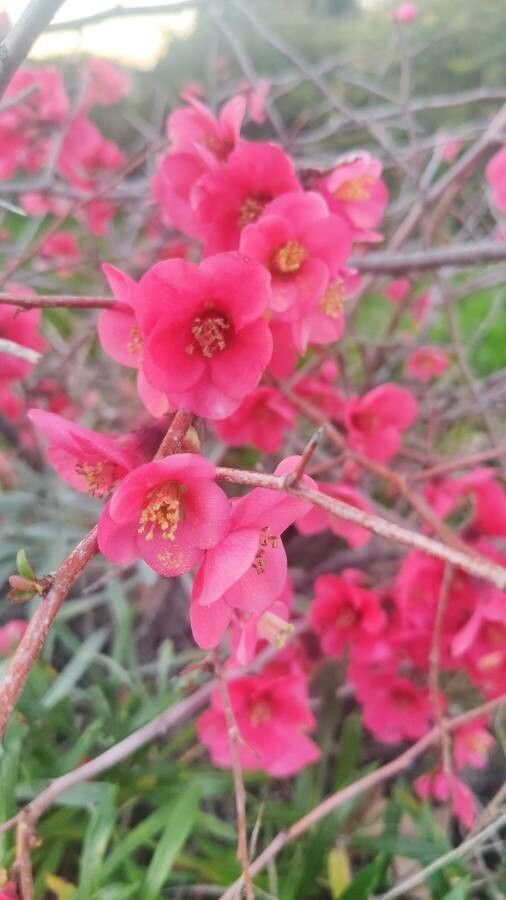
Chaenomeles japonica, commonly known as Japanese Quince, is a prized ornamental shrub renowned for its vibrant, early spring blooms and the pleasantly fragrant, though often inedible, fruits that follow. Its thorny branches contribute to its use as a hedging plant, while its stunning blossoms in shades of red, pink, and white make it a beloved addition to any garden. While readily available commercially, propagating Japanese Quince offers gardeners a rewarding challenge and the satisfaction of nurturing a plant from a cutting, division, or even (with some effort) seed. The unique aspect of its propagation lies in the combination of methods available, each presenting its own set of difficulties and rewards.
Seed Germination:
Currently, there are no known reliable methods for seed germination propagation of Chaenomeles japonica. While seeds can be collected, germination rates are notoriously low and inconsistent, even with stratification (a cold treatment mimicking winter conditions). The lengthy germination time and unpredictable results make seed propagation a largely impractical method for most home gardeners.
Cuttings:
Cuttings offer a relatively straightforward and successful method for propagating Japanese Quince.
Challenges: The main challenge lies in achieving successful rooting. Japanese Quince cuttings can be prone to rot if not handled correctly.
Practical Tips: Hardwood cuttings, taken in late autumn or winter from dormant wood, generally yield the best results. These should be 4-6 inches long, with a slanted cut at the base to increase surface area for root absorption. Dip the cut ends in rooting hormone powder before planting in a well-draining propagation mix (e.g., perlite and peat moss). Keep the cuttings consistently moist but not waterlogged, and provide bottom heat (around 70-75°F) to encourage root development. Misting regularly helps maintain humidity.
Rewards: This method allows for relatively rapid propagation, producing genetically identical plants to the parent plant, ensuring consistent characteristics in your blooms and fruit.
Division:
Division is a highly successful method for propagating established Japanese Quince plants.
Challenges: This method is only viable with mature plants and requires careful handling to avoid injuring the root system.
Practical Tips: The best time to divide is in early spring or autumn, when the plant is dormant. Dig up the entire plant carefully, gently separating the root ball into smaller sections, each with healthy roots and shoots. Replant the divisions immediately, ensuring adequate spacing and watering.
Rewards: Division is a relatively quick and easy method, resulting in several new plants that are exact copies of the original. It’s an excellent way to expand your collection of existing, desirable cultivars.
Tissue Culture:
Tissue culture is a highly specialized method.
Challenges: Tissue culture requires a controlled laboratory environment, specialized equipment, and aseptic techniques. It is not a practical option for the average home gardener.
Practical Tips: This method, typically employed by nurseries, involves sterilizing plant tissue and growing it on a nutrient medium in a sterile environment.
Rewards: This method allows for mass propagation of desirable cultivars and the production of disease-free plants.
Conclusion:
Propagating Japanese Quince presents a spectrum of challenges and rewards. While seed germination proves largely unreliable, cuttings and division provide accessible and reasonably successful options for the home gardener. Each has its own intricacies to master; cuttings require careful attention to humidity and rooting, while division demands gentle handling of the root system. The high-tech approach of tissue culture is best left to professionals.
The unique satisfaction derived from successfully cultivating Japanese Quince from a cutting or division stems from the effort involved and the connection established with the plant. Overcoming the hurdles, from selecting the perfect cutting to tending carefully to its rooting, culminates in a deep sense of accomplishment. Aspiring propagators should not be discouraged by initial setbacks, instead, view each attempt as a learning experience. With patience and attention to detail, the rewarding beauty of home-propagated Japanese Quince will surely bloom.